Skip to content

What Are the Top Durable Dog Toys Manufacturers in China?

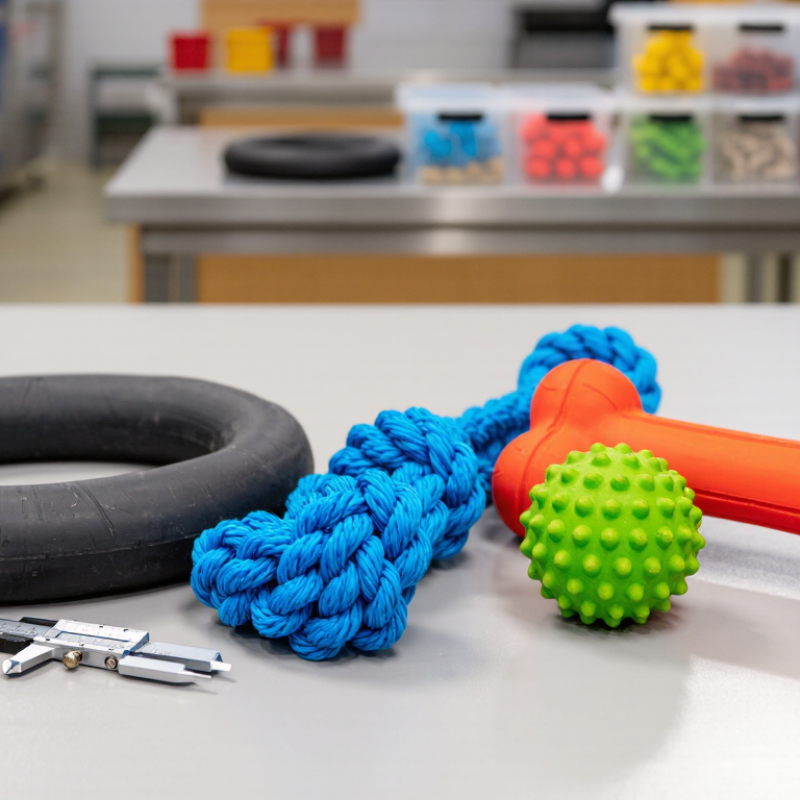
Choosing among China’s leading Durable Dog Toys manufacturers takes more than comparing catalog photos. A thick rubber ring may look robust, yet a determined chewer can expose weak seams, brittle material, or a poorly finished edge within hours. Veterinarian Dr. Marty Becker’s caution captures an important point: “No dog toy is truly indestructible.” Buyers should treat durability as a tested performance, not a promise.

This guide examines manufacturers through practical signals: material consistency, construction quality, product testing, customization, and communication. A factory’s ability to explain rubber hardness, stitching methods, or inspection procedures can reveal more than a polished sales page. Ask how samples are tested, what defects are tracked, and whether production batches match approved samples. Small details matter. A loose seam or sharp molding line can change a toy’s usefulness quickly.

The “top” manufacturer will depend on the dog, the toy design, and the buyer’s priorities. A toy built for supervised tug may not suit persistent chewing. Price matters, but it cannot replace clear specifications and repeatable quality checks. This comparison may still miss something: real dogs vary, and a successful sample does not guarantee every batch performs equally. That uncertainty deserves attention. The manufacturers discussed here offer a starting point for informed evaluation, not a blanket guarantee of safety or durability.
What Are the Top Durable Dog Toys Manufacturers in China?

2023 China Pet Industry White Paper: 279.3B Yuan in Urban Pet Spending

The 2023 China Pet Industry White Paper reported 279.3 billion yuan in urban pet spending. That figure shows the scale of city-based pet care, but it does not tell us how much went to dog toys. It is easy to overread a large number. Still, growing spending can encourage manufacturers to improve product design and production consistency.

For buyers comparing durable dog toy manufacturers in China, practical details matter more than bold claims. Ask what materials are used, how seams are checked, and whether products are tested for repeated chewing. A thick rubber toy may look sturdy, yet a weak join can fail quickly. Small details matter. Clear material descriptions and repeatable quality checks offer more useful evidence than words like “indestructible.”

Urban owners may also value toys that are easy to clean and suitable for smaller homes. A textured surface can collect food or dust, so care instructions should be specific. Samples are worth inspecting before a large order: check edges, odor, finish, and packaging. No toy suits every dog, and durability depends on chewing habits. That part is often overlooked. The spending figure signals market activity, not a guarantee of product quality.

How Durability Is Measured: Tensile, Tear, Abrasion, and Chew-Test Data

For buyers assessing durable dog toys from Chinese manufacturers, “tough” should mean measurable performance, not a thick-looking wall. ASTM D5034-21 measures fabric breaking force, usually reported in newtons. ASTM D624-00(2020) measures rubber tear strength, reported in force per thickness. ASTM D4060-19 evaluates abrasion by tracking material loss after controlled wheel cycles. These methods offer useful comparisons, but each applies to specific materials. A high tensile result alone does not predict how a stitched seam or molded edge will hold up.

Chew resistance needs extra care. There is no single universal chew-test score that predicts every dog’s behavior. Ask for the test setup: applied force, jaw shape, cycle count, sample size, and failure criteria. A useful report includes the average and the spread between samples, not only the best result. It should also identify material, thickness, and conditioning, since heat or moisture can change performance. Small details matter. ASTM methods define how to test; they do not certify a toy as safe or durable. I would still question any impressive number without a matching method and test conditions.

Materials and Safety: Compare Rubber, Nylon, TPR, and Test Standards

For durable dog toys, material labels tell only part of the story. Natural rubber can flex and resist tearing, but compounds vary in hardness and purity. Nylon withstands heavy chewing, yet a rigid piece may crack or wear into sharp edges. TPR (thermoplastic rubber) often feels springy; its durability depends on the blend and molding quality. A hard toy can look reassuring. That impression can mislead.

Ask manufacturers for batch-level test records, not just a “non-toxic” claim. Useful checks include hardness testing, tensile strength, repeated-bite or abrasion testing, and chemical screening for restricted substances. ISO/IEC 17025 accreditation indicates a lab’s testing competence; it does not certify the toy itself. ASTM F963 and EN 71-3 were developed for children’s toys, so passing them alone does not prove a dog toy is safe. APPA’s 2025 State of the Industry report puts U.S. pet-industry spending at $152 billion in 2024—a broad market figure, not a dog-toy safety measure. It does underline why buyers should request specific evidence.

Tips: Ask for the test method, sample date, and material composition. Inspect seams and edges after chewing. Replace toys that split or shed pieces. Even a good test has limits: dogs chew differently, and I would not treat one pass result as a guarantee.

Durable Dog Toy Materials: Common Mechanical Test Methods

The chart shows whether a test method is commonly applicable to each material family: 1 = applicable; 0 = not typically selected. ASTM D2240 measures durometer hardness, ASTM D412 covers tensile testing of rubber and thermoplastic elastomers, and ASTM D638 covers tensile testing of plastics. Applicability depends on the specific material grade and specimen. These methods characterize material properties; they do not certify a finished dog toy as safe.

How to Vet Chinese Manufacturers: Audit Capacity, Quality Controls, and Export Records

A manufacturer’s advertised capacity matters less than what the workshop can consistently produce. Ask to see the production floor, equipment list, and recent schedules for comparable orders. A site visit can reveal whether molding, trimming, and packing happen in-house or are subcontracted. Look closely. Check whether staff can explain machine maintenance and how rush orders affect inspection time. Capacity figures should match actual shifts, tooling, and available workers.

Quality controls need evidence, not confident promises. Request written inspection procedures, sample batch records, and logs showing how defects are handled. For chew toys, ask how the maker checks dimensions, seams, material consistency, and resistance to repeated pulling or chewing. Inspect a few finished units under bright light. Rough edges and uneven joins are easy to miss in polished product photos. Small inconsistencies matter. Ask how test results connect to a specific production lot, and whether failed samples trigger corrective action.

Export experience is best verified through redacted shipping documents, packing lists, and records of prior shipments to similar markets. Names and prices can be removed, but dates, product descriptions, quantities, and destination regions should still be clear. Confirm that the supplier can explain packaging, lead times, and how production changes are recorded. Speak with trade references when available. A tidy file is useful, but it is not proof by itself; compare documents with samples and audit findings before placing a large order.

Comparing Leading Suppliers: Verify Test Reports, Defect Rates, and Warranty Terms

Durable dog toys are not proven by thick rubber or bold catalog claims. When comparing Chinese manufacturers, request recent test reports tied to the exact material, color, and toy design. A report for a similar item is not enough. Check the laboratory, test date, sample details, and whether results cover seams, pull strength, and detachable parts. Keep the report number and sample photos for later comparison.

Ask suppliers to define their defect rate. Does it include cosmetic flaws, weak seams, or toys that fail during inspection? Request figures from several recent production batches, plus the number of units inspected. A low percentage can hide a small sample size. Compare the supplier’s records with your own incoming checks, such as examining stitching and gently testing molded edges. Small checks matter.

Warranty terms need the same scrutiny. Confirm how long coverage lasts, what counts as a defect, and who pays for replacement shipping. Get these details in writing. Even careful comparisons have gaps: supplier data may be incomplete, and no report guarantees every batch will perform identically. That uncertainty deserves attention. A clear paper trail, realistic defect figures, and specific warranty conditions offer stronger evidence than a polished product sheet.