$0.00
For retailers, distributors, and pet brands, Durable Dog Toys are more than a product category. They can shape customer trust, repeat purchases, and a business’s reputation. A toy that survives regular play may reduce replacement complaints. It can also give owners better value. Still, “durable” should never mean indestructible. No toy suits every dog.
Dog-toy designer Nina Ottosson is associated with this guiding idea: “Dogs need to use their brains as well as their bodies.” That matters for product selection. A sturdy rubber chew may suit a persistent chewer, while a puzzle toy may better engage a curious dog. Buyers should compare materials, seams, construction, and size guidance. They should also look for clear care instructions and warnings about damaged toys. These details help businesses describe products responsibly.
Real-world performance can be uneven. A toy that holds up during one dog’s gentle play may fail under another dog’s focused chewing. That is worth acknowledging, not hiding. Businesses can review customer feedback, test products across appropriate play styles, and avoid promises that every toy will last indefinitely. Durable Dog Toys can support a stronger assortment when quality claims match practical evidence. The aim is not simply a tougher-looking shelf. It is helping customers choose toys that fit their dogs, their routines, and their expectations.
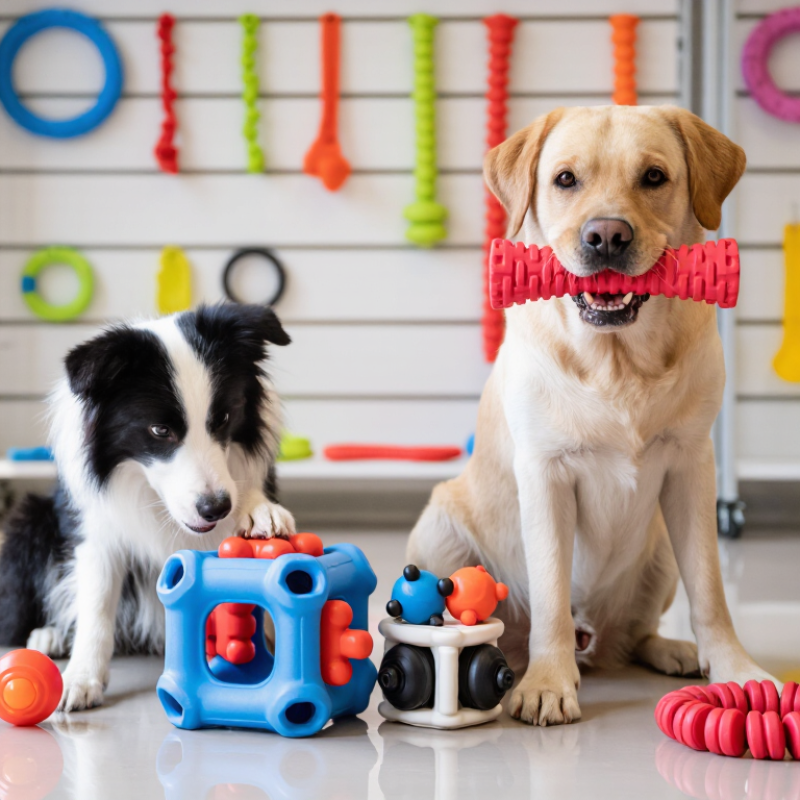
A durable dog toy resists damage during repeated play without becoming difficult or unpleasant for a dog to use. Look for sturdy construction, consistent material thickness, and seams that stay closed when gently pulled. Edges should feel smooth, with no loose parts that could detach. A toy should also match the dog’s size and chewing style. A heavy-duty design can still be unsuitable for a small dog. No toy lasts forever.
For business buyers, inspect more than the product description. Check whether the toy keeps its shape after washing and whether its surface is easy to examine for cracks or wear. Ask suppliers for material details and care instructions, then assess samples under realistic handling. Toughness claims can be vague, and a quick hand test cannot predict every dog’s behavior. That limitation is worth acknowledging. Clear product guidance helps staff recommend toys responsibly and set realistic expectations for customers.
Tips: Compare a sample with its listed dimensions, inspect seams and openings, and check cleaning instructions. Replace toys that split, shed pieces, or develop sharp edges. Advise customers to supervise play.
Durable dog toys help businesses offer play that stays engaging beyond a few minutes. In a busy retail setting, customers often squeeze, bend, and inspect a toy before buying it. Strong seams and resilient materials can make that first impression more reassuring. They also help toys hold their shape during repeated play. That matters.
Durability can support safer play, but no toy is indestructible. A dog’s size, chewing style, and play habits all affect wear. Clear guidance helps customers choose appropriately, while regular inspection can catch split seams, loose parts, or sharp edges. Small details count. For example, a toy that remains easy to grip may keep a dog interested without encouraging rough tugging. Still, we can overvalue toughness alone. A toy that is too hard or poorly matched to a dog may not be a suitable choice. Businesses should consider material feel, construction, and age guidance alongside expected lifespan. Honest product information builds trust, especially when it explains that damaged toys should be replaced. Durable design is useful when it keeps play enjoyable and gives owners practical signs to watch for.
Durability starts with matching materials to the dog’s chewing style. Natural rubber can flex under pressure and suit many moderate chewers, while overly soft rubber may split under persistent, forceful biting. Dense nylon can resist abrasion, but its edges should stay smooth and its size should prevent easy swallowing. No material lasts forever.
Construction matters as much as the raw material. Look for thick walls, rounded corners, and seams placed away from likely bite points. For fabric toys, tightly woven layers and reinforced stitching can slow tearing, though they will not make cloth chew-proof. In practical product checks, inspect stress points after repeated use: thin spots, loose threads, sharp edges, or cracks are warning signs. A simple squeeze test helps, but it cannot predict every dog’s behavior.
Design affects how long a toy stays useful. Hollow rubber shapes can spread pressure and offer a place for treats, while broad, solid forms may be harder to grip and tear apart. Avoid small add-ons that can detach. Fit matters. A toy should be large enough for the dog’s mouth, yet easy to carry and handle. It is tempting to promise “indestructible,” but that claim can mislead; clear guidance on supervision and replacement is more trustworthy.
Why Choose Durable Dog Toys for Your Business?
How Durable Toys Affect Costs and Customer Trust
A toy that fails after a few play sessions can mean more than a disappointed customer. It may lead to returns, extra staff time, and repeated replacement costs. A sturdier toy can stay in use longer, helping reduce those expenses. Still, durability does not guarantee savings; purchase price, shipping, and the dog’s chewing habits all matter. Some dogs are remarkably determined.
Customers notice honest product details. Explain the toy’s materials, intended play style, and recommended dog size in plain language. Avoid calling any toy indestructible. That claim can create unrealistic expectations and weaken trust when a customer sees torn seams or missing pieces. Clear guidance helps shoppers choose more confidently and gives staff a useful way to answer questions.
Tips: Check seams, joins, and surface wear during routine stock reviews. Keep a sample for hands-on inspection, and record common complaints or return reasons. Compare those notes with sales and replacement costs over time. Small details count. A toy may look tough on the shelf but wear differently in real homes, so your advice should leave room for that uncertainty.
Illustrative 12-month toy cost per dog
In this example, standard toys cost $8 each and are replaced every two months; durable toys cost $18 each and are replaced every six months. That works out to $48 versus $36 per year, a modeled saving of $12 per dog. These are example assumptions, not market averages. Products that last longer may reduce replacement frequency and help support customer trust when durability claims match real-world performance.
Choosing durable toys starts with the dogs your customers actually serve. A small fetch toy may fail quickly in a powerful chewer’s mouth, while an oversized rubber toy can frustrate a small dog. Ask suppliers for material specifications, seam or joint details, cleaning instructions, and documented testing. Inspect samples yourself: flex the toy, check for loose parts, and wash it repeatedly. No toy is indestructible. That matters.
The APPA’s 2024 State of the Industry report put U.S. pet-industry spending at $147 billion in 2023 and projected $150.6 billion for 2024. This signals a substantial market, not guaranteed sales for any product. Compare landed cost with expected replacement frequency, customer feedback, and return rates. Start with a modest range across sizes and play styles, then track which items show cracking, fraying, or repeat purchases. A practical detail: keep a chew-strength guide beside the shelf, but avoid promising a toy will suit every dog. We can get that wrong. Review complaints regularly, and remove products that fail sooner than their intended use suggests.
| Toy type | Common materials | Durability considerations | Suitable use | What to check before buying | Care and replacement signs |
|---|---|---|---|---|---|
| Rubber chew toys | Natural or synthetic rubber blends | Thicker, resilient designs generally resist chewing better than thin or hollow parts. No toy is chew-proof for every dog. | Supervised chewing and food-stuffing activities | Choose a size and firmness appropriate to the dog; inspect for weak seams, detachable pieces, and clear care instructions. | Wash as directed. Replace if cracked, torn, or missing pieces. |
| Rope toys | Braided cotton or other textile fibers | Braiding and knot construction affect wear; loose strands can develop with repeated use. | Interactive tug and supervised play | Check knot security, fiber condition, and whether the toy is appropriately sized for the intended dogs. | Clean and dry fully according to the care label. Remove if strands unravel or sections are chewed off. |
| Fabric plush toys | Woven fabric, stitching, and fiber filling | Stitching and fabric weight influence wear. Plush toys are usually less suitable for dogs that aggressively chew or tear toys. | Gentle play, carrying, or comfort under supervision | Look for reinforced seams and securely attached features; consider designs without small detachable parts. | Follow washing instructions. Remove promptly if seams open or filling becomes accessible. |
| Hard nylon chew toys | Molded nylon or similar firm materials | Designed for chewing, but very hard toys may not suit every dog. Chewing can wear down the toy and may affect teeth. | Supervised chewing for dogs suited to firm chew toys | Review the intended dog size and use guidance. Avoid toys that are damaged or have sharp edges. | Inspect frequently and replace if cracked, splintered, or significantly worn. Ask a veterinarian if unsure about a dog's chewing needs. |
| Food-dispensing toys | Rubber, plastic, or composite materials | Moving parts and openings can wear or trap residue; simpler designs may be easier to inspect and clean. | Supervised enrichment and treat dispensing | Check that the opening matches the intended treats, parts are secure, and the toy can be cleaned thoroughly. | Remove food residue after use. Replace if parts loosen, cracks appear, or cleaning becomes difficult. |
| Business-level selection | A range of materials and construction styles | Durability depends on the dog's size, chewing style, supervision, and the toy's condition—not on material alone. | Retail, pet care, grooming, boarding, and other dog-serving businesses | Compare intended use, size guidance, construction, cleaning needs, safety information, and supplier support. Stock options for different play styles. | Set a routine inspection process, remove damaged toys, and advise customers to supervise play and choose toys suited to their dogs. |
Safety note: Choose toys according to the dog's size and chewing behavior, supervise play, and remove any toy that becomes damaged. No dog toy is indestructible.