Skip to content

Why Choose Embroidery Pattern Fabric for Global Sourcing?

Why Choose Embroidery Pattern Fabric for Global Sourcing?

Global sourcing decisions often begin with a practical question: can the fabric deliver beauty, consistency, and commercial value? Embroidery Pattern Fabric offers a distinctive surface without requiring complicated post-production decoration. Its raised motifs can add texture to dresses, home textiles, accessories, and boutique packaging. Buyers can compare floral, geometric, cultural, and seasonal designs across different markets. The fabric also supports visual storytelling. That matters when products must stand out on crowded retail shelves.

Trish Burr, a respected embroidery artist and educator, has said, “The beauty is in the detail.” Her observation reflects an important sourcing reality. Small details influence perceived quality. Clean stitching, balanced spacing, stable backing, and accurate colors all affect customer trust. Experienced buyers should request physical samples before approving production. They should examine thread tension, fabric weight, wash performance, colorfastness, and pattern alignment. Digital images are not enough.

Not every fabric fits every project.

Embroidery Pattern Fabric can involve higher costs, longer production times, or limited pattern flexibility. Dense embroidery may feel heavy on lightweight garments. Large motifs may also shift when cut into smaller panels. These limitations deserve honest attention. Suppliers with reliable quality systems can provide testing records, production samples, and clear tolerance standards. They should also explain minimum order quantities and shipment schedules. Responsible sourcing includes checking fiber information and applicable product-safety requirements. A thoughtful supplier relationship can reduce surprises. It cannot remove every risk. That is where careful comparison matters.
Why Choose Embroidery Pattern Fabric for Global Sourcing?

What Is Embroidery Pattern Fabric?

Why Choose Embroidery Pattern Fabric for Global Sourcing?

What Is Embroidery Pattern Fabric?

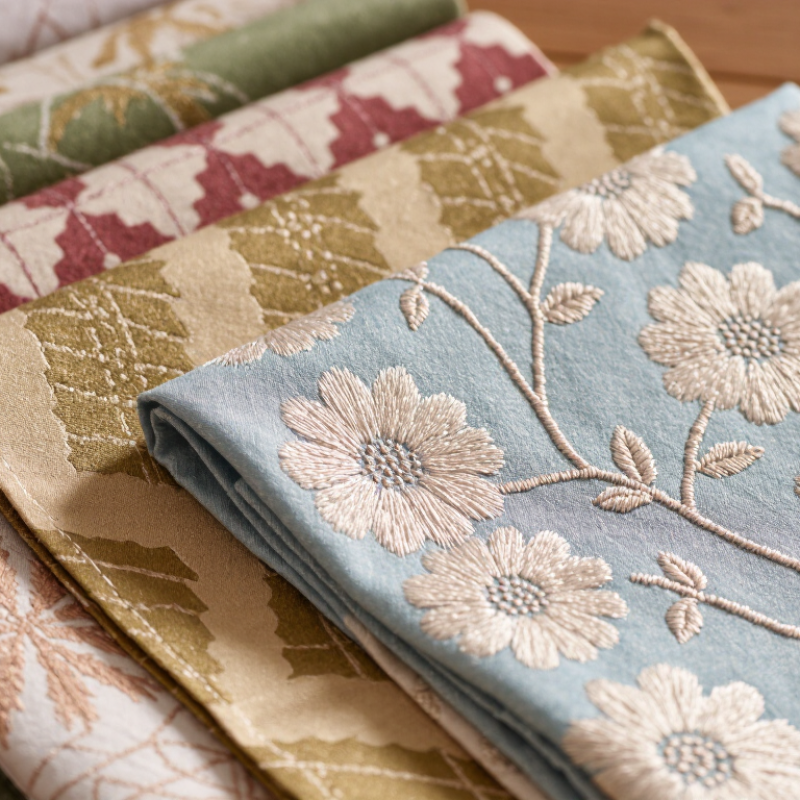
Embroidery pattern fabric is a textile decorated with stitched motifs, raised threads, or programmed needlework. Its foundation may be cotton, linen, rayon, polyester, or a blended material. The embroidery can cover the full surface or appear as small repeating details. Look closely. You may see the ground fabric, stitch direction, thread tension, backing, and pattern repeat.

This structure matters during global sourcing. Dense stitching adds texture, but it can also increase weight and production time. Poor tension may create puckering around flowers, borders, or geometric shapes. According to Textile Exchange’s Materials Market Report 2024, global fiber production reached about 124 million metric tons in 2023. That scale makes material selection more important, especially when buyers compare durability, fiber content, and waste risks. The International Trade Centre also emphasizes detailed product classification for international textile trade. Yet, embroidery details are not always captured clearly by broad fabric categories. That is a practical limitation.

Tips: Request a fabric swatch and a close-up image. Check stitch density, backing softness, colorfastness, and shrinkage after washing. Ask for the finished width, usable pattern repeat, and fabric weight. Test one sample before placing a large order. A beautiful pattern may still fail in production.

Key Materials, Techniques, and Design Features

Why Choose Embroidery Pattern Fabric for Global Sourcing?

Embroidery pattern fabric combines surface texture with practical material choices. In sourcing reviews, I examine fiber content, backing stability, stitch density, and colorfastness before judging appearance. Cotton offers a soft hand and breathable feel. Recycled polyester often provides sharper outlines and stronger dimensional stability. Textile Exchange’s 2024 Materials Market Report estimates global fiber production reached 124 million metric tonnes in 2023. Polyester represented about 57% of output, while cotton contributed roughly 19%. These figures explain why blended constructions remain common in international purchasing.

Technique affects both cost and performance. Satin stitches create smooth petals, while chain stitches add a visible, handcrafted rhythm. Appliqué can reduce thread use, but its edges need secure cutting and controlled bonding. Dense embroidery may cause puckering on lightweight fabrics. A 2024 report from the International Textile Machinery Federation highlights continuing investment in automation and digital production, yet skilled inspection remains necessary. Machines repeat patterns well. They do not always detect awkward tension.

Design details also influence logistics. Repeating motifs simplify cutting and reduce placement errors. Border embroidery needs accurate fabric alignment, especially for curtains, scarves, and ceremonial garments. I prefer testing a 30-centimeter sample before approving bulk production. One sample is not enough. Wash tests, rubbing tests, and needle-hole checks reveal weaknesses that photographs hide. My own review process is not flawless; I have underestimated backing stiffness before. That mistake changed how I compare materials across suppliers and climates.

Benefits for Global Sourcing Projects

Embroidery pattern fabric can strengthen global sourcing projects through visible differentiation. Buyers can compare motifs, stitch density, backing, and color accuracy before approving bulk production. In practical sampling, a raised floral border often reveals tension problems faster than a plain woven surface. Small flaws become easier to inspect.

The Textile Exchange Materials Market Report 2024 estimated global fiber production at 124 million tonnes in 2023. It also projects growth toward 160 million tonnes by 2030. This pressure makes material selection more important. Embroidery can add value without changing the base fabric completely. However, it may increase labor, thread consumption, and inspection time. That trade-off deserves honest costing.

Global sourcing teams also benefit from clearer quality specifications. A technical sheet can define stitch count, motif placement, color tolerance, fabric weight, and acceptable loose threads. The International Trade Centre emphasizes traceability and reliable supplier information in international textile trade. These controls support better supplier comparison and fewer surprises at delivery. Still, digital samples can mislead. Thread shine and hand feel may differ under warehouse lighting. Physical approvals remain necessary, especially across multiple production countries. Mistakes happen. Good sourcing systems leave room to learn from them.

Quality, Compliance, and Supplier Evaluation

Why Choose Embroidery Pattern Fabric for Global Sourcing?

Embroidery pattern fabric adds texture, visual depth, and a handmade impression to apparel and home products. In sourcing work, quality starts with the base cloth. Check fiber content, fabric weight, embroidery density, backing stability, and surface defects before ordering. A sample may look attractive under showroom lights, yet reveal loose threads or uneven stitches outdoors. Small details matter.

Reliable suppliers should provide consistent samples, production records, and test reports. Useful checks include colorfastness, shrinkage, seam strength, abrasion resistance, and dimensional stability after washing. Ask how the supplier controls thread tension and inspects fabric rolls. Photos are helpful, but physical inspection remains more dependable. A pre-production sample can expose problems early. It is not a complete guarantee.

Compliance requires attention to the destination market, product use, labeling rules, restricted substances, and customer safety requirements. Request traceability for fibers, dyes, and backing materials. Supplier evaluation should include factory capability, quality procedures, worker safety practices, delivery history, and communication speed. An independent audit may reveal gaps that a polished questionnaire misses. I have seen good samples followed by weaker bulk fabric. That risk deserves a written inspection plan, clear tolerance limits, and agreed corrective actions. Even then, some uncertainty remains.

How to Plan International Purchasing and Logistics

Why Choose Embroidery Pattern Fabric for Global Sourcing?

International purchasing needs more than attractive fabric samples. Embroidery pattern fabric can add texture, detail, and perceived value to finished products. However, planning must begin with clear specifications. Confirm the fiber content, embroidery density, fabric width, color references, backing material, and acceptable defect limits. A small sample may look perfect, while bulk production reveals loose threads or uneven patterns.

Request a pre-production sample before approving the order. Ask the supplier to record inspection results, packing methods, and production capacity. I have learned that written details prevent costly misunderstandings. My first sourcing plan underestimated carton volume, which increased freight costs. That mistake still influences how I calculate shipment weight and warehouse space.

Tips: Compare at least two transport options. Sea freight often suits larger fabric orders, while air freight may help with urgent samples. Confirm the trade terms, export documents, invoice details, packing list, and country-of-origin information before dispatch. Use moisture-resistant packaging, especially during humid seasons. Keep a small fabric cutting from the approved lot for later comparison. Also, allow extra time for customs review and local delivery. A perfect schedule rarely survives every port delay.