$0.00
Why Choose Custom Card Game Print Services?
The tabletop games industry is expanding, but competition is becoming more visual and demanding. Grand View Research valued the global board games market at approximately USD 13.06 billion in 2023. Its report also projects continued growth through 2030. These figures suggest real opportunity for independent designers, publishers, and established game brands. They also reveal a difficult truth: a strong concept may not survive poor production quality.
Custom Card Game Print services connect creative ideas with controlled manufacturing. A professional printer can advise on card stock, coating, color calibration, corner rounding, and packaging structure. For example, a 300 gsm card with a linen finish can feel stable during repeated shuffling. A precise tuck box can protect cards while improving shelf presentation. These details influence playability, perceived value, and customer trust.
Industry reports cannot replace practical testing. Prototypes still need to survive hundreds of shuffles, bright table lighting, and occasional spills. Print samples may also expose problems that digital files hide, such as muddy shadows or weak text contrast. This is where experienced production teams become valuable. They compare proofs, inspect registration, and document revisions before mass production. The process is not flawless. Even careful teams can underestimate freight delays, color variation, or packaging waste. That limitation deserves honest planning.
The Association of American Publishers continues to emphasize the importance of physical product quality and manufacturing consistency across publishing categories. For card game creators, dependable Card Game Print production can turn an attractive prototype into a reliable, memorable product. The best choice balances design ambition, production evidence, budget discipline, and player experience.
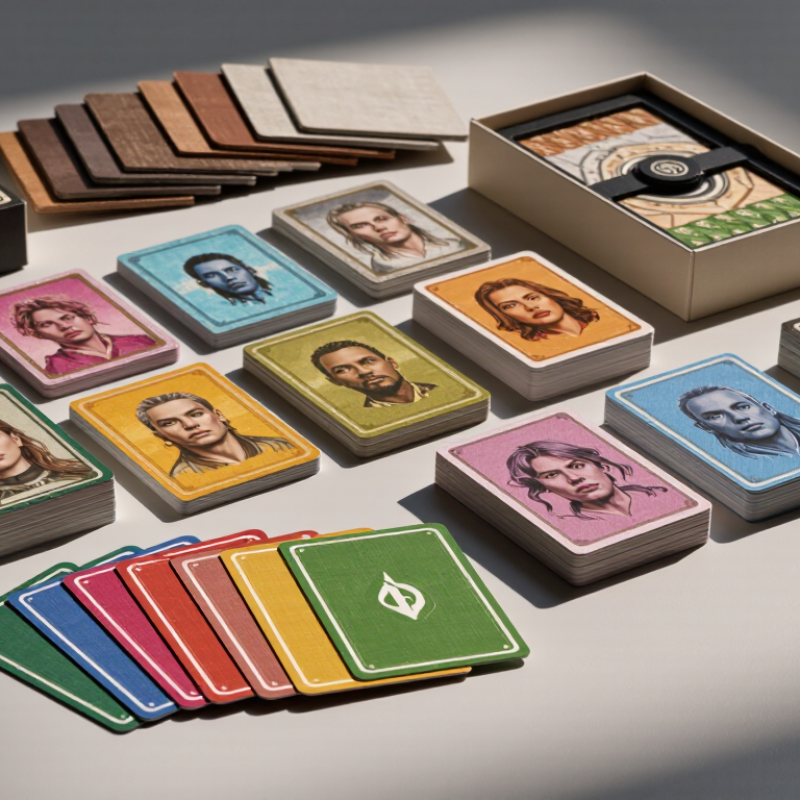
Custom card game print services turn your game files into physical cards, usually with professional equipment and quality checks. These services may handle file preparation, card cutting, corner rounding, packaging, and small or large print runs. You can often select card size, paper thickness, surface coating, box style, and instruction sheet options.
A dependable service normally provides a digital proof before production. Some providers also offer a physical prototype, which helps you inspect color, shuffle feel, and text readability. My first prototype looked attractive, but the cards felt too slippery during play. That small issue changed the coating choice. Printing is not only about sharp artwork. It also involves durability, handling comfort, and production consistency. Ask about color tolerances, replacement policies, and how safely finished decks are packed.
Tips: Prepare files with correct bleed and safe margins. Keep important text away from cutting edges. Request a prototype when your budget allows. Test the cards with real players, not only on a screen. Check whether the box fits sleeved cards. A beautiful design can still fail during repeated shuffling. Costs may also rise through hidden setup fees, revisions, or complex packaging, so request a detailed quotation before approving production.
Custom card game print services allow creators to select the deck size, card format, artwork, packaging, and finishing options that best match their game. The chart below compares the card counts of established deck formats, showing why flexible production is important for different game concepts.
Reference formats: a standard French-suited deck contains 52 cards, a traditional German-suited deck commonly contains 32 cards, and a traditional tarot deck contains 78 cards. Custom printing makes it possible to produce decks with alternative card counts and tailored components.
Why Choose Custom Card Game Print Services?
How the Custom Card Game Printing Process Works
Custom card game printing begins with a clear production brief. You provide card dimensions, quantity, artwork files, and packaging requirements. A print specialist then checks bleed, safe zones, color settings, and image resolution. Small errors can affect an entire production run.
A digital proof follows. This shows the card fronts, backs, borders, and box layout before printing. A first proof is rarely perfect. Colors may appear warmer than expected, or thin lines may lose clarity. Reviewing a physical sample helps reveal problems that a screen can hide. Experienced printers also recommend suitable card stock, protective finishes, and corner styles based on handling needs.
After approval, the files enter prepress preparation. Sheets are printed, cut, sorted, and checked for alignment. Quality control should compare card counts, color consistency, edge condition, and packaging accuracy. I have found that simple checklists prevent surprisingly expensive mistakes. Still, no process removes every risk. A complex illustration may need another adjustment after cutting, especially when borders are narrow. Clear communication during this stage keeps changes documented and production reliable.
Custom printing also supports practical testing. A small sample run can help evaluate shuffle feel, coating grip, and box strength before a larger order. This hands-on step often exposes weaknesses early. It may add time, but it protects the final playing experience.
A practical overview of customization benefits, production stages, standard specifications, and typical lead times
| Stage / Dimension | What Is Customized or Completed | Common Technical Data | Typical Time Range | Why It Matters |
|---|---|---|---|---|
| 1. Game Concept and Specifications | Card count, card size, box structure, inserts, tokens, and packaging format are defined before artwork production. | Common card sizes include approximately 63 × 88 mm and 57 × 89 mm; custom dimensions are also possible. | 1–5 business days | A clear specification reduces redesigns, material waste, and unexpected packaging limitations. |
| 2. Artwork Preparation and Prepress | Files are checked for dimensions, color mode, typography, image quality, cut lines, and safe areas. | CMYK artwork, 300 ppi raster images, vector text where possible, and a typical 3 mm bleed on trimmed edges. | 1–3 business days | Proper prepress preparation helps prevent clipped artwork, soft images, and color inconsistencies. |
| 3. Digital Proofing | A digital proof is reviewed for layout, spelling, card order, bleed, and packaging artwork before production. | Proofs normally show layout and content accurately; screen colors may differ from the final printed result. | 1–3 business days per revision cycle | Approval at this stage helps prevent costly corrections after printing begins. |
| 4. Printing | Card fronts, backs, rulebooks, boards, and packaging panels are printed using digital or offset methods. | Digital printing is generally suitable for shorter runs and variable content; offset printing is often more efficient for larger uniform runs. | 2–10 business days | Choosing the appropriate printing method balances quantity, color consistency, setup cost, and unit price. |
| 5. Coating and Finishing | Printed sheets may receive aqueous coating, varnish, or film lamination before cutting. | Common surface choices include matte, gloss, and linen-textured finishes; coating improves handling and surface resistance. | 1–4 business days | The finish affects glare, shuffle feel, appearance, scuff resistance, and the perceived quality of the game. |
| 6. Cutting, Rounding, and Die-Cutting | Cards are trimmed, corners are rounded, and custom components such as tokens or punchboards are die-cut. | Rounded corners are commonly used for playing cards; corner radius and die-cut shapes are specified during prepress. | 1–4 business days | Accurate cutting supports consistent card dimensions, smooth handling, and reliable gameplay. |
| 7. Collation and Assembly | Cards are counted and arranged into decks, then combined with inserts, tokens, rulebooks, and boxes. | Assembly requirements depend on deck count, component variety, packaging type, and whether sorting is manual or automated. | 2–7 business days | Accurate collation ensures every game contains the correct cards and components in the intended order. |
| 8. Quality Control | Samples are checked for print defects, color variation, alignment, cutting accuracy, surface damage, and component completeness. | Typical checks include random sampling, visual inspection, count verification, and comparison with the approved proof. | Throughout production and before dispatch | Quality control helps identify manufacturing problems before the finished games reach distributors or players. |
| 9. Packing and Delivery | Finished sets are packed for shipment, with outer cartons selected according to product weight, size, and protection needs. | Transit time varies by destination and service; protective packaging helps reduce corner damage, crushing, and moisture exposure. | 2–10 business days for transit, depending on destination | Appropriate packing protects the finished product and supports efficient storage and distribution. |
Note: Time ranges are typical planning estimates for custom card game production. Actual schedules vary according to order quantity, artwork readiness, component complexity, proof revisions, finishing requirements, and shipping destination.
Choosing a custom card game print service matters because materials affect more than appearance. They influence shuffling, durability, grip, and player comfort. Standard card stock can feel familiar, while thicker stock creates a sturdier, more premium impression. A black-core layer can reduce show-through when artwork is dark or detailed. Recycled paper offers a natural texture, although its surface may appear slightly less uniform.
Finishes change the playing experience. Matte coating reduces glare under bright lights and feels smooth between the fingers. Gloss coating makes colors look sharper, but fingerprints can become visible. Linen texture adds grip and helps hide small surface marks. Foil accents can highlight a title, symbol, or border, while spot varnish creates contrast between dull and shiny areas. Rounded corners also deserve attention, especially for games handled repeatedly.
I learned this through prototype testing. A heavy stock looked impressive on the table, but it made large decks harder to shuffle. My first finish choice was too glossy. It photographed well, yet reflected overhead lamps during play. That was a useful mistake. Ask the printer for physical samples before approving production. Test them with real sleeves, hands, and lighting. Material samples reveal details that digital proofs often miss.
Custom card printing depends on material, color control, finishing, and order volume. In production work, I have seen small artwork errors become expensive after cutting. A 2 mm bleed, correctly prepared, can prevent white edges. That detail matters.
Paper thickness affects shuffle feel, stiffness, and durability. Coating changes glare and hand friction. Linen-textured stock may improve grip, but it can soften tiny text. Color accuracy also depends on calibrated proofing and standardized files. ISO 12647-2 provides recognized process targets for offset color control. Smithers’ The Future of Global Printing to 2028 values worldwide printing at more than 800 billion dollars annually, showing how strongly efficiency influences quotations. Digital printing usually suits small runs, while offset printing can reduce unit cost at higher volumes. However, setup waste may make a low-volume offset order uneconomical. I have sometimes underestimated packaging costs. That was a useful correction.
Tips: Request a physical proof, not only a screen preview. Confirm card dimensions, corner radius, bleed, and color profile. Ask whether the quoted price includes sorting, wrapping, inspection, and delivery. Compare total delivered cost. The cheapest estimate may hide weak stock or limited quality checks. Also, test one complete deck before approving thousands. Samples reveal problems that spreadsheets cannot.
Why Choose Custom Card Game Print Services?
Custom printing turns a game concept into a physical experience. Card size, paper weight, coating, and edge finish affect how players shuffle and handle each card. During production, a careful printer checks these details against the game’s intended use. A fast card game may need smooth handling, while a strategy game may benefit from thicker stock. Small choices matter.
Custom printing also supports consistent branding across the deck, tuck box, rulebook, and promotional materials. Colors should match the visual identity, but screen colors can mislead designers. A printed proof reveals unexpected shifts, such as a blue symbol appearing too dull or a dark background hiding small text. Clear contrast improves readability. It also helps players identify card types quickly.
Not every first proof works.
I have learned that practical testing is more reliable than appearance alone. Designers should shuffle sample cards, inspect corners, and read instructions under normal lighting. A printer can compare batches, confirm measurements, and document approved specifications. These steps reduce avoidable variation during larger production runs. Still, custom work sometimes exposes weaknesses in the original design. A crowded icon or fragile border may look fine digitally, yet fail during real play. That uncomfortable discovery can lead to a stronger, more usable game.