
$0.00
A Tornado Toilet may look like a simple bathroom fixture, but buying one across borders involves more than comparing prices. The flushing system, bowl shape, rough-in distance, and water connection all affect whether it will work in a specific bathroom. A sleek product photo cannot show every detail. Buyers should check technical drawings and installation requirements before placing an order.
The term “tornado flush” often describes a swirling water action designed to rinse the bowl effectively. Performance can still vary by model, plumbing setup, and maintenance. Ask suppliers for clear specifications, independent test information where available, and practical warranty terms. Do not assume every market uses the same measurement standards or accepts the same product documentation. Local requirements matter.
Small details count. A few centimeters can change installation plans. So can the location of a water inlet. Buyers should also compare water use, replacement-part availability, shipping protection, and the seller’s after-sales support. These checks may feel slow, and no checklist removes every risk. A supplier’s confident claim is not proof. Request written answers, review them against the product documents, and keep records of agreed specifications. The following seven buying tips offer a practical way to assess a Tornado Toilet, spot avoidable mismatches, and make a more informed purchase for the intended bathroom.
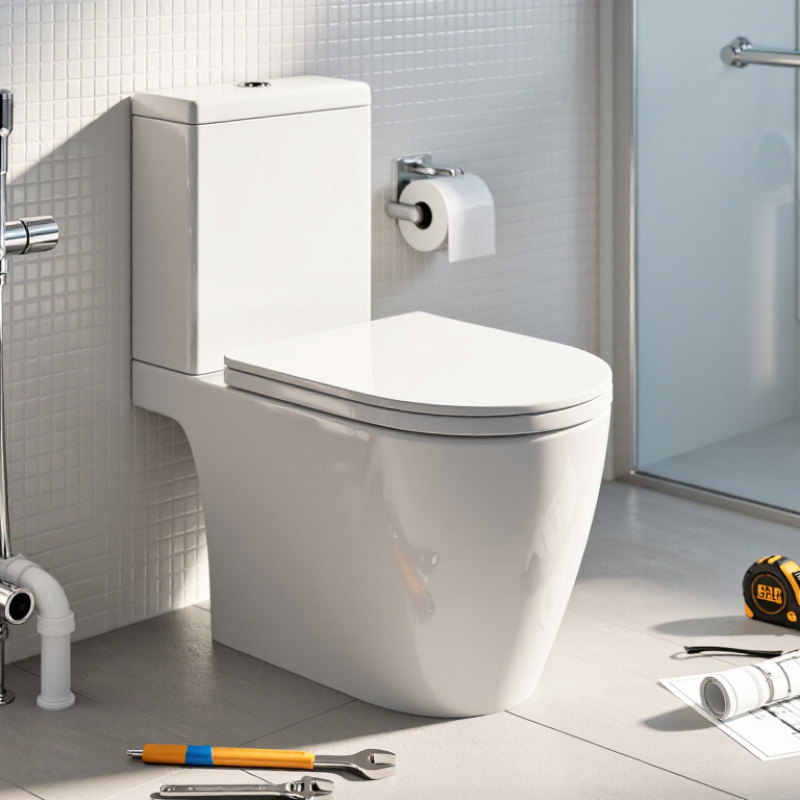
A tornado-flush toilet uses directed water outlets to send rinse water around the bowl in a circular path. The aim is to wash more of the bowl surface while moving waste toward the trapway. The term is not a guarantee of one standard design; outlet position, rim shape, and water volume vary. Look inside the bowl or ask for a cutaway diagram. You should be able to identify where the water enters and how it is guided.
Watch closely. During a showroom flush, check whether water actually swirls around the bowl or simply pours down one side. Notice dry patches, splashing, and whether the rinse reaches the front and rear surfaces. A short video can help when buying remotely, but ask whether it shows the exact model. Bowl shape and installation can affect what you see. It is easy to focus on the word “tornado” and overlook the rinse pattern itself. Also check the manufacturer’s flushing instructions and water-use specifications before comparing models.
These are U.S. maximum flush-volume benchmarks, not measurements of tornado-flush performance. When comparing toilets, confirm the applicable local requirements and ask for a demonstration or test evidence showing that water swirls around and rinses the full bowl.
When comparing tornado-flush toilets, use the MaP score as one clear measure of waste-clearing performance. MaP testing reports how many grams of solid waste a toilet removes under a standardized test. Some models score up to 1,000 g. That number is useful, but it does not guarantee identical results in every home. Check the score for the exact model and configuration you plan to buy.
A high score can offer reassurance, especially in a busy household. Still, it measures clearing, not every part of the flush. It does not tell you how well the bowl rinses, how much water each flush uses, or whether the sound suits a small bathroom.
Look for test information alongside flush volume and bowl-cleaning details. For global buyers, confirm that the model sold in your market matches the tested version. Water supply conditions and installation can affect everyday performance. I would not choose a toilet by score alone; even a 1,000 g result leaves practical questions unanswered. Ask for the test basis, check the installation requirements, and compare the figures with your household’s needs. One more check. Compare warranty and spare-part availability locally, too.
When comparing toilets, check the water-use figure before focusing on shape or finish. In the United States, a WaterSense-labeled toilet uses no more than 1.28 gallons per flush, about 4.85 liters. The label also indicates that the model has met efficiency and performance criteria, not just a low-volume target. Look for the certification on product documents or packaging. Do not rely on a vague claim such as “water-saving.”
The number still needs context.
A toilet’s real performance depends on installation, drainage design, and how well it clears the bowl with one flush. Ask for the exact model’s test information, especially when buying for a different country. Flush standards and plumbing conditions can vary. Check that the outlet, trapway, and connection dimensions match the site. A dual-flush model may list separate volumes, so compare its stated flush options rather than assuming every flush uses the maximum amount. Small detail. If technical sheets are unclear, request written confirmation from the supplier before ordering. I would not treat the lowest figure as an automatic win; a toilet that needs repeated flushing can waste water and frustrate users. That trade-off is easy to overlook.
7 Tornado Toilet Buying Tips for Global Buyers
Verify Local Standards, Including ASME A112.19.2/CSA B45.1 and EN 997
For global buyers, a standards mark is only useful when it matches the exact toilet model and destination market. ASME A112.19.2/CSA B45.1 covers ceramic plumbing fixtures, while EN 997 addresses WC pans and WC suites with integral traps. Requirements and accepted editions can vary by country. Confirm applicable rules with the local importer or authority before placing an order.
Tips: Request a test report or certificate that names the model and standard edition. Match the model number across the report, carton, and product label. Check whether the toilet is a pan-only unit or a complete suite. Standards compliance does not automatically confirm local installation approval, cistern compatibility, or suitable rough-in dimensions.
One easy mistake is trusting a generic certificate that covers a similar-looking product. Ask the supplier to clarify any model-number differences in writing. Check the document’s issuing laboratory and scope, too. A mismatch matters. Keep copies of the records with your purchase documents, and verify that the stated standard remains accepted in your market. One detail can be easy to miss.
| Tip | Buying Check | What to Verify | Useful Evidence or Action |
|---|---|---|---|
| 01 | Confirm the applicable local standard | Check which plumbing product standards and local building or plumbing codes apply at the installation destination. Relevant examples include ASME A112.19.2/CSA B45.1 in North America and EN 997 in markets that use the European standard. Requirements and accepted editions can vary by jurisdiction. | Request the exact model’s test reports, certification details, and applicable standard edition. Confirm acceptance with the local authority, importer, or project specifier. |
| 02 | Match the toilet to the installation layout | Measure the rough-in, the distance from the finished wall to the waste outlet or mounting position as specified by the toilet design. Check the outlet arrangement, available floor space, door clearance, and water-supply position. | Compare the installation drawing with site measurements. Do not assume one rough-in dimension or outlet configuration fits every market or model. |
| 03 | Check flush performance and water use | Review the stated flush volume and performance data for the exact model. Water-use limits and test or labeling requirements differ by country, region, and product category. | Ask for model-specific test documentation and confirm that the flush volume meets local rules and project requirements. Avoid relying on a general product-family claim. |
| 04 | Verify the water-supply conditions | Confirm the toilet’s specified operating pressure, fill-valve requirements, inlet connection, and any stated restrictions on supply conditions. Low or unstable pressure can affect operation on models that depend on particular inlet conditions. | Compare the installation manual with the building’s measured water-supply conditions and local connection requirements before ordering. |
| 05 | Review the bowl, trapway, and waste connection | Check the pan or bowl type, trapway configuration, waste outlet orientation, and compatibility with the drainage connection. Verify that the specified installation method suits the local plumbing layout. | Use the dimensional drawing and installation instructions to confirm clearance, outlet alignment, sealing method, and required fittings. |
| 06 | Assess materials, finish, and included parts | Confirm the ceramic body and glaze description, dimensions, color, seat compatibility, and whether the seat, flush components, fixing hardware, and connection parts are included. | Request a complete packing list and product specification. Check that replacement parts and compatible service components are available in the destination market. |
| 07 | Plan for shipping, inspection, and after-sales support | Ceramic sanitaryware can be damaged in transit. Check packaging protection, inspection procedures, spare-part support, warranty terms, and the process for handling breakage or defects. | Agree on packaging and shipment inspection requirements in advance. Keep the model identification, installation manual, test documents, and warranty details with the purchase records. |
Buyer note: “Tornado” may describe a flushing design or product feature; it does not by itself establish compliance with a plumbing standard. Verify documentation for the exact model and confirm local acceptance before purchase.
Before comparing flush performance, confirm the installation envelope at the actual site. Measure from the finished wall—not the baseboard—to the center of the floor outlet. Twelve inches is common, but 10- and 14-inch rough-ins also exist. Check the drawing for the exact model, then allow for tile, skirting, and clearance around the bowl. A few millimeters can matter. Old bathrooms are not always square, so recheck before ordering.
Match the trapway and flange position, too. The trapway must align with the drain, while the bowl’s footprint should cover the existing floor opening. Do not assume a wider trapway guarantees better performance; flushing depends on the complete fixture design and installation. Check the water-supply location, shutoff valve, connector length, and the fixture’s stated pressure range. A supply line that looks close may still kink behind the bowl.
Water use is worth checking against independent guidance. The U.S. EPA WaterSense residential toilet guidance lists 1.28 gallons per flush for labeled models, compared with the federal standard of 1.6 gallons; EPA estimates these models use about 20% less water than standard toilets. Ask for certified product documentation, not just a sales claim. Small details matter. A photograph of the flange, supply valve, and tape measure can help suppliers verify compatibility before shipment.