
Skip to content

Top 10 Thermal Bond Non Woven Fabric Manufacturers

thermal bond non woven fabrics are formed by heating thermoplastic fibers until they bond. This process creates a stable web without traditional chemical binders. Manufacturers use these materials in hygiene products, filtration media, furniture padding, insulation, and medical packaging. Performance depends on more than appearance. Fiber selection, bonding temperature, web uniformity, basis weight, and cooling control all matter.

This guide examines ten manufacturers with practical buying criteria in mind. We consider production experience, technical capability, quality systems, customization, delivery reliability, and application support. Evidence may include factory information, product specifications, certification records, and documented market experience. Claims should still be checked directly with each supplier. A polished website is not proof of consistent production. Small samples can also hide problems that appear during high-speed converting.

The strongest suppliers explain their testing methods clearly. They can discuss tensile strength, thickness recovery, air permeability, thermal resistance, and lot-to-lot variation. Some offer recycled fibers or lower-energy processes, but environmental claims require verification. Cost matters, yet unstable quality can create waste, downtime, and customer complaints. The ranking is therefore a practical reference, not an absolute verdict. Regional capacity, order volume, and application requirements may change the result. This review may miss newer producers. That is worth remembering. Buyers should request samples, technical datasheets, compliance documents, and recent test results before making a final decision.

Top 10 Thermal Bond Non Woven Fabric Manufacturers

What Thermal Bond Nonwoven Fabric Is and How It Is Made

Thermal Bond Nonwoven Fabric: What It Is and How It Is Made

Thermal bond nonwoven fabric is made by joining loose fibers with heat. It does not rely on weaving or knitting. Common fibers include polyester, polypropylene, and bicomponent fibers with low-melting outer layers. The final fabric may feel soft, firm, bulky, or resilient, depending on fiber choice and bonding conditions.

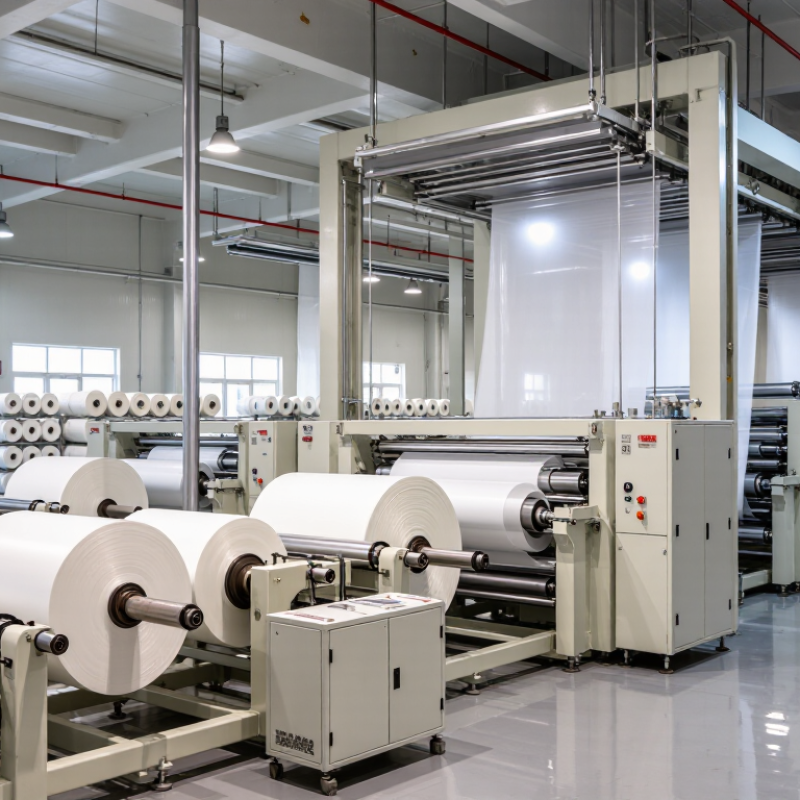
Manufacturing begins with fiber opening and blending. A carding machine then aligns fibers into a thin web. Air laying can create a more random structure. The web passes through a hot-air oven or heated calender. Heat softens selected fibers, while pressure forms stable bonding points. Cooling fixes the fabric’s thickness and shape. Experienced manufacturers monitor temperature, line speed, pressure, and moisture. A small temperature drift can change strength, loft, or surface feel. The process is efficient, but it is not flawless. Uneven fiber distribution may create weak areas, even when the roll looks consistent.

Tips: Check basis weight, thickness, tensile strength, and recovery before choosing a supplier. Ask for production samples from different lots. Inspect edges and surfaces under clear lighting. For absorbent or filtration uses, test airflow and liquid behavior. Do not judge quality by softness alone; a softer fabric may lose structure during use. Supplier records, process controls, and independent test reports can support a more reliable decision.

Key Criteria for Evaluating Thermal Bond Nonwoven Fabric Manufacturers

Top 10 Thermal Bond Non Woven Fabric Manufacturers

Key Criteria for Evaluating Thermal Bond Nonwoven Fabric Manufacturers

A credible top-10 list should measure manufacturing evidence, not promotional language. INDA’s recent industry outlook places global nonwoven production above 14 million metric tons annually, increasing buyer choice and supplier risk. Thermal bonding quality depends on fiber selection, calender temperature, line speed, and cooling control. Ask for production records.

Start with consistency. Request samples across several basis weights, then test tensile strength, elongation, air permeability, thickness, and thermal shrinkage. ISO 9073 test methods provide useful comparability. A capable manufacturer should share tolerances, inspection frequency, and batch traceability. Ask for evidence.

Capacity also matters. Check working widths, minimum order quantities, lead times, spare-line availability, and experience with recycled or bicomponent fibers. Smithers’ nonwovens market analysis highlights hygiene, filtration, and construction as major demand areas, but each application needs different pore structures and bonding levels. One material cannot solve every need.

Sustainability claims deserve careful review. Verify recycled content, energy data, wastewater controls, and relevant chain-of-custody documents. ISO 9001 can support quality management, but certification alone does not prove stable fabric performance. I would compare at least three production lots, not one perfect sample. That takes longer. It also exposes weak process control. A supplier’s technical response should explain failures honestly, including shrinkage, uneven bonding, or fiber migration, rather than hiding them behind attractive test averages.

Top 10 Thermal Bond Nonwoven Fabric Manufacturers

The Top 10 Thermal Bond Nonwoven Fabric Manufacturers are often compared by process control, material consistency, and application knowledge. Thermal bonding uses heat to join synthetic fibers without liquid adhesives. This method creates lightweight sheets for filtration, hygiene products, packaging, insulation, and protective liners. A reliable manufacturer should explain fiber type, web structure, bonding temperature, and finished fabric weight clearly.

Look for suppliers that provide stable GSM values, even thickness, and measured tensile strength in both directions. Air permeability also matters when the fabric supports filtration or ventilation. During factory evaluation, request samples from several production lots, not one carefully selected roll. Check edge quality, odor, shrinkage, and bonding points after heating. Small defects become visible during cutting.

The strongest manufacturers usually maintain documented testing systems and traceable raw material records. They should share technical data, inspection methods, and realistic production tolerances. Ask whether their equipment supports spunbond, staple fiber, or blended structures. Each option behaves differently under pressure and heat. Factory experience matters.

A ranking can still mislead. A producer that excels at high-volume hygiene fabric may not suit automotive insulation. Price alone is a weak filter. Delivery history, communication, sample accuracy, and corrective action deserve equal attention. I would also verify certificates directly, because outdated documents sometimes remain in sales files. That detail is easy to overlook.

Product Capabilities, Certifications, and Market Applications

Top 10 Thermal Bond Non Woven Fabric Manufacturers

Selecting the top 10 thermal bond non woven fabric manufacturers requires more than comparing prices. Product capability matters first. Leading producers should offer polypropylene, polyester, and bicomponent fibers. They should also control basis weight, thickness, tensile strength, and pore structure. These details affect filtration, hygiene, automotive, furniture, and construction performance.

Market evidence supports this demand. Grand View Research valued the global nonwoven fabric market at about USD 53.5 billion in 2023. Its report also projects strong growth through 2030. Smithers, in The Future of Nonwovens to 2028, identifies hygiene, healthcare, filtration, and durable technical textiles as important growth areas. Manufacturers serving these markets need stable thermal bonding lines, laboratory testing, and traceable raw materials. Some facilities can produce roll goods from lightweight liners to heavy insulation layers. Not every supplier publishes enough test data. That is a weakness.

Certifications provide another practical filter. ISO 9001 supports process consistency, while ISO 14001 indicates structured environmental management. For medical or skin-contact applications, buyers may request OEKO-TEX Standard 100 evidence and chemical compliance documentation. Automotive programs may require IATF 16949 or customer-specific quality systems. Factory audits should verify certificates, not merely collect copies. Product samples should be tested for air permeability, peel strength, shrinkage, and aging. A fabric may look uniform yet fail after heat exposure. That uncomfortable possibility deserves attention.

Top 10 Thermal Bond Non Woven Fabric Manufacturers — Product Capabilities, Certifications, and Market Applications
Rank Anonymized Manufacturer Profile Primary Thermal-Bond Technology Typical Fiber Composition Commercial Product Range Common Certification Scope Key Market Applications
1 Profile A
Large-scale integrated producer
Through-air bonding and hot-air bonding Polyester, polypropylene, bicomponent fibers 15–200 g/m²; rolls, sheets, and die-cut formats ISO 9001OEKO-TEX® Standard 100REACH compliance Hygiene products, filtration media, automotive interiors, furniture padding
2 Profile B
Automotive-focused producer
Thermal calendering and needlepunch preforming Polyester, recycled polyester, polypropylene 40–300 g/m²; engineered multilayer constructions IATF 16949ISO 14001ISO 9001 Trunk liners, headliners, door panels, acoustic insulation, wheel-arch liners
3 Profile C
Hygiene-material specialist
Through-air bonding with hydrophilic or hydrophobic finishing Polypropylene, polyester, polyethylene/polyester bicomponent fibers 12–100 g/m²; soft, highly uniform web structures ISO 9001ISO 13485Skin-contact testing Acquisition-distribution layers, absorbent cores, wipes, feminine-care products
4 Profile D
Filtration-grade supplier
Thermal bonding with controlled porosity and surface treatment Polyester, polypropylene, nylon, bicomponent fibers 20–180 g/m²; customized pore structure and air permeability ISO 9001ISO 14001ISO 16890 testing support HVAC filters, liquid filtration, industrial dust collection, battery separators
5 Profile E
Sustainable-fiber producer
Thermal bonding of recycled and low-melt fiber blends Recycled polyester, recycled polypropylene, natural-fiber blends 30–250 g/m²; mono-material and recycled-content options GRSISO 14001OEKO-TEX® Sustainable packaging, apparel interlinings, home textiles, automotive components
6 Profile F
Technical-textile converter
Hot-air bonding, thermal point bonding, laminating Polyester, polypropylene, polyethylene, aramid blends 25–500 g/m²; laminated and coated constructions ISO 9001REACH complianceRoHS support Protective clothing, construction membranes, cable wrapping, industrial insulation
7 Profile G
Medical and healthcare supplier
Thermal bonding with cleanroom-controlled converting Polypropylene, polyester, polyethylene/polyester bicomponent fibers 20–120 g/m²; low-lint and soft-touch grades ISO 13485ISO 9001Biocompatibility testing Medical gowns, surgical drapes, wound-care components, mattress covers
8 Profile H
Building-materials producer
Thermal bonding and composite reinforcement Polyester, polypropylene, glass-fiber-supported blends 60–600 g/m²; high-strength reinforcement grades ISO 9001ISO 14001Fire-performance testing Roofing underlay, wall insulation, geotextiles, flooring underlayment
9 Profile I
Furniture and bedding supplier
Through-air bonding and thermal calender bonding Polyester, polypropylene, recycled polyester fibers 40–350 g/m²; lofted, resilient, and cushioning grades ISO 9001OEKO-TEX®Flammability testing Mattress pads, quilt backing, sofa padding, upholstery backing, comforters
10 Profile J
Specialty nonwoven developer
Thermal bonding with additive, antistatic, flame-retardant, or absorbent finishes Polyester, polypropylene, nylon, viscose, specialty bicomponent fibers 20–400 g/m²; custom widths, colors, finishes, and slit rolls ISO 9001REACH complianceCustomer-specific validation Electronics protection, agriculture covers, filtration, packaging, specialty composites

Note: Manufacturer names and brands are intentionally omitted. Certification availability, product specifications, and market applications vary by production site, product grade, and customer qualification requirements.

How to Compare Suppliers and Select the Right Manufacturer

Comparing thermal bond non woven fabric suppliers requires more than checking price per kilogram. Start with a controlled specification covering fiber type, GSM, width, color, thickness, and bonding strength. Ask for evidence. Request recent test reports, production samples, and batch records instead of relying on sales promises. A reliable manufacturer should explain how bonding temperature and line speed affect softness, loft, and tensile performance.

Evaluate at least ten potential manufacturers using the same sample requirements. Inspect roll edges, surface uniformity, odor, and winding tension. Test samples after storage and moderate heat exposure, because fabric can change after shipment. Check laboratory equipment, calibration records, incoming fiber controls, and final inspection procedures. Traceability matters when a defect appears in one carton. So does capacity. A supplier may offer an attractive sample but lack enough stable output for monthly orders.

Compare minimum order quantities, lead times, packaging, payment terms, and response speed. Ask how they handle color variation or failed batches. Their answer reveals practical accountability. Do not select the lowest quotation automatically. A low price can hide weaker fibers, inconsistent bonding, or expensive rework. One imperfect area deserves attention: sample testing rarely matches full production exactly. Require a pilot run and approve a retained reference sample before scaling. Then review performance against the original application, whether filtration, hygiene products, furniture padding, or automotive interiors.