$0.00
Surface-mounted lighting has moved well beyond the plain white ceiling disk. In 2026, buyers can choose slim LED disks, flush-mount fixtures, surface-mounted panels, wraparound lights, linear battens, and compact bulkhead fittings. The right option depends on more than appearance. Ceiling height, glare, maintenance access, and the task beneath the fixture all matter. A bright panel can still feel harsh over a kitchen table.
The U.S. Department of Energy’s LED Lighting guidance reports that LED products use at least 75% less energy and can last up to 25 times longer than incandescent lighting. That benchmark helps explain why integrated LED fixtures now appear across homes, offices, corridors, and retail spaces. It does not mean every fixture performs equally. Compare lumen output, color temperature, color rendering, dimming compatibility, and warranty details before choosing. Small specifications matter.
Light affects more than visibility. Lighting researcher Dr. Mariana Figueiro has described light as “the most powerful synchronizer of the human circadian system.” Her work is a useful reminder that placement and timing deserve attention, too. A cool, high-output surface-mounted panel may suit a workshop, yet feel wrong in a bedroom. There is no universal winner.
This guide compares the leading Surface Mounted Light types for 2026, including their strengths, limitations, and best-fit spaces. It also flags a practical detail that product listings often bury: installation conditions can change the final result. That part is easy to overlook.
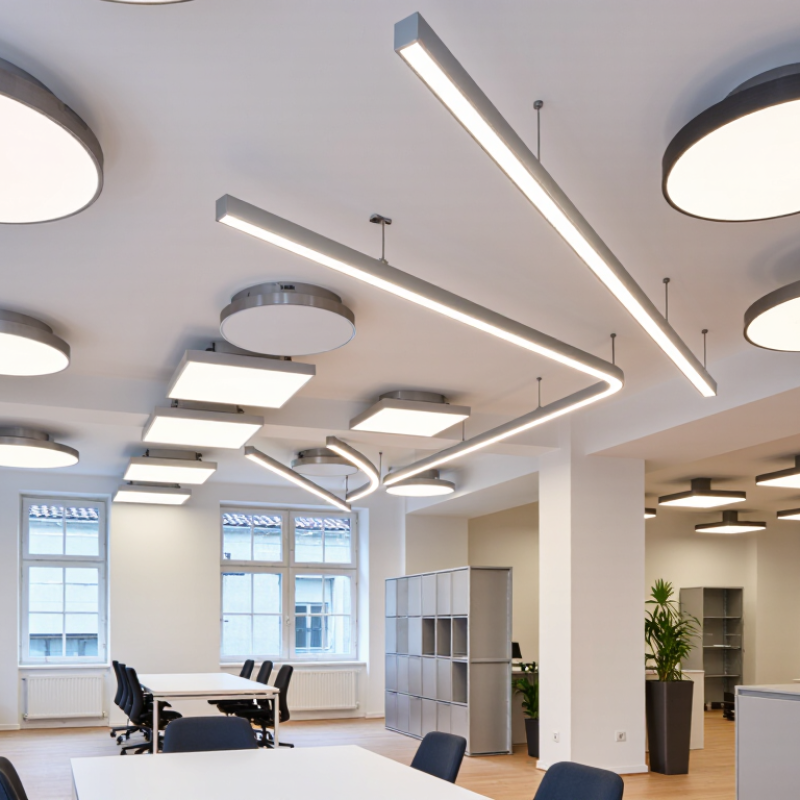
A surface-mounted light is fixed to the visible face of a ceiling or wall, rather than set inside a cavity. Its base, canopy, or mounting plate attaches to a junction box or supporting surface; the lamp body remains visible below it. No ceiling void needed. That makes this format useful in concrete rooms, shallow ceilings, and renovations where cutting a recess is impractical.
The category includes flush-mount discs, semi-flush fixtures, linear battens, and surface-mounted panels. Their shapes differ, but the defining feature is the installation method, not the lamp technology. A quick on-site check helps: if the fixture projects below the finished surface and its housing stays accessible, it is generally surface-mounted. Terminology can blur at the edges, especially with slim panels, so product drawings and mounting instructions matter more than appearance alone.
Efficiency is relevant, but it does not define the category. The International Energy Agency’s 2023 Tracking Clean Energy Progress report estimates lighting uses about 15% of global electricity. That figure supports choosing efficient equipment, yet glare, heat, maintenance access, and ceiling height still affect real-world performance. A bright fixture can look impressive in a catalogue and feel harsh over a kitchen counter. Measure the room and check the beam spread before choosing. I would not treat “surface-mounted” as a performance rating; it only tells you how the light meets the building surface.
Flush-mount and semi-flush-mount fixtures remain common choices in homes, shops, and shared buildings. A flush fixture sits close to the ceiling, making it useful where low clearance matters. Semi-flush models hang slightly lower and can spread light broadly while adding a modest visual detail. Both are often used in bedrooms, hallways, and smaller living areas. Simple, but practical.
Surface-mounted LED panels and slim disk lights are also widely used, especially in offices, kitchens, and renovated rooms. Panels provide an even field of light; disks suit compact spaces where a larger housing might look bulky. Linear battens are common in garages and utility rooms, where they illuminate long work surfaces. Surface-mounted downlights offer a more directed beam for counters, displays, or selected areas. Not always the best choice. Their narrower beam can leave shadows if fixtures are spaced poorly. When comparing types, check ceiling height, glare, light output, and whether the fixture can be dimmed. The distinction between “bright” and “comfortable” is easy to overlook. Surface-mounted lights are not interchangeable, and the right fit depends on how people use the room.
Surface-mounted lights differ less by shape than by how they distribute light. Flush-mount disks and panels sit close to the ceiling, with diffusers that spread light across kitchens, corridors, and low-ceiling rooms. They usually feel visually quiet, though a broad diffuser can still cause glare when viewed directly. Linear fixtures create a longer, more even strip of light over counters or worktables. Surface cylinders and compact downlights concentrate their beams, making wall texture or display objects stand out. Track-mounted heads offer more aiming flexibility, but their visible hardware may not suit every interior.
Performance depends on more than fixture type. Compare delivered lumens, beam angle, color rendering, dimming range, and glare control; a high lumen figure alone does not guarantee comfortable light. The U.S. Department of Energy’s Energy Saver guidance says LEDs use at least 75% less energy and last up to 25 times longer than incandescent lighting. That is a broad technology comparison, not proof that one surface-mounted form outperforms another. In practice, a diffuse panel may suit general room lighting, while a narrow-beam cylinder can leave dark patches if spacing is poor. Small details matter. Check the manufacturer’s photometric data, then consider the actual ceiling height and task area. Even careful selection can miss the mark when a room’s surfaces reflect light differently than expected.
Flush-mount lights sit close to the ceiling, making them practical for low-ceiling hallways, closets, and bedrooms. A wide diffuser can soften shadows across a small room, while a narrow shade may leave corners dim. Check the light at night, when you can see how it actually spreads. Low ceilings matter.
Semi-flush fixtures hang slightly lower and add a more decorative look in entryways or bedrooms with moderate ceiling height. Disk lights work well in kitchens, laundry rooms, and other spaces where a simple, compact profile is useful. For long counters or corridors, linear surface-mounted lights spread illumination more evenly than one small central fixture. Measure the area first.
In garages, utility rooms, and workshops, enclosed wraparound fixtures can provide broad, practical light over benches and storage shelves. In bathrooms, choose a fixture rated for the location and follow its installation instructions; moisture exposure varies by placement. Surface-mounted track systems can aim light at artwork or work zones, but several bright heads may cause glare. I learned that the hard way. Match brightness and color temperature to the task, and have a qualified electrician handle wiring if you are unsure.
Choosing a surface-mounted light starts with the room, not the fixture. Flush mounts sit close to the ceiling and suit low spaces, hallways, and compact bedrooms. Semi-flush designs hang slightly lower, adding visual interest where headroom allows. Surface-mounted LED panels spread even light across kitchens, offices, and utility rooms. Track-style fixtures offer adjustable heads for aiming light at shelves or work surfaces. Details matter.
Check ceiling height and fixture dimensions before choosing. A wide fitting can overwhelm a small room, while a tiny one may leave corners dim. For task areas, compare light output and beam spread, not just wattage. A higher color-rendering index can help food, fabrics, and paint look more natural. Warm white often feels calm in living spaces; cooler light can feel clearer in work areas. Preferences vary, so a sample or adjustable color setting can prevent an expensive mismatch.
Also check whether the fixture supports your dimmer, and confirm its listed rating suits damp locations such as bathrooms. Integrated LED models can be slim and efficient, but replacement may mean changing the whole fitting. That trade-off is easy to miss. Measure twice, note the ceiling junction-box position, and consider how the light will look when switched off. A practical choice balances comfortable light, suitable proportions, and straightforward maintenance.
Compare common surface-mounted fixture types by typical performance, light distribution, and best-fit applications.
| Light type | Typical output and efficacy | Light distribution | Typical applications | How to choose |
|---|---|---|---|---|
| Flush-mount ceiling light | About 800–3,000 lm; commonly 70–120 lm/W for integrated LED models | Broad, mostly even ambient light | Bedrooms, hallways, closets, and rooms with low ceilings | Choose a low-profile fixture for limited headroom. Check whether the light is dimmable and whether its driver works with the intended dimmer. |
| Semi-flush-mount light | About 1,000–3,500 lm; commonly 70–120 lm/W for integrated LED models | Ambient light, often with some upward ceiling illumination | Entryways, dining areas, and bedrooms with moderate ceiling height | Allow enough clearance below the fixture, and consider how its shade affects brightness and glare. |
| Surface-mounted LED panel | About 2,000–6,000 lm; commonly 90–140 lm/W | Wide, diffuse light with relatively uniform coverage | Kitchens, offices, utility rooms, and spaces needing general illumination | Match panel size and lumen output to the room. Check glare control, color quality, and compatibility with the ceiling surface. |
| Surface-mounted linear light | About 1,500–6,000 lm per fixture; commonly 90–150 lm/W | Linear, broad illumination; output depends on lens and installation layout | Workshops, corridors, garages, offices, and kitchen work areas | Select length and spacing to limit dark gaps. For task areas, check the fixture’s glare rating and light distribution. |
| Surface-mounted cylinder or spotlight | About 500–2,500 lm; commonly 70–120 lm/W | Directional or adjustable beam; often around 15°–60° | Accent lighting, artwork, retail displays, and focused task lighting | Choose beam angle and aiming range for the target. Use multiple fixtures when broad or even coverage is needed. |
| Bulkhead light | About 500–2,500 lm; commonly 70–120 lm/W for LED models | Wide, typically diffused light from a compact, enclosed fixture | Garages, stairwells, covered entrances, and other practical areas | For damp or exposed locations, check the required IP rating and installation instructions. A higher rating does not replace correct installation. |
Figures are indicative ranges for common LED fixtures, not guaranteed specifications. Actual output and efficacy vary by design, size, optics, and operating conditions. For selection, also consider room dimensions, ceiling height, color temperature, color rendering, dimming needs, and local electrical requirements.