
Choosing among the top sugar syrup filtration systems in 2026 requires more than comparing flow rates and purchase prices. Sugar syrup changes quickly under heat, pressure, and concentration. A filter that performs well at 70°C may struggle when crystals begin forming. That detail matters.
Peter Rein, a respected sugar-technology authority, emphasizes a central principle: “Clarification is one of the most important operations in sugar manufacture.” His observation supports a practical approach to sugar syrup filtration. The right system must protect color, flavor, yield, and production stability. It must also handle suspended bagasse, carbon fines, scale particles, and microbial concerns without creating excessive product loss.
This guide examines pressure leaf filters, rotary vacuum filters, filter presses, bag and cartridge systems, and membrane technologies. Each option has a different operating personality. Pressure leaf systems can provide high throughput and enclosed processing. Cartridge filters offer convenient polishing stages. Membranes may deliver fine separation, but cleaning demands can be unforgiving. Small plants may value simplicity over automation. Large refineries usually prioritize continuous flow and predictable maintenance.
No ranking is perfect. A system that excels in one refinery may disappoint in another. Syrup viscosity, feed quality, temperature control, and cleaning discipline can change the result. That is why performance data should come from trials, not brochures alone. Look for measurable clarity, stable pressure loss, sanitation access, filter life, and recoverable syrup volume. The best choice is rarely the most expensive one. It is the system that remains dependable during a long, messy production shift.
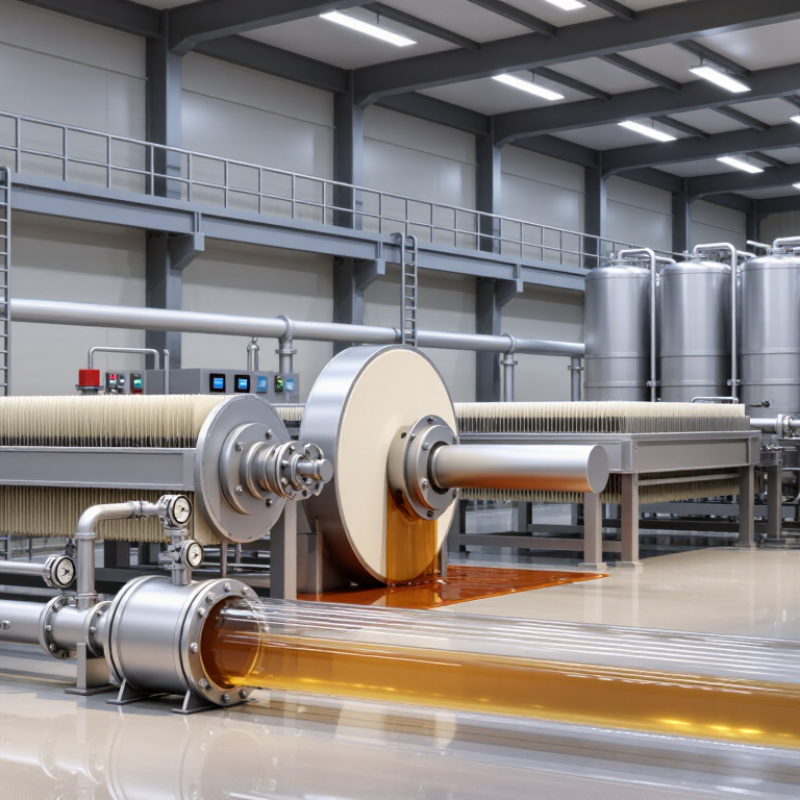
Sugar syrup filtration systems remove unwanted particles from syrup before cooking, filling, or further processing. These particles may include sugar crystals, carbon fines, fibers, rust, and processing debris. The system’s purpose is practical: protect pumps, reduce nozzle blockage, improve clarity, and support consistent product quality.
Common designs include bag filters, cartridge filters, depth filters, and membrane units. Each option suits a different syrup condition. Bag filters handle heavier particle loads and are often useful as prefilters. Cartridge filters provide more controlled retention. Membrane systems can achieve finer separation, but viscous syrup may slow the flow and increase pressure. That trade-off matters.
The core principles are pore size, pressure, temperature, viscosity, and flow rate. Warmer syrup usually moves more easily, but excessive heat can affect quality and energy use. Operators should monitor differential pressure across the filter. A rising reading often signals loading or poor cleaning. In plant trials, small changes in mesh size have sometimes produced large flow differences. It is easy to over-filter.
Food-grade materials, sealed connections, and documented sanitation procedures support reliable operation. Cleaning must match the syrup’s sugar concentration and residue profile. A clear filter housing can help operators inspect buildup, although visual checks cannot prove complete cleanliness. For 2026 applications, the strongest systems will combine stable filtration performance, measurable hygiene controls, and simple maintenance. They should also allow realistic testing with the actual syrup, not only laboratory water.
| System Type | Core Filtration Principle | Typical Particle Rating | Typical Throughput Range | Suitable Syrup Conditions | Primary Purpose | Key Advantages | Main Limitations | Best-Fit Processing Stage |
|---|---|---|---|---|---|---|---|---|
| Bag Filtration | Depth or surface filtration through a replaceable porous bag. Particles are retained within or on the filter media. | Approximately 1–100 micrometres, depending on the media and filtration grade. | Approximately 1–100 m³/h per housing, depending on syrup viscosity, pressure drop, and bag area. | Low- to medium-viscosity syrups; commonly used at moderate temperatures to reduce viscosity. | Removal of suspended crystals, carbon fines, scale, and coarse process debris. | Low equipment cost, simple operation, fast element replacement, and good tolerance for variable solids loading. | Usually lower particle retention consistency than absolute-rated cartridge systems; bags can blind quickly with heavy solids. | Coarse pre-filtration and clarification protection |
| Pleated Cartridge Filtration | Surface filtration using pleated polypropylene, cellulose, or other compatible media to increase effective filter area. | Approximately 0.5–50 micrometres; 1–10 micrometres is common for fine syrup clarification. | Approximately 0.1–30 m³/h per housing, depending on cartridge length, pore rating, and syrup viscosity. | Clear, relatively clean syrups where consistent fine-particle removal is required. | Fine clarification and protection of downstream heat exchangers, fillers, and polishing filters. | Repeatable retention, compact footprint, broad micron range, and easy staged filtration. | Higher replacement cost than coarse bags; fine grades may experience rapid pressure increase in heavily contaminated syrup. | Fine clarification and final particulate control |
| Plate-and-Frame Filter Press | Pressure filtration through filter cloths or sheets; retained solids form a filter cake between the plates. | Approximately 1–50 micrometres, depending on cloth, sheet grade, and cake formation. | Approximately 0.5–20 m³/h, strongly affected by cake thickness, syrup temperature, and viscosity. | Medium- to high-solids syrups and batch processes that can tolerate longer filtration cycles. | Bulk clarification and removal of substantial suspended solids. | High solids-holding capacity, efficient recovery of filtrate, and adjustable cake depth. | Batch-oriented operation, labor-intensive cleaning, larger floor area, and possible product loss in residual hold-up. | Batch clarification after crystallization or carbon treatment |
| Candle or Vertical Pressure Filter | Liquid flows through candle-shaped elements while solids accumulate as a cake on the outside or inside surface. | Approximately 1–25 micrometres, depending on element construction and filter aid use. | Approximately 2–60 m³/h per vessel, subject to vessel size, cake loading, and viscosity. | Continuous or semi-continuous syrup streams requiring controlled cake filtration. | High-capacity clarification with reduced manual handling of filter media. | Large filtration area in a compact vessel, good cake retention, and suitability for automated backwashing or cake discharge in selected designs. | Higher initial cost, more complex maintenance, and sensitivity to incorrect cake formation or excessive differential pressure. | Continuous clarification and high-volume production |
| Rotary Vacuum Drum Filter | A rotating drum draws liquid through a filter cake under vacuum while solids are continuously removed from the drum surface. | Approximately 10–150 micrometres, depending on cloth selection and cake properties. | Approximately 5–100 m³/h, depending on drum area, cake permeability, and solids concentration. | Large-volume streams with relatively high suspended-solids loading. | Continuous removal of coarse and moderate suspended solids. | Continuous operation, high solids capacity, and reduced interruption for element replacement. | Generally less suitable for very fine polishing; vacuum performance can decrease with highly viscous syrup or poorly permeable cake. | Primary solids removal in large-volume operations |
| Crossflow Microfiltration | Pressurized tangential flow reduces cake buildup while a membrane separates suspended particles and microorganisms from the syrup stream. | Approximately 0.1–1.0 micrometres for microfiltration membranes. | Approximately 0.05–10 m³/h per skid, depending on membrane area, temperature, viscosity, and solids loading. | Low-solids, temperature-controlled syrups requiring fine clarification and reduced filter-cake accumulation. | Fine clarification and selected microbial-reduction applications. | Stable particle separation, limited disposable-media use, and potential for continuous operation. | Higher capital and energy requirements; membrane fouling and cleaning validation are important design considerations. | Polishing and high-quality clarification |
| Ultrafiltration | Crossflow membrane separation based primarily on molecular size and membrane selectivity rather than conventional particle screening. | Typically expressed as a molecular-weight cut-off of approximately 1–100 kilodaltons rather than a simple micron rating. | Approximately 0.02–5 m³/h per skid, depending on membrane area, concentration factor, and syrup composition. | Specialty syrups or process streams where proteins, colloids, color bodies, or high-molecular-weight impurities must be reduced. | Selective removal or concentration of dissolved and colloidal components. | High separation selectivity, continuous processing potential, and reduced reliance on filter aids. | Not a universal replacement for particulate filters; osmotic effects, concentration polarization, fouling, and product retention must be evaluated. | Specialty purification and process-stream fractionation |
Note: The figures shown are typical engineering ranges rather than guaranteed performance values. Actual capacity and retention depend on syrup viscosity, temperature, solids concentration, filter-media compatibility, differential pressure, cleaning procedures, and the required product specification.
