
Choosing reliable Screen Printing Textile Ink suppliers is not simply a matter of comparing prices. Global buyers must examine ink performance, technical support, delivery consistency, and documented quality controls.
A supplier may show vivid samples under bright studio lights. The real test begins after curing, washing, stretching, and repeated handling. Does the print remain soft? Does the color stay stable? Can the supplier reproduce the same shade across different production batches? These practical questions matter to apparel manufacturers, decorators, and sourcing teams working across changing climates and production standards.
Screen-printing educator and consultant Andy MacDougall has said, “Consistency is not a single product; it is a controlled process.” This observation is especially useful when evaluating Screen Printing Textile Ink suppliers. Strong partners should provide clear technical data sheets, curing guidance, storage instructions, and responsive troubleshooting. Certifications can support trust, but they should not replace independent testing or production trials.
The strongest suppliers usually understand more than chemistry. They understand mesh selection, squeegee pressure, flash temperatures, fabric absorbency, and the limitations of real factories. Still, no supplier is perfect. A promising ink can behave differently on recycled polyester, dark cotton, or blended fabrics. That uncertainty deserves attention.
This guide compares leading suppliers for global buyers, focusing on product range, print durability, environmental considerations, customization, logistics, and after-sales support. The goal is not to promote the loudest brand. It is to identify dependable partners that perform beyond the sample room.
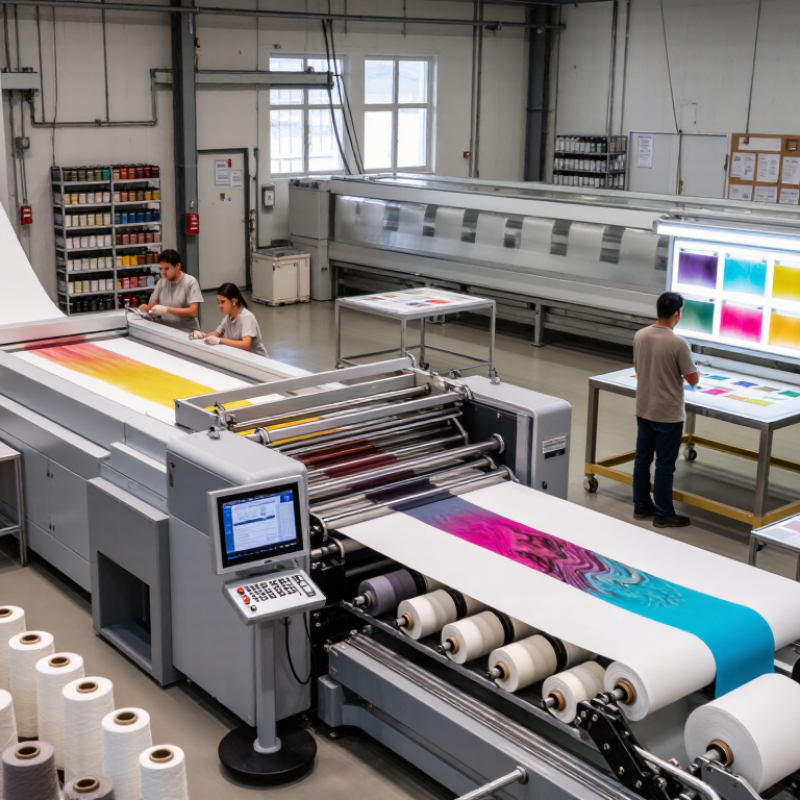
Top Screen Printing Textile Ink Suppliers for Global Buyers
Types of Screen Printing Textile Inks for Different Fabric Applications
Choosing screen printing textile ink starts with the fabric, not the color chart. Water-based ink suits cotton and light garments when a soft, breathable print matters. It absorbs into the fibers and works well for detailed artwork. Plastisol ink offers stronger opacity on dark cotton, polyester, and blended fabrics. It stays on the surface, creating a heavier hand feel.
Discharge ink can produce a soft print on suitable, dyed cotton fabrics. However, results vary with fabric dye chemistry, so trial printing is essential. Silicone ink performs well on stretchy sportswear and technical fabrics. It remains flexible after repeated movement. Puff ink creates a raised texture for fashion graphics, while metallic ink adds reflective decoration. These effects may need special screens, curing controls, and careful washing tests. No single ink fits every application.
Tips: Ask suppliers for technical data, curing temperatures, wash-test results, and fabric compatibility. Print a small sample before bulk production. Check color, stretch recovery, adhesion, and hand feel after washing. A supplier may recommend a popular ink, but the best choice can still fail on an unusual blend. That possibility deserves attention. Reliable suppliers explain limitations clearly and support controlled testing.
A practical comparison of textile screen-printing ink categories, fabric compatibility, curing requirements, performance characteristics, and supplier evaluation criteria for international buyers.
| Ink Type | Primary Chemistry | Recommended Fabric Applications | Typical Finish and Hand Feel | Typical Curing Requirement | Main Advantages | Important Limitations | Key Supplier Information to Request |
|---|---|---|---|---|---|---|---|
| Plastisol Ink | PVC resin dispersed in plasticizer; generally solvent-free before curing | Cotton Cotton blends Polyester with low-bleed grades Sweatshirts Sportswear | Opaque, durable print with a comparatively heavier hand; can be formulated for matte, gloss, soft-hand, puff, metallic, or high-density effects | Usually heat-cured around 150–170°C, depending on the formulation and film thickness; the ink film must reach the supplier’s specified cure temperature | High opacity, long screen open time, broad effect range, strong production versatility, and good suitability for dark garments | Can feel heavier than water-based ink; requires controlled curing; some formulations may contain restricted substances unless compliant grades are selected | Technical data sheet, cure window, bleed resistance, wash-test results, restricted-substance declaration, and applicable regulatory certifications |
| Water-Based Ink | Water-based polymer or acrylic dispersion with pigments and additives | Cotton Rayon Viscose Lightweight apparel Fashion garments | Soft, breathable, low-profile print that allows more of the fabric texture to remain noticeable | Requires evaporation of water followed by heat curing; many systems cure in the approximate range of 150–170°C, subject to the supplier’s specification | Soft hand, breathable result, reduced surface plasticity, and strong suitability for premium fashion printing | Can dry in screens during production; often needs careful humidity, storage, screen, and workflow control; opacity on dark fabrics may require an underbase or specialized formulation | Screen-open-time guidance, retarder requirements, viscosity range, dark-fabric opacity data, curing instructions, and shelf-life information |
| Discharge Ink | Water-based system containing an activating agent that removes or decolorizes certain fabric dyes while depositing pigment | Reactive-dyed cotton Dark cotton garments Soft-hand fashion prints | Very soft, breathable print because the original dye is partially removed rather than covered by a thick ink layer | Requires drying and heat activation, commonly around 150–170°C; the exact result depends on the fabric dye and activation system | Excellent soft hand on suitable dark cotton fabrics; reduced need for a heavy white underbase | Performance varies with the original dye; generally unsuitable for many synthetic fibers; ventilation and safe chemical handling are important; color results may vary by fabric lot | Fabric-dye compatibility test, activation method, ventilation and handling guidance, formaldehyde or restricted-substance information, and wash-test data |
| Silicone Ink | Two-component or catalyzed silicone elastomer system | Polyester Performance wear Stretch fabrics Sports uniforms Technical textiles | Highly elastic, smooth, rubber-like or matte finish; can provide excellent coverage with a premium surface feel | Often heat-cured approximately around 140–170°C, depending on catalyst, ink grade, and equipment; precise time and temperature control is essential | Excellent stretch and recovery, strong adhesion to many synthetic fabrics, high opacity, and good resistance to dye migration when correctly specified | Higher material cost; mixing and pot-life control are necessary; specialized screens, tools, and cleaning procedures may be required | Mixing ratio, pot life, curing profile, elongation data, bleed-resistance test results, storage conditions, and compatibility with automated equipment |
| Acrylic or Hybrid Ink | Water-based or solvent-assisted acrylic polymer system, sometimes combined with other binders | Cotton Polyester blends Home textiles Promotional apparel | Ranges from soft and matte to moderately raised or glossy, depending on additives and curing conditions | Typically requires drying and heat curing, often within approximately 140–170°C; always follow the product-specific technical data sheet | Flexible formulation options, broad fabric compatibility, and a balance between print softness, durability, and cost | Performance can vary significantly among formulations; some grades may have lower opacity or lower stretch than specialized systems | Binder composition, recommended mesh count, viscosity, opacity, crocking and wash ratings, curing profile, and compatibility with the target fabric |
| Puff Ink | Plastisol or water-based ink containing a heat-reactive expanding additive | Cotton T-shirts Sweatshirts Casualwear Logo graphics | Raised, three-dimensional, soft or textured surface with a visibly elevated appearance | Requires controlled heat activation; excessive heat or over-curing can reduce the desired expansion effect, so the supplier’s profile must be followed | Creates dimensional effects using standard screen-printing processes; useful for fashion graphics and tactile branding | Limited detail sharpness compared with flat ink; expansion height can vary with mesh, deposit, pressure, and curing; excessive thickness may reduce wash durability | Expansion ratio, recommended mesh and stencil thickness, curing profile, wash-test results, and guidance for overprinting or halftone details |
| Metallic Ink | Ink containing reflective metallic or pearlescent pigment particles in a suitable binder | Cotton Blends Fashion apparel Decorative textiles | Reflective, shimmering, or pearlescent finish; hand feel depends on particle size and binder system | Heat curing is required; the correct temperature depends on whether the system is plastisol, water-based, or another binder technology | Produces premium decorative effects and strong visual contrast on suitable fabric colors | Metallic particles may affect screen selection and print smoothness; brightness can decrease after washing or abrasion; very fine details may be difficult | Pigment particle size, recommended mesh count, opacity, curing method, wash and abrasion performance, and storage or settling instructions |
| High-Density Ink | High-solids ink printed through a thick stencil or specialty emulsion system | Cotton Polyester Promotional garments Labels and logos | Raised, sharp-edged, tactile surface with a sculpted or embossed appearance | Requires complete drying and curing through a relatively thick ink deposit; curing parameters depend on the ink chemistry | Strong dimensional impact, crisp edges, and enhanced tactile recognition | Requires precise stencil preparation and print deposition; thick films may crack or lose adhesion if the formulation is not matched to fabric stretch | Recommended stencil thickness, deposit control, stretch performance, adhesion data, curing requirements, and compatibility with automatic presses |
| Low-Bleed Polyester Ink | Specialized low-migration plastisol, silicone, or hybrid formulation designed to reduce dye migration | Dye-sublimated polyester 100% polyester Sportswear Team uniforms | Usually opaque and elastic; finish may be matte, soft, glossy, or rubber-like depending on the formulation | Requires a carefully controlled cure; excessive heat can increase dye migration in some polyester fabrics, while insufficient heat can reduce durability | Improved resistance to color migration and strong suitability for performance garments | No formulation can eliminate every migration risk; fabric dye, dwell time, temperature, and storage conditions all affect results | Migration-test results, recommended blocker or underbase system, maximum curing temperature, fabric qualification procedure, and wash-test reports |
| Reflective Ink | Binder system containing retroreflective glass beads or engineered reflective particles | Safety apparel Workwear Outdoor garments Sportswear | Visible reflective appearance under directed light; surface texture depends on bead size and print construction | Requires curing suitable for the selected binder while preserving the orientation and performance of reflective particles | Provides enhanced visibility in low-light conditions when illuminated by a light source | Reflectivity may decline with abrasion, incorrect curing, excessive overprinting, or unsuitable washing; it is not a substitute for certified high-visibility construction | Reflectance test method, visibility-performance data, recommended mesh, wash durability, curing instructions, and compliance documentation for the intended market |
| Discharge-Plus-Pigment Ink | Discharge base combined with pigment color for soft-hand prints on selected dyed fabrics | Dark reactive-dyed cotton Premium T-shirts Fashion graphics | Soft and breathable with a colored image integrated into the fabric surface rather than sitting as a heavy layer | Requires activation and heat curing; the supplier must specify the correct temperature, dwell time, and ventilation requirements | Combines the soft feel of discharge printing with a wider color range than unpigmented discharge systems | Color consistency depends heavily on the fabric dye and process conditions; not suitable for every fiber or garment finish | Compatibility testing by fabric lot, color-development instructions, activator information, emissions guidance, and wash-test results |
| Silicone Stretch Ink | Elastic silicone polymer system formulated for high elongation and recovery | Elastane blends Compression wear Swimwear Stretch sportswear | Flexible, smooth, low-tack surface designed to move with highly elastic fabrics | Requires controlled catalyst mixing and heat curing, commonly within an application-specific range around 140–170°C | Excellent flexibility, adhesion, and resistance to cracking on stretch garments when properly cured | Requires precise formulation control; poor mixing or insufficient curing can cause adhesion and durability failures | Elongation and recovery data, mixing ratio, pot life, cure verification method, recommended screen system, and repeated-stretch test results |
