$0.00
For global buyers, Organic Socks are no longer a simple catalog item. They represent fiber integrity, responsible production, comfort, and supply-chain accountability. A soft pair may hide difficult questions: Where was the cotton grown? Who processed the yarn? Can the certification be verified?
Fashion sustainability scholar Kate Fletcher has said, “Sustainability is not a destination, but a journey.” That idea fits organic sock sourcing closely. A manufacturer may use certified organic cotton yet rely on unclear subcontractors, excessive packaging, or inconsistent dyeing practices. Certification alone is not the whole story.
This guide examines ten Organic Socks manufacturers serving international buyers. The evaluation considers organic fiber certifications, factory experience, knitting technology, product customization, minimum order quantities, quality control, and export capability. It also considers practical details, such as elastic recovery after washing, toe-seam comfort, label accuracy, and carton protection during long-distance shipping.
Some suppliers appear highly professional online but provide limited evidence. That gap matters. Buyers should request current certificates, audit records, material specifications, and production samples before signing agreements. A sample that feels smooth today may lose shape after repeated washing. Mistakes happen.
The selected manufacturers are not presented as perfect choices for every market. Each may suit different needs, from private-label collections to large retail programs. Pricing, lead times, and compliance requirements can also change. Careful verification remains essential.
For serious buyers, the strongest partner is not always the cheapest factory. It is the manufacturer that can explain its materials, processes, limitations, and improvements with clear evidence.
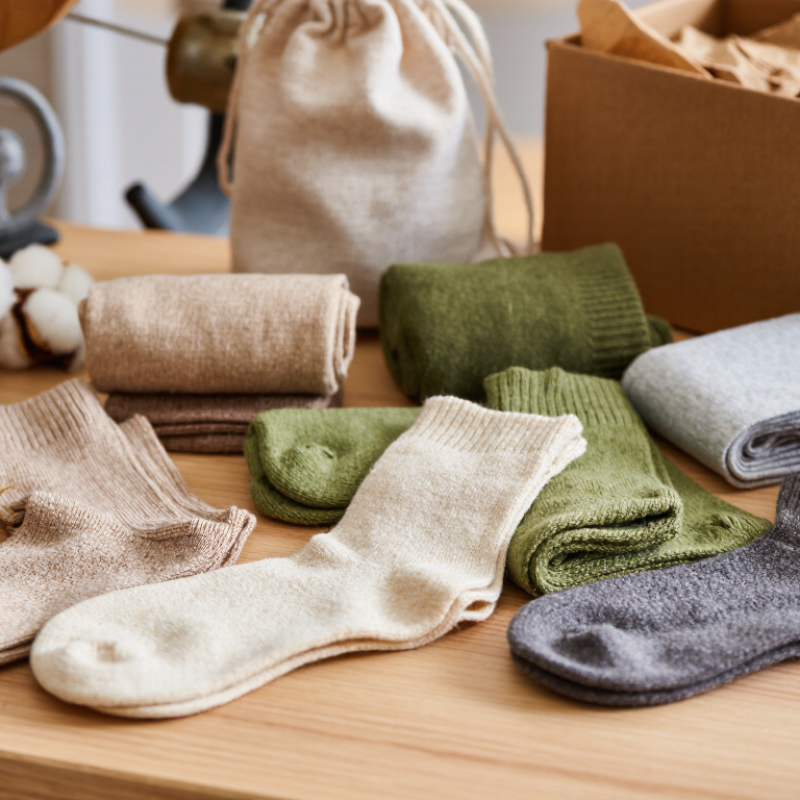
For global buyers, organic sock manufacturing starts with traceable fiber, not a green label. Cotton should move from certified farms through spinning, knitting, dyeing, and packing with documented custody records. A valid organic textile standard can verify fiber content and processing controls. It may also review chemical use, wastewater handling, worker conditions, and factory management.
Buyers should request current certificates, scope documents, transaction records, and test reports. The certificate must cover the actual factory and product category. A farm certificate alone is not enough. One widely used organic textile scheme requires controlled inputs and third-party audits throughout the supply chain. Another system mainly confirms organic fiber content and chain of custody. These scopes are different. Treating them as equal creates avoidable risk.
Product safety testing adds another layer. Testing for restricted substances can examine dyes, finishing agents, heavy metals, and skin-contact residues. Check the test date, laboratory details, and sock composition. Recycled elastane, elastic bands, sewing thread, and packaging may fall outside an organic claim. Ask how each component is controlled.
Factory visits can reveal practical weaknesses. Look for labeled chemical containers, calibrated dyeing equipment, clean storage, and wastewater records. Audits are useful, but they are still snapshots. Certificates can expire, suppliers can change, and paperwork can lag behind production. I have found that a simple lot-tracking exercise often exposes more than polished factory photos. Keep written approval for every material change. A low-impact dye may still fail a restricted-substance test. That uncomfortable possibility deserves attention before bulk production.
Selecting an organic sock manufacturer requires more than checking a sustainability claim. Ask for current certification documents, certified scope, and transaction records for the exact fiber used. A certificate covering cotton farming may not cover spinning, dyeing, or sewing. Verify each production stage.
Request pre-production samples in your target yarn blend, size range, and color palette. Inspect the toe seam, cuff pressure, fabric density, and label attachment. Wash samples several times at realistic temperatures. Measure shrinkage and check elastic recovery afterward. Test color fastness and fiber composition through an independent laboratory when order value justifies it. Small details reveal production discipline.
Factory visits or live video audits can show storage conditions, moisture control, and lot separation. Ask how rejected materials are recorded and how corrective actions are followed. Reliable manufacturers should explain minimum order quantities, production capacity, lead times, packaging, and shipment terms clearly. Their answers should remain consistent across departments.
Paperwork is not proof of every shipment. Bulk results can differ from samples. This is where many buyers become too confident. Add random inspections and lot-based testing to the purchasing plan. Review labor policies, wastewater handling, and workplace safety records without accepting vague promises. A strong supplier may admit a weakness and provide a dated improvement plan. That honesty is useful, though it still needs verification.
Anonymous supplier evaluation scorecard for international sourcing teams
| Rank | Supplier Profile | Organic Certification Evidence | Traceability Level | Product Capability | Indicative MOQ | Sample Lead Time | Bulk Lead Time | Quality-System Evidence | Export Readiness | Evaluation Score |
|---|---|---|---|---|---|---|---|---|---|---|
| 1 | Profile A | Valid transaction certificate available; scope must cover the finished product | Farm-to-product documentation requested | Crew, ankle, quarter, athletic and custom jacquard socks | 500–1,000 pairs per style | 7–14 days | 30–45 days after approval | AQL inspection plan and pre-shipment inspection accepted | Commercial invoice, packing list and origin documents supported | 92/100 |
| 2 | Profile B | GOTS certificate copy requested with certification-body verification | Batch records and yarn documentation available | Organic cotton basics, ribbed socks and seamless styles | 1,000 pairs per color | 10–15 days | 35–50 days after approval | Inline inspection, final inspection and defect records available | Experience with carton marking and retailer packing requirements | 89/100 |
| 3 | Profile C | Organic-content claim supported by certificate and scope statement | Supplier declarations plus lot-level documentation | Casual, business and low-compression sock programs | 1,000–2,000 pairs per style | 12–18 days | 40–55 days after approval | Dimensional checks, colorfastness testing and workmanship inspection | Standard export documentation and barcode application supported | 87/100 |
| 4 | Profile D | Certification status requires confirmation for each production site | Yarn-to-garment records available on request | Recycled-blend and organic-cotton sport socks | 1,500 pairs per style | 10–16 days | 35–50 days after approval | Material testing and production inspection procedures documented | Can support export labeling and consolidated shipments | 84/100 |
| 5 | Profile E | Third-party organic certification requested before order placement | Material certificates available; transaction tracking varies by order | Private-label basics and promotional sock collections | 2,000 pairs per design | 14–20 days | 45–60 days after approval | Basic quality manual and final inspection checklist | Suitable for standard international wholesale documentation | 81/100 |
| 6 | Profile F | Scope and expiry date must be checked against the ordered sock category | Raw-material invoices and supplier declarations available | Children’s, infant and family-size organic sock ranges | 1,000–2,000 pairs per color | 12–18 days | 40–55 days after approval | Needle-control, measurement and appearance inspections documented | Supports retail packaging and mixed-size assortments | 79/100 |
| 7 | Profile G | Certification documentation available after commercial qualification | Material-level traceability with limited farm-level visibility | Lightweight summer socks and fine-gauge designs | 2,000 pairs per style | 15–21 days | 45–60 days after approval | Basic lab testing and finished-goods inspection available | Export support available for regular commercial orders | 77/100 |
| 8 | Profile H | Certificate and transaction records require independent verification | Batch-level records supplied for approved materials | Logo socks, promotional programs and simple custom patterns | 2,000–3,000 pairs per design | 14–21 days | 45–65 days after approval | Final inspection available; formal corrective-action records should be requested | Can provide standard invoices, packing lists and shipping marks | 74/100 |
| 9 | Profile I | Organic-fiber claim supported by supplier documents; finished-product scope must be confirmed | Limited lot-level traceability | Standard crew and ankle socks with limited customization | 3,000 pairs per style | 15–25 days | 50–70 days after approval | Standard visual and measurement inspection | Suitable for buyers with straightforward import requirements | 71/100 |
| 10 | Profile J | Certification status, scope and validity should be confirmed before sampling | Material declarations only unless upgraded by contract | Basic organic-cotton socks for price-sensitive programs | 3,000–5,000 pairs per style | 18–25 days | 55–75 days after approval | Basic factory inspection; third-party testing recommended | Export documentation available for approved destinations | 68/100 |
Evaluation methodology: Certification evidence and scope 25%, traceability 15%, product capability 15%, quality systems 15%, MOQ and lead time 10%, export readiness 10%, and sampling responsiveness 10%.
Buyer note: MOQ and lead-time figures are indicative sourcing benchmarks, not contractual commitments. Before placing an order, verify certificate validity, certification scope, transaction certificates, test reports, factory ownership, social-compliance records and current production capacity directly with each supplier.
Top 10 Organic Socks Manufacturers Serving International Buyers
International buyers need more than attractive organic cotton claims. A reliable top-ten shortlist should include factories with certified organic materials, stable knitting capacity, and clear export procedures. Suitable manufacturers can produce crew socks, ankle socks, athletic styles, and baby designs for different markets.
The strongest candidates usually provide certification records, fiber transaction documents, and batch-level traceability. They should also explain where yarns are spun, dyed, and finished. Sample checks matter. A soft sock can still shrink after washing. A factory should test colorfastness, pilling, stretch recovery, and seam strength before bulk production. Ask about minimum order quantities, size grading, packaging, and delivery schedules. These details often reveal more than a polished catalog.
International service also requires practical communication. Manufacturers should support private labeling, multilingual documents, customs paperwork, and pre-shipment inspections. Some suppliers offer lower prices but lack consistent inspection systems. That weakness can create uneven toe seams or mismatched sizes. No factory is perfect. Even experienced suppliers may face yarn shortages or seasonal delays. Buyers should request recent test reports, production photos, and a written correction process. A small trial order remains sensible, even when the factory appears highly qualified. Sustainability claims also deserve careful review, because organic fiber alone does not prove responsible production. Audited energy use, wastewater controls, worker safety, and transparent sourcing create a more dependable basis for long-term cooperation.
International buyers commonly screen organic sock suppliers by verifying the minimum certified organic fiber content required by recognized textile standards.
The chart compares minimum organic fiber-content thresholds: GOTS requires at least 70%, OCS Blended covers products with at least 5%, and OCS 100 requires at least 95% certified organic material.
For global buyers, product range is the first serious comparison point. A capable organic sock manufacturer should offer ankle, crew, knee-high, work, athletic, and baby styles. Materials may include certified organic cotton, responsibly sourced wool, and recycled fibers. Buyers should verify each certificate’s scope and expiry date. “Organic” should never remain a vague marketing word.
Small details matter. Customization can cover colors, patterns, rib structures, toe seams, labels, packaging, and size grading. Ask for a physical sample before approving bulk production. A digital image cannot reveal tight cuffs, uneven knitting, or rough seams. Discuss minimum order quantities, sample fees, mold charges, and revision limits early. Some factories accept custom artwork but restrict complex patterns. That limitation deserves honest discussion.
Production capability includes more than machine numbers. Review knitting capacity, dyeing controls, linking equipment, inspection procedures, and packing lines. Request recent test reports for colorfastness, shrinkage, fiber composition, and harmful substances. A reliable supplier should explain material traceability from yarn to finished carton. Confirm monthly output, realistic lead times, and backup plans for delayed yarn. No factory is perfect. I would question suppliers promising zero defects or unusually fast delivery. Clear records, responsive communication, and consistent samples usually reveal more than polished presentations.
Pricing, Minimum Orders, Shipping, and Supplier Verification
Organic sock pricing depends on fiber quality, knitting density, dyeing, packaging, and order volume. Textile Exchange’s 2023 Organic Cotton Market Report recorded 342,265 metric tonnes of organic cotton production in 2022, only 1.4% of global cotton output. Limited supply can affect quotations. Request prices for 500, 1,000, and 5,000 pairs. Indicative minimum orders often range from 500 to 2,000 pairs, but smaller trial runs may cost more per pair.
Ask every shortlisted manufacturer for a complete landed-cost estimate. It should show product price, carton dimensions, export handling, freight, insurance, duties, and delivery terms. A quotation using FOB is not comparable with one using DDP. Shipping rates change quickly. The World Bank’s Logistics Performance Index 2023 also shows major differences in customs efficiency and shipment reliability between countries. Build a timing buffer of at least two weeks. It feels excessive, but delays are common.
Verification requires documents, not confident emails. Request a valid organic certification scope certificate and a transaction certificate for the actual shipment. Under the Global Organic Textile Standard, products labeled organic generally require at least 95% certified organic fibers. Check the certificate holder, facility address, product scope, and expiry date independently. Request a video call from the knitting floor. Examine rib recovery, toe seams, loose threads, and carton labels. A spreadsheet can still lie. I would also order samples from three suppliers, because one sample rarely predicts consistent bulk production.