China Top Flying Inflatable Boat Manufacturers for Sale
Finding the right Flying Inflatable Boat starts with understanding what “flying” means in a supplier’s product description. Some sellers may use the term for a lightweight inflatable craft, while others describe a design intended to rise above the water on specialized equipment. The difference matters. Buyers should confirm the boat’s actual configuration, intended use, and operating conditions before comparing prices.
This guide introduces Chinese manufacturers and suppliers offering inflatable boats for sale, while treating “top” as a starting point for research rather than a verified ranking. Product photos can be useful, but they cannot replace detailed specifications. Ask for hull dimensions, fabric type, seam construction, load capacity, propulsion compatibility, and available testing records. Look for clear answers. A supplier’s ability to explain these details can reveal more than a polished brochure.
Request current quotations and compare what each one includes, such as accessories, packaging, warranty terms, and inspection arrangements. If the craft is designed for unusual or demanding operation, ask how its performance claims were tested and what training or safety equipment is recommended. Be cautious with vague promises. A low price may omit important components, and shipping costs can change the final figure. Some details may remain unclear until a sample or independent inspection is available. That is worth admitting. Careful questions, written specifications, and realistic expectations help buyers assess suppliers more reliably.
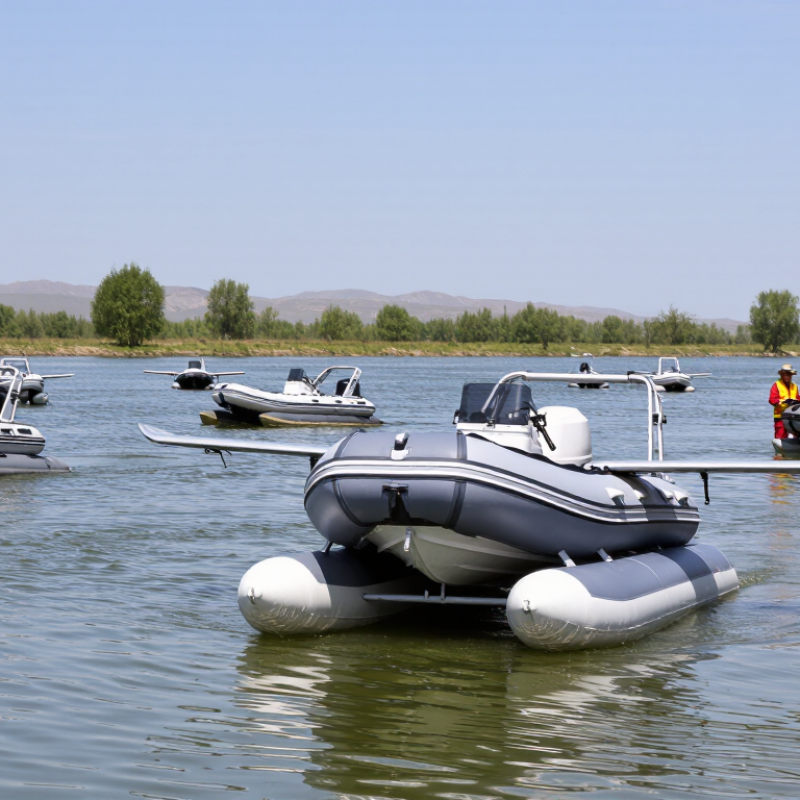
Overview of China’s Flying Inflatable Boat Industry
China’s flying inflatable boat sector sits within a broader marine manufacturing base. The term often describes lightweight inflatable craft designed for fast travel over water, not aircraft. Buyers should check hull design, tube material, floor stiffness, payload, and engine compatibility. On a factory visit, inspect welded seams and valve placement closely. Small defects matter.
The Ministry of Industry and Information Technology reported that China completed 42.32 million deadweight tons of shipbuilding in 2023, equal to 50.2% of global output. This figure reflects the wider shipbuilding industry, not inflatable boats specifically. It signals manufacturing capacity, but cannot prove quality in this niche. Inflatable craft rely on different processes, including coated-fabric cutting, heat or high-frequency welding, and pressure testing. China’s suppliers commonly serve export markets, where buyers may request material records and production inspections. Ask for test results tied to the exact model, not a general factory certificate. Details can be uneven. A useful supplier comparison should include tube diameter, fabric weight, seam method, rated load, and repair support. The data gap remains real: public reports rarely separate flying inflatable boats from other small craft.
How Chinese Manufacturers Design and Build These Boats
Chinese manufacturers usually begin with the boat’s intended use, passenger load, and operating conditions. For a fast, planing inflatable boat, designers balance hull shape, tube diameter, floor stiffness, and engine weight. The aim is stable lift without making the craft difficult to handle. Small changes matter.
Teams create drawings or prototypes before choosing coated fabric, such as PVC or a tougher CSM-based material. Fabric thickness and reinforcement depend on expected wear, storage, and exposure. Workers cut panels to measured patterns, then join seams using suitable welding or bonding methods. They fit separate air chambers, a transom, floor sections, handles, and valves. Details matter. A tidy seam alone does not prove sound construction.
Quality checks should include chamber pressure tests and careful inspection of seams, fittings, and transom joints. Manufacturers may also conduct load and water trials to assess trim, handling, and leakage. Results can vary with the test setup, so buyers should ask what was tested and request clear specifications. No design is perfect. Even a well-built boat can feel different when loaded unevenly or used in rough water. Honest production notes help customers compare boats beyond appearance.
How to Compare Manufacturers and Product Specifications
When comparing China-based flying inflatable boat manufacturers, match specifications to real use, not brochure claims. Grand View Research estimated the global inflatable-boat market at USD 1.03 billion in 2023 and projected 4.4% annual growth through 2030. That market estimate signals demand, but it cannot confirm any supplier’s build quality. Ask for the exact fabric type and thickness, seam method, tube diameter, hull material, rated payload, and maximum engine power. Then compare equivalent models. A larger payload rating is not useful if it leaves little allowance for passengers, fuel, and equipment.
Check the seams. Request test records, load limits, and documentation showing which relevant product standards the boat meets. Compare warranty terms, spare-part availability, repair instructions, and the time needed to replace a damaged tube.
NMMA’s 2024 economic-impact report estimated that U.S. recreational boating supported USD 230.3 billion in annual economic activity; it is broad sector data, not inflatable-boat sales data. Still, it highlights why after-sales support deserves attention. Ask manufacturers how they handle claims and keep records of the answers.
Small details matter. One imperfect point: published specifications may use different testing conditions, so ask for the method behind each figure before comparing prices.
Buying, Customization, and After-Sales Support Options
Buying a flying inflatable boat starts with matching its design to real operating conditions. Ask about hull fabric, chamber layout, floor construction, and rated load before comparing prices. Small details matter. Request a written specification listing engine compatibility, packed dimensions, included accessories, and delivery terms. Photos help, but they cannot show seam quality or how fittings feel in hand. If possible, inspect a sample or request close-up images of welds, valves, and reinforcement patches. A checklist can still miss how awkward a packed boat feels to lift.
Customization may include tube color, seat placement, deck material, storage pockets, or safety-line positions. Describe who will use the boat, launch conditions, and how often it will travel. Confirm which changes affect weight, stability, setup time, and warranty coverage. Not every requested feature is useful. Ask the manufacturer to explain trade-offs, even when the answer complicates the order. After-sales support should cover setup guidance, spare valves or patches, repair instructions, and response times. Clarify what evidence is needed for a claim and whether replacement parts ship separately. Keep the manual, invoice, and serial details together. Support quality is easy to overlook until a leak appears beside a cold launch ramp.

