
Skip to content

China Top 10 Thermal Sticker Label Manufacturers

A reliable Thermal Sticker Label does more than carry a barcode. It must feed smoothly through a printer, produce sharp text, and stay attached during handling and storage. Small differences matter. Coating uniformity affects print clarity, while adhesive choice can determine whether a label holds on cardboard, glass, or plastic. For buyers, these details are worth checking before comparing prices.

This guide to China’s top 10 Thermal Sticker Label manufacturers offers a practical starting point for supplier research. It considers factors such as product range, production capability, quality controls, customization options, and communication support. Manufacturer profiles can help buyers narrow their search, but a list cannot replace direct evaluation. Specifications, samples, and actual order requirements should still be compared carefully. Ask about face stock, roll dimensions, core size, adhesive performance, and compatibility with your printer. A sample roll can reveal issues that a brochure may not show. Even so, one test may not represent every production batch. Buyers should confirm current details with each supplier and review relevant documentation before placing an order. The best fit is not always the largest factory or the lowest quote. It is the supplier whose materials and service match the intended application.
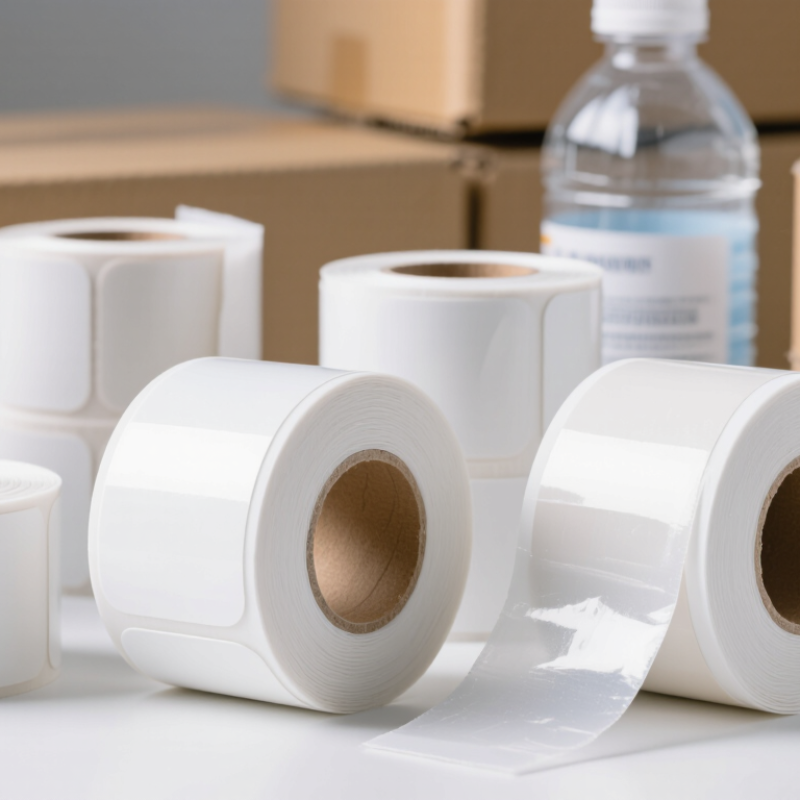
China Top 10 Thermal Sticker Label Manufacturers

What Thermal Sticker Labels Are and How They Are Used

Thermal sticker labels are pressure-sensitive labels printed by applying heat to coated paper or synthetic material. No ink is needed. Direct thermal printers darken the label surface, making them useful for short-lived shipping labels, receipts, and chilled-food date stickers. Thermal-transfer printing uses a heated ribbon to transfer ink onto the label, which can improve resistance to rubbing, moisture, and fading. The right choice depends on the label’s journey, not just the printer. A parcel moving through a hot delivery van may need more durability than a shelf tag used indoors. Small detail, big impact.

The U.S. Census Bureau reported that U.S. retail e-commerce sales reached about $1.19 trillion in 2024, up 8.1% from 2023. That growth helps explain why warehouses and stores rely on fast, scannable labels for parcels, inventory, and price updates. A good label needs readable barcodes, suitable adhesive, and enough contrast after handling.

In practice, choosing stock is less tidy than a specification sheet suggests: cold surfaces, dust, and hurried application can all cause peeling or smudging. Thermal labels are efficient, but they are not automatically durable. The Census Bureau’s Quarterly Retail E-Commerce Sales report provides the sales figures; it does not measure label use directly.

How Thermal Sticker Labels Are Made in China

China Top 10 Thermal Sticker Label Manufacturers
How Thermal Sticker Labels Are Made in China

Thermal sticker labels begin with a face stock, an adhesive layer, and a release liner. For direct thermal labels, the paper surface receives a heat-sensitive coating. A thermal printhead darkens selected areas during printing, so no ink ribbon is needed. Material rolls are checked for coating consistency, thickness, and surface defects before conversion.

The coated stock is slit into narrower rolls, then printed or left blank according to the order. Die-cutting forms each label’s edges, while the liner remains intact for dispensing. Operators inspect roll alignment, label gaps, and adhesive performance. A simple test uses a barcode printer and a short print run. This can reveal fading or uneven darkness that a visual check might miss. Production methods and tolerances vary between factories, so sample results matter more than broad claims.

Tips: Share your printer model, core size, label dimensions, and storage conditions when requesting samples. Check print contrast and adhesion on the actual packaging surface. Keep samples for comparison. One detail is easy to overlook: heat and sunlight can affect direct thermal labels, even when the initial print looks sharp.

China’s Thermal Sticker Label Manufacturing: Typical Material Thickness

Thermal sticker labels are made by combining a printable face stock, pressure-sensitive adhesive, and release liner. The ranges below are representative thicknesses in micrometers (µm); actual specifications vary by material grade and product design.

How to Evaluate Chinese Thermal Label Manufacturers

Evaluating Chinese thermal label manufacturers means testing the roll, not just reviewing a catalogue. Smithers’ 2023 report, The Future of Label Printing to 2028, valued the global label market at about US$46.5 billion in 2022. That figure covers labels broadly, not thermal labels alone, but it signals a competitive market where consistent converting matters. Ask suppliers for material specifications, coating details, adhesive type, liner weight, and batch-level quality records. Vague answers are a warning.

Request samples made to your actual printer width and core size. Check print darkness, barcode readability, edge quality, and adhesive performance on the intended surface. Then test rolls after heat, humidity, and storage; direct thermal images can fade, and a sample that looks sharp today may not stay that way. Small details matter. Ask how the factory controls coating uniformity and roll tension, and whether it can trace production batches. Independent test results are more useful than a polished brochure.

Compare lead times, minimum order quantities, packaging, and defect-handling procedures alongside price. A low quote can hide thinner facestock or inconsistent winding. Request recent inspection data and clarify how rejected lots are replaced. If possible, run a pilot order before scaling up. One limitation: a short trial cannot fully predict months of storage or every printer’s behavior. Keep that uncertainty visible in your evaluation.

Profiles of Ten Chinese Thermal Sticker Label Manufacturers

Profiles of Ten Chinese Thermal Sticker Label Manufacturers

A meaningful profile compares converting capability, not just catalog size. Across ten Chinese manufacturers, the key differences include coating consistency, adhesive choice, roll dimensions, and inspection controls. Some focus on shipping and barcode labels, where sharp print and reliable dispensing matter. Others serve retail shelves, cold storage, or warehouse workflows. Ask for samples on the intended printer. A label that looks clean on paper may still curl or fade in daily use.

Grand View Research’s Thermal Paper Market Size, Share & Trends Analysis reports a global market value of about US$4.34 billion in 2023, with projected growth through 2030. This covers thermal paper broadly, not sticker labels alone. Still, it signals continuing demand for dependable thermal printing materials. Profiles should therefore examine face stock, adhesive performance, and resistance to heat, moisture, and abrasion. Small details matter. Check print darkness after storage, not only fresh off the roll.

Supplier comparisons also need practical evidence: trial rolls, batch records, and clear tolerances for core size and roll length. One weakness in many directories is thin verification. A polished product page cannot prove stable coating quality. Request recent test results, and compare them under the same printer settings. That takes time. It is worth it.

How the Manufacturers Compare in Products and Capabilities

Thermal label manufacturers differ most in material control and production flexibility. Strong suppliers can offer direct thermal and thermal-transfer stocks, several adhesive grades, and face materials that suit handheld printers or fast-moving packing lines. Their real capability shows in details: consistent roll winding, clean die cuts, stable print darkness, and adhesive performance on corrugated cartons or chilled containers. A sample roll helps, but it cannot prove long-run consistency.

Grand View Research estimated the global thermal paper market at USD 4.3 billion in 2023 and forecast 6.7% annual growth from 2024 to 2030. This broader market includes more than labels, so it signals material demand rather than ranking label makers. Compare suppliers by documented batch checks, print testing, customization, lead times, and minimum order quantities. Ask for test rolls using your own printer and packaging. A glossy sample can hide uneven coating or weak adhesion. That matters. Online specifications rarely reveal how well a factory handles production changes.

Tips: Print a small batch, then test scannability, smudging, and adhesion after storage. Record the printer model and surface tested; otherwise, comparisons may be misleading.