$0.00
Buying Barista Instant Coffee in bulk can lower unit costs, but only when quality survives storage and regular use. A low price per kilogram means little if the final cups taste flat. Check the roast profile, ingredient list, pack size, and preparation instructions before comparing suppliers.
Demand provides useful context. The International Coffee Organization’s Coffee Report and Outlook projected global coffee consumption at about 177 million 60-kilogram bags for the 2023/24 coffee year. That figure covers coffee broadly, not instant coffee alone. Still, it signals the scale of a market where consistent supply matters. For a scientific perspective, coffee chemist Dr. Christopher Hendon has described coffee this way: “Coffee is a solution, and it is one of the most complex solutions that humans consume on a regular basis.” His point is practical: extraction and flavor depend on details, even when preparation takes seconds.
Bulk purchasing adds its own details. A café may need a smooth, milk-friendly blend; an office may value quick dissolving and sealed single-serve portions. Ask for a recent production date, a sample, and written storage guidance. Check whether the supplier can maintain the same product across repeat orders. Small tests help. Taste it with the water and milk your customers actually use. I would not treat one successful sample as proof of long-term consistency; that is an easy mistake. The tips ahead focus on supplier checks, freshness, packaging, pricing, and trial orders, so buyers can make a decision grounded in evidence rather than the biggest discount.
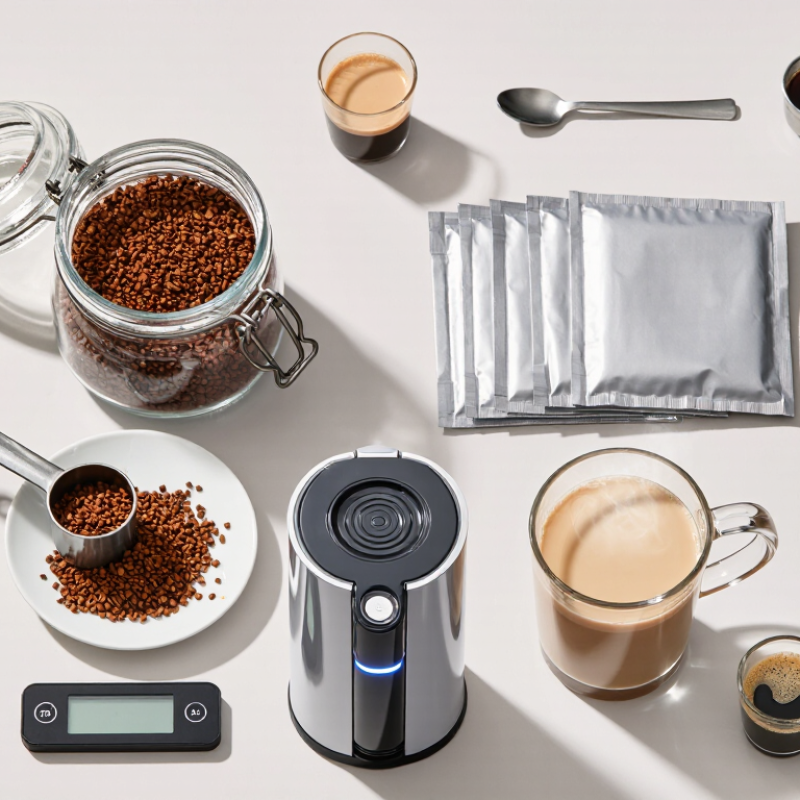
The International Coffee Organization’s Coffee Report and Outlook estimates global coffee consumption at 177.0 million 60-kg bags for 2023/24. Treat this as market context, not a forecast for instant coffee or your café. Global demand is enormous; your buying unit is much smaller. Plan around actual cups sold, not the headline figure.
Estimate your monthly requirement using your product’s stated serving size. For example, at 2 grams per cup, 1,000 cups daily require about 60 kilograms for 30 days, before accounting for spills or changing demand. Check that serving size with staff; hurried scoops can vary. Small buffer matters. Then compare the result with supplier pack sizes and your storage capacity, rather than ordering a full quarter’s stock automatically.
Use recent sales records to adjust the estimate for weekday peaks, seasonal dips, and new menu items. Keep unopened stock sealed, dry, and away from heat, and rotate older packs forward. A spreadsheet can look precise; café demand rarely is. Review usage weekly at first, then revise the reorder point when real consumption settles. ICO’s aggregate figure helps frame the market, but your own cup counts should determine the bulk order.
Spray-dried coffee is usually the practical choice for high-volume service. Coffee extract is atomized into hot air, creating a fine powder quickly and at relatively low production cost. Its aroma can be less vivid after processing, though, especially in an open bag near a warm espresso machine. Freeze-dried granules are made under low-temperature vacuum conditions. They often retain more of the coffee’s delicate aroma and look visibly larger. For a bulk order, compare samples in the same cup, not just supplier descriptions. Smell them dry, then dissolve equal weights in hot water. Aroma matters. So does the last gritty speck.
Solubility depends on particle design as well as drying method. Fine spray-dried powder may dissolve fast but can dust or clump; granulated products may pour neatly and wet more evenly. Ask for a solubility test, moisture specification, and packaging details. Then compare cost per prepared serving, including waste from stale or poorly dissolving stock. The International Coffee Organization’s 2024 report estimated global coffee consumption at 177 million 60-kilogram bags for 2023/24, a reminder that supply choices operate at enormous scale. That figure does not predict your café’s demand. I would still test a small sample through your actual dispensers; my first choice on paper may not behave well during a busy morning.
When buying barista instant coffee in bulk, check authenticity before comparing price per kilogram. The International Coffee Organization’s Coffee Report and Outlook estimated global consumption at 177 million 60-kilogram bags in 2023/24. That scale makes consistent verification important, especially when a single order fills several pallets. Keep the lot number, supplier documents, and a sealed sample together. Small details matter.
Ask for evidence that the soluble coffee meets ISO 24114:2011, the standard covering authenticity criteria for soluble coffee. It assesses compositional markers that can help identify non-coffee additions. Request the laboratory report, the analytical method, and confirmation that the tested sample came from the same production lot you will receive. A certificate without lot traceability is weak evidence. Not proof by itself.
Also confirm that the laboratory report names the sample and test date, and check whether results meet the standard’s stated criteria. ISO conformity does not guarantee cup quality, freshness, or suitability for your espresso workflow. Test a small quantity in your own machine: note dissolution, aroma, crema, and residue in the cup. It is tempting to trust tidy paperwork; I would not skip the tasting. Keep an unopened reference pack from each delivery, since batch changes can be subtle.
| # | Buying dimension | What to check | Practical bulk-buying benchmark | Why it matters |
|---|---|---|---|---|
| 1 | Soluble-coffee authenticity | Request a lot-specific authenticity test report that identifies the method used and refers to ISO 24114:2011 criteria. Confirm the laboratory and report details directly where possible. | Obtain a report for each lot or an agreed, documented sampling plan. Treat ISO 24114 as an authenticity assessment, not as a general safety or sensory certification. | Helps assess whether soluble coffee meets the standard’s authenticity criteria; a supplier statement alone is not a laboratory result. |
| 2 | Ingredient and product identity | Check the specification and label for the product name, ingredient list, coffee form (for example, soluble coffee powder or granules), and any added ingredients. | Require the declared composition and product description to match across the quotation, specification, label, and invoice. | Prevents confusion between plain soluble coffee and products containing sugar, creamer, flavourings, or other ingredients. |
| 3 | Barista performance | Prepare the coffee using the intended recipe and water temperature. Record dissolution time, visible residue, flavour, aroma, and performance in the planned beverage. | Test at least 3 samples: one from the delivered lot and two retained or pre-shipment samples when available. Set pass/fail criteria before ordering. | A product that passes an authenticity check may still differ in taste or preparation performance. |
| 4 | Moisture protection and packaging | Inspect packaging for intact seals, clear lot coding, and protection from moisture and oxygen. Ask for packaging material details and storage instructions. | Reject damaged, unsealed, or unidentifiable packs. Compare the received packaging with the approved sample and specification. | Instant coffee can absorb moisture, which may cause caking and affect handling and quality. |
| 5 | Lot traceability and documentation | Match the lot number on the packs with the certificate of analysis, authenticity report, production information, and delivery documents. | Require a unique lot code and retain one sealed reference sample from each delivered lot, where storage conditions allow. | Traceable records make it easier to investigate quality issues and verify which test results apply to the goods received. |
| 6 | Shelf life and stock rotation | Check the production or best-before date, remaining shelf life on arrival, and recommended storage conditions. | Set a minimum remaining shelf-life requirement in the purchase agreement based on your expected usage rate and delivery schedule. | Bulk savings can be lost if stock expires or quality declines before it is used. |
| 7 | Order size and landed cost | Compare the price per kilogram after freight, duties, handling, storage, and any testing costs. Confirm minimum order quantity and delivery terms. | Calculate cost using the full delivered quantity and forecast usage for the planned stock period before committing to a bulk order. | A lower unit price may not be economical if freight, storage needs, or slow stock turnover increase total cost. |
When buying barista instant coffee in bulk, check moisture-related results before comparing price alone. ISO 3726:1983 specifies loss-in-mass testing at 70°C under reduced pressure. The method gives buyers a consistent basis for reviewing samples and production lots. Ask for the test date, batch identification, and laboratory report, not just a percentage in an email.
Sampling matters. A test result is useful only when the sample represents the lot. Request sealed samples from the same batch offered for delivery, and confirm how they were collected and stored. Small details matter. Moisture can change after a pack is opened, especially in a humid storeroom. Keep records of results alongside packaging condition, delivery date, and any signs of clumping.
Treat loss in mass as a defined test result, not a complete prediction of cup quality or shelf life. Different handling conditions can affect comparisons, so use the same method and consistent sampling when assessing suppliers. If a result sits near your purchasing limit, ask the lab or supplier to clarify the report before placing a large order. I would not rely on one number alone; that is an easy shortcut, and sometimes a poor one. Compare repeat batches and check whether the coffee dissolves and pours as expected in your own workflow.
Tip 1: Calculate cost per cup, not just the price of each case. Divide the total delivered cost by the number of servings the package can reasonably make. Use the supplier’s suggested dose, then compare it with your actual recipe. For example, a 200-gram pouch at 2 grams per drink yields about 100 cups. Include shipping and any expected waste. Small details matter.
Tip 2: Check shelf life against your real sales pace. Ask how long the coffee remains at its best unopened and after opening. Then estimate weekly use from recent sales, rather than a busy-season guess. A bulk order can look economical but still leave half-used packs sitting for months. That can be awkward. Rotate stock by date, and follow the package’s storage instructions.
Tip 3: Measure your storage space before ordering. Instant coffee generally needs a cool, dry place, away from steam, sunlight, and strong odors. Once opened, keep it tightly sealed and use a clean, dry scoop; moisture can cause clumping and affect quality. Check case dimensions, shelf height, and nearby heat sources. I have seen storage plans fail over something simple, like a carton that will not fit through the stockroom doorway. For an uncertain quantity, consider a smaller trial order before committing to a full case.