What Is a Roller Blind Clutch and How Does It Work?
A Roller Blind Clutch is the small mechanism that helps a roller blind move smoothly and stay at the chosen height. It sits inside one end of the roller tube, where it connects the operating chain to the fabric-covered tube. Pull the chain. The tube turns, and the blind rises or lowers. Release it, and the clutch helps hold the blind in place.
Jordan Lee, an illustrative composite voice representing experienced blind installers, puts the principle simply: “A clutch should make movement controlled, not forceful.” This is an explanatory quote, not a verified statement from a named, published expert. In practice, installers check that the clutch matches the blind’s tube size, fabric weight, and control side. A mismatch can cause stiff pulling, uneven movement, or a blind that drifts down. Small details matter.
This guide explains the clutch’s parts, how chain movement becomes rotation, and what happens inside the mechanism. It also considers signs of wear and basic selection factors. A close look at the chain wheel and mounting bracket can make the design easier to understand. Still, not every fault comes from the clutch; fabric alignment, brackets, or a damaged chain may also be responsible. That distinction deserves attention. A blind that feels unusually heavy should not simply be pulled harder. Understanding the mechanism helps readers describe problems more clearly and choose sensible next steps.
What a Roller Blind Clutch Is
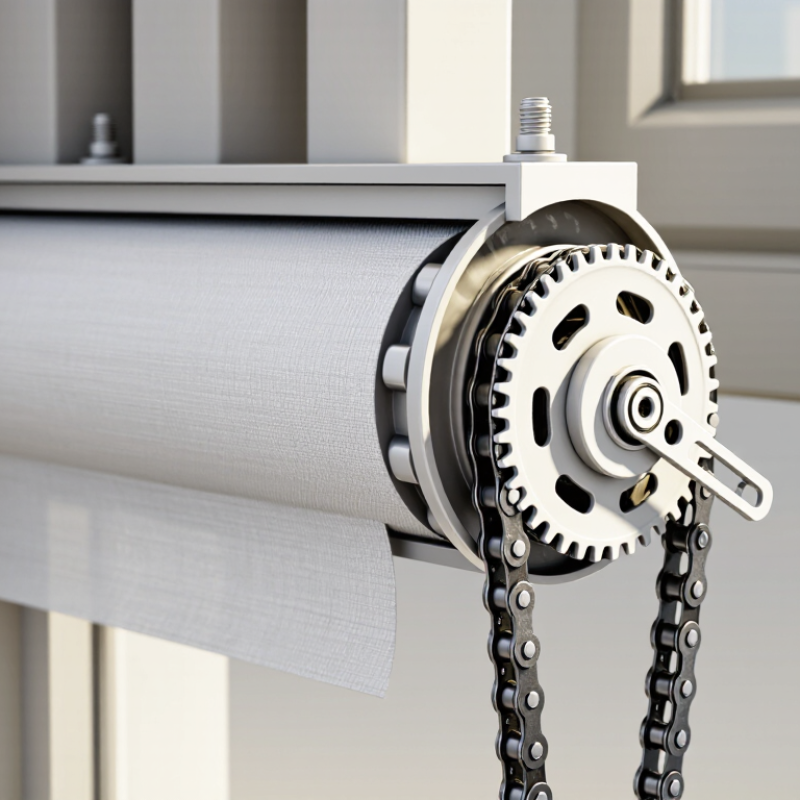
A roller blind clutch is the control unit fitted at one end of a roller tube. It connects the operating chain or cord to the tube, turning a hand pull into rotation. Inside, a drive wheel engages the chain, while gears or a spring mechanism help support the shade and hold it at a chosen height. The exact design varies by blind, so a replacement clutch must match the tube diameter, control side, and shade weight.
Pull the chain down on one side, and the clutch turns the tube to lower the fabric. Pull the opposite side, and the fabric rolls upward. The movement should feel steady, not gritty or jerky. Small part. Big difference. The U.S. Consumer Product Safety Commission’s 2018 review reported 271 window-covering cord incidents from 1990 to 2015, including 184 deaths and 87 near-fatal incidents. These figures concern cords across window coverings, not clutch failures, but they underline why the operating system deserves attention. A loose chain loop, damaged connector, or slipping clutch can affect safe, reliable use. I’ve found that a blind may still move while its clutch is already wearing; that can be easy to miss. Check for smooth travel and secure fittings during routine inspection.
What Is a Roller Blind Clutch and How Does It Work? - What a Roller Blind Clutch Is | Dimension | Description | How It Works or Why It Matters |
| Definition | A roller blind clutch is the control mechanism fitted to one end of a chain-operated roller blind. | It transfers movement from the control chain to the roller tube, allowing the blind to be raised or lowered. |
| Main components | A typical assembly includes a clutch housing, a chain wheel or sprocket, an internal drive mechanism, and a fitting that connects to the roller tube. | The exact design varies, but these parts work together to turn chain movement into rotation of the tube. |
| Control chain | A continuous loop of beads or links runs around the clutch’s chain wheel. | Pulling one side of the loop rotates the wheel in one direction; pulling the other side rotates it in the opposite direction. |
| Roller tube | The blind fabric is attached to a horizontal tube, which is supported by brackets at each end. | The clutch turns the tube, winding fabric onto it to raise the blind or unwinding fabric to lower it. |
| Holding position | Many chain-operated clutches include an internal braking or holding mechanism. | When the chain is released, the mechanism helps resist rotation and keep the blind at the selected height. Holding capacity depends on the clutch and blind specifications. |
| Operating sequence | Pull the chain in the direction that moves the blind as desired, then stop pulling at the chosen height. | The chain wheel drives the clutch, the clutch rotates the tube, and the tube moves the fabric. |
| Compatibility | Clutches are made for particular tube sizes, load ranges, and installation arrangements. | A replacement should match the tube and blind requirements; a mismatch can cause poor operation or prevent the blind from staying in position. |
| Common signs of a problem | The chain may slip, the blind may move unevenly, or the blind may fail to remain at the selected height. | These symptoms can also result from incorrect installation, a damaged chain, a loose tube connection, or excessive blind load. |
| Safety note | Looped blind chains can present a strangulation hazard, especially to young children. | Use an appropriate chain tensioner or safety device, install it as directed, and keep looped chains out of reach of children. |
The Main Parts of a Roller Blind Clutch
A roller blind clutch sits at one end of the roller tube and controls its movement. Its main parts are the clutch housing, a drive wheel, and a chain mechanism. The chain runs around the drive wheel, often with small beads that help fingers grip it. Inside the housing, a brake or holding mechanism helps keep the blind at the chosen height. The opposite end usually has an idler pin or plug, which supports the tube as it turns. Designs vary, so not every clutch contains identical internal parts.
Pulling one side of the chain turns the drive wheel. The clutch transfers that rotation to the tube, winding or unwinding the fabric. Pull the other side, and the tube turns in the opposite direction. When you stop pulling, the holding mechanism resists further movement. That is the basic action. A little resistance is normal, but a blind that slips or feels unusually stiff may have a misaligned bracket, worn part, or fabric rubbing against the frame. It is easy to blame the clutch alone; check the full assembly before deciding.
Tips: Keep the chain clear of knots, and avoid yanking it. Check that the roller sits level in its brackets. If the blind still slips, consult its fitting instructions before adjusting or replacing parts. Small details matter.
How the Clutch Connects to the Blind’s Roller
A roller blind clutch sits at one end of the roller tube, usually inside a shaped drive adapter. The adapter fits the tube’s inner profile, so the clutch can turn the tube rather than spin freely inside it. A bracket holds the clutch in place. At the other end, an idler pin supports the tube and lets it rotate. Fit matters. A loose adapter may click, slip, or wind the fabric unevenly.
When you pull the chain, its loop turns a toothed sprocket inside the clutch. Small gears transfer that motion to the drive wheel and adapter, rotating the roller. Pull one side to lower the blind; pull the other to raise it. The clutch also helps hold the blind at a chosen height, though wear or poor alignment can make it creep. The feel should be steady, not gritty.
This connection affects practical use, not just movement. The U.S. Department of Energy’s Energy Saver guidance reports that properly installed cellular shades can reduce window heat loss by up to 40% and unwanted solar heat gain by up to 60%. Those figures apply to cellular shades, not every roller blind. Still, a clutch that winds fabric squarely helps the covering sit as intended. It is a small part, but installation details are easy to underestimate.
How Chain Movement Raises and Lowers the Blind
A roller blind clutch converts a small pull on the chain into rotation at the roller. The chain runs around a toothed wheel inside the clutch. Pull one side, and the wheel turns; the clutch then rotates the tube, winding fabric around it or letting fabric unwind. The chosen side for raising or lowering depends on how the blind is fitted.
Watch the fabric move. As it winds onto the tube, the blind rises; as it unrolls, it lowers. A brake or holding mechanism inside the clutch helps keep the blind at the height where you stop pulling. Let the chain move steadily, rather than giving it a sharp tug. Small pulls are easier to control.
The movement should feel reasonably smooth. It may not feel perfectly even, though, especially if the fabric is not tracking straight or the chain is pulled at an angle. If the blind jerks, tilts, or will not stay in place, stop forcing it and check for an obstruction or visible damage. A clutch is a small part, but its condition affects how safely and reliably the blind moves.
How Different Clutch Designs Control Blind Movement
A roller blind clutch transfers your pull into controlled rotation at the top tube. In a chain-operated design, the bead chain turns a drive wheel inside the clutch. Gears reduce the effort needed to lift heavier fabric. A brake or locking part helps hold the blind at the chosen height. The action should feel steady, not jerky.
Clutch designs affect how the blind moves. A geared clutch suits larger or heavier blinds because it provides more mechanical advantage, though the chain may need more turns. Spring-assisted designs use stored tension to help raise the fabric; some allow cordless operation through a controlled pull on the bottom rail. Their movement depends on spring tension and correct setup. Small differences matter. A poorly adjusted spring can make the blind rise too quickly or stop unevenly, and not every clutch fits every tube.
Tips: Keep the chain straight and free of twists. If the blind drifts or feels unusually stiff, avoid forcing it; check for fabric rubbing or a loose fitting. These clues can help identify a setup issue, but the clutch itself may need adjustment or replacement.

