$0.00
Choosing the right Dog Harness for your business is a practical decision, not just a style choice. The product must suit your customers, their dogs, and the way they use it. A small pet shop may need adjustable everyday designs, while a walking-service supplier may prioritize quick fitting and durable hardware. Details matter. Think of a wet leash, a wriggling dog, and a buckle that must close cleanly on the first try.
For this guide, “Maya Chen” is a fictional product specialist, and the following line is an illustrative editorial quote, not a real-world testimonial: “A good harness fits the dog in front of you, not the average dog on a chart.” That idea points to questions worth asking: Are size ranges clear? Can staff explain chest and neck measurements? Do straps rub behind the front legs? A chart helps, but it cannot replace careful fit checks. And sometimes, a product that looks sturdy in a photo disappoints in hand.
We’ll examine fit, materials, construction, sizing, supplier consistency, and customer support. We’ll also consider how to compare samples before placing a larger order. No harness works for every dog or business. The right choice is the one you can assess honestly, explain clearly, and stand behind when customers ask what makes it suitable.
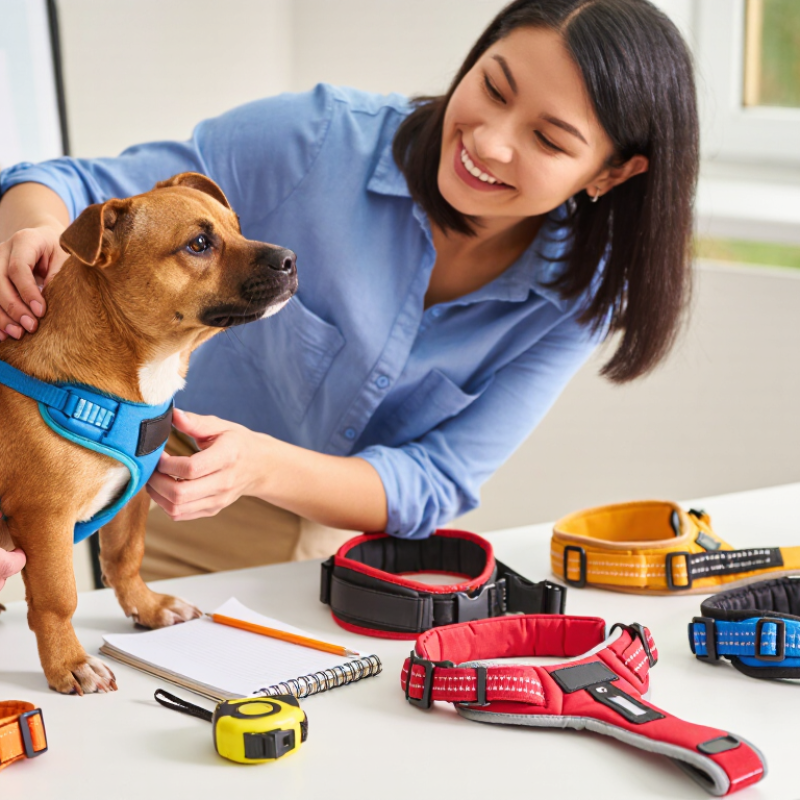
Before choosing a dog harness, define who your business serves. A neighborhood pet shop may need everyday walking options, while a grooming service may value quick, easy-to-clean designs. Ask customers what they struggle with: slipping straps, difficult buckles, or dogs that pull. Their answers are more useful than guessing from appearance alone. Fit matters.
Consider the dogs your customers actually bring in. A small range of adjustable sizes may suit a local shop, but a specialist retailer could need more choices for broad chests, narrow bodies, and growing puppies. Check strap placement, stitching, buckle operation, and whether the harness allows comfortable shoulder movement. A practical test is to adjust it on several different body shapes, not just one calm dog. Not every dog cooperates.
Your business needs matter, too. Compare wholesale cost with the price customers will accept, and leave room for exchanges when sizing goes wrong. Clear measuring instructions can reduce confusion, though they will not prevent every return. I would avoid stocking many colors before learning which sizes sell; that assumption can leave useful cash tied up in slow-moving inventory. Ask staff to record common fit complaints for a few weeks, then review the notes before placing the next order. One detail is easy to miss: customers may want a harness that is simple to put on, even when a more technical design looks impressive.

How to Choose the Right Dog Harness for Your Business?
Comparing Dog Harness Types and Their Uses
A useful harness range starts with the dog’s shape, walking habits, and handler needs—not just color or price. Back-clip harnesses suit many everyday walks and are simple for new owners to fit. Front-clip designs can give handlers more steering control, while dual-clip styles offer both attachment points. Step-in and vest designs may work well for dogs that dislike equipment passing over their heads. No single style fits every dog.
The American Pet Products Association’s 2023–2024 National Pet Owners Survey estimated that 65.1 million U.S. households owned a dog. That figure signals a substantial customer base, but it does not show which harness types those owners prefer. For a business, compare sample harnesses on dogs with different chest shapes. Check strap adjustment, buckle access, seam strength, and whether the harness shifts during a short walk. Small details matter. Fit can still be tricky.
Tips: Stock several attachment styles and a clear size guide. Ask customers to measure chest girth, then check the fit with two fingers beneath each strap. Keep notes on returns and fitting questions; they may reveal gaps in your range. Measurement is helpful, not perfect, so advise customers to reassess fit as their dogs grow or change weight.
Choosing the Right Dog Harness for Your Business
A reliable harness starts with materials suited to daily use. Breathable mesh can help reduce heat during walks, while reinforced webbing handles repeated pulling. Check stitching closely, especially around leash attachments and adjustment points. A smooth finish matters too; rough edges may rub beneath a dog’s front legs. Consider how the material cleans after muddy outings. Care instructions should be clear and realistic.
Fit affects comfort and control. A harness should sit securely without restricting shoulder movement or pressing against the throat. Measure each dog according to the maker’s sizing guidance, then check the fit with two fingers beneath the straps. Dogs have different body shapes, so one size chart may not suit every customer. Small details matter.
Tips: Test buckles several times, inspect seams under light tension, and check that adjustments stay in place. Ask staff to explain fitting without overtightening.
For safety, look for secure leash points and hardware that resists opening during ordinary use. Durability claims are easier to assess through wear tests than appearance alone. Track customer feedback on slipping, chafing, and broken stitching, and review complaints regularly. A sample may look sturdy on a shelf yet disappoint after a wet week outdoors. That possibility is worth taking seriously when choosing inventory.
Suggested procurement score weighting (%)
Use these suggested weights as a starting point when comparing harness suppliers: prioritize fit and safety, then assess durability and material suitability. The percentages are a customizable evaluation framework, not measured market data.
Choosing a dog-harness supplier starts with repeatable quality, not a polished sample. Ask for material specifications, size tolerances, and inspection records. Check bar-tack stitching, buckle fit, and edge finishing on samples; pull-test load-bearing points under consistent conditions. A clasp that slips on a small sample can become a costly return issue. Request a pre-production sample and compare it with the approved version after the first production run.
Customization should solve a customer need, not merely add options. Confirm whether the supplier can grade patterns across sizes, match colors consistently, and print accurate care labels or packaging. The American Pet Products Association reported U.S. pet-industry spending of $147 billion in 2023 in its 2024 State of the Industry report. That figure covers the wider pet market, not harnesses alone, so it signals scale rather than guaranteed demand. A low minimum order quantity can still be a trap. Compare unit cost, setup fees, defect replacements, and reorder lead time—not just the opening order. Ask for written MOQ tiers and realistic production schedules. I would still test a small batch before committing; attractive customization can leave a business holding slow-moving sizes.
Choosing a dog harness for resale or service use takes more than comparing catalog photos. Request several samples and inspect them under consistent conditions. Check stitching near the chest panel, strap edges, buckle closure, and adjustment range. Then fit the harness on dogs with different body shapes, watching for rubbing, slipping, or restricted movement. Small details matter. A strap that twists during a short walk may become a repeated complaint.
Compare price with expected lifespan, not just unit cost. A cheaper harness can cost more if returns, replacements, or staff time add up. Record sample price, shipping, defect rate, and any minimum order requirement in one sheet. Test buckles repeatedly and wash materials according to care instructions. Still, a neat scorecard can miss the way a nervous dog reacts, so leave room for notes from handlers.
Ongoing performance needs a simple routine. Track returns and customer feedback by size and model, then inspect a few units from each delivery. Look for loose threads, faded fabric, or buckles that no longer hold securely. Review those findings monthly, especially after seasonal sales. A supplier’s first batch may be consistent; later batches deserve the same checks. Keep one worn sample for comparison, even if it looks less presentable.
| Harness Type | Typical Materials and Construction | Indicative Unit Price (USD) | Quality Checks Before Purchase | Fit and Use Considerations | Ongoing Performance to Track | Potential Business Use |
|---|---|---|---|---|---|---|
| Basic step-in harness | Woven nylon or polyester straps, plastic adjustment sliders, and a back attachment ring. | $10–$25 per unit | Inspect stitching at strap joins, webbing edges, buckle closure, and ring attachment. Check that adjusters hold their position during repeated pulling. | Simple to put on for many dogs, but strap placement and adjustment must avoid restricting shoulder movement or rubbing the armpits. | Monitor frayed webbing, loose stitching, cracked buckles, and slipping adjustments. Record returns related to fit or hardware failure. | Entry-level retail ranges, adoption programs, and customers seeking a straightforward walking harness. |
| Padded vest harness | Fabric or mesh body panel with foam or textile padding, adjustable straps, and a back attachment point. | $20–$45 per unit | Check seam consistency, padding coverage, lining quality, attachment-point reinforcement, and whether the fabric dries after washing. | Broader contact areas can distribute pressure, but a poor fit may cause heat buildup, chafing, or restricted movement. | Track padding compression, odor retention, color fading, drying time, and seam condition after care-label washing. | General-purpose walking collections and stores serving customers who prioritize comfort and coverage. |
| Y-front harness | Strap-based design with a Y-shaped front chest section; commonly made from nylon or polyester webbing with metal or plastic hardware. | $20–$50 per unit | Check that the front straps stay clear of the throat when correctly fitted. Examine load-bearing seams and verify that hardware is securely attached. | Designed to leave the shoulders relatively free when fitted correctly. Sizing is sensitive to chest and neck measurements, so clear size guidance matters. | Review fit-related exchanges, strap adjustment stability, hardware wear, and customer reports of rubbing or restricted shoulder movement. | Specialty walking ranges where fit guidance and freedom of movement are key selling points. |
| Front-clip, dual-clip, or no-pull style | Adjustable webbing or padded panels with a front chest attachment point; some designs also include a back attachment point. | $18–$45 per unit | Inspect reinforcement around each attachment point and test clips for secure closure. Confirm that the front ring is positioned to avoid contact with the legs. | Front attachment can help redirect a pulling dog, but it does not replace leash training. Fit and leash setup affect comfort and control. | Track ring deformation, clip function, stitching wear, and reports of tangling, rubbing, or fit problems during walks. | Training-focused assortments and customers looking for additional leash attachment options. |
| Tactical-style harness | Heavier webbing, reinforced stitching, multiple adjustment points, and often metal hardware or accessory panels. | $30–$80 per unit | Examine seam reinforcement, hardware finish, load-bearing handles, and attachment points. Check whether accessories are securely mounted and do not create sharp edges. | Typically bulkier than basic walking styles. Confirm the harness is appropriate for the dog’s activity and does not impede normal movement. | Monitor hardware corrosion, handle stitching, panel attachment, added weight, and wear after repeated use and cleaning. | Outdoor and working-dog product ranges where customers need a more robust, feature-rich design. |
| Small-dog or lightweight harness | Lightweight mesh or narrow webbing, small-scale buckles, and reduced-weight attachment hardware. | $12–$35 per unit | Check buckle operation at small sizes, seam neatness, adjuster grip, and whether the hardware is proportionate without being difficult to handle. | Small dogs still require secure, correctly measured fit. Avoid assuming that a lightweight design is suitable for every small breed or body shape. | Track buckle breakage, adjustment slippage, sizing exchanges, and wear at the smallest strap settings. | Size-specific ranges and retailers serving toy and small-breed customers. |
Pricing note: Price bands are broad indicative consumer-price ranges in USD, not supplier quotes; actual prices vary by size, materials, order volume, and market. For procurement, compare like-for-like samples and request written specifications, care instructions, and warranty terms. Any load or durability testing should follow a documented protocol appropriate to the product’s intended use.