How to Choose the Best HDPE Tarpaulin in 2026?
Choosing the best Hdpe Tarpaulin in 2026 starts with understanding where and how it will be used. A cover for garden furniture faces different demands than one protecting building materials or farm supplies. Rain, sunlight, wind, and repeated handling all affect how long a tarp performs. Small details matter. Check fabric weight, weave density, coating, and edge reinforcement instead of relying on a product photo. These specifications can reveal more than a broad “heavy-duty” label. Still, numbers need context: a heavier sheet may be harder to fold, carry, or secure.
Measure the items and coverage area before comparing sizes. Leave enough material for overlap and fastening, but avoid excess fabric that catches strong gusts. Inspect the seams, corners, and grommets; these points often take the most strain during everyday use. Look for clear information about UV resistance and water protection, and ask how those features were tested. A low price can be tempting, but replacement frequency and repair options also affect overall value.
There is no perfect tarp for every job. A product described as waterproof may still let water through at worn seams or damaged edges. Read the care instructions, check the seller’s specifications, and consider the conditions the sheet will actually face. The right choice balances protection, handling, durability, and cost. Keep expectations practical.
What Is HDPE Tarpaulin and How Is It Made?
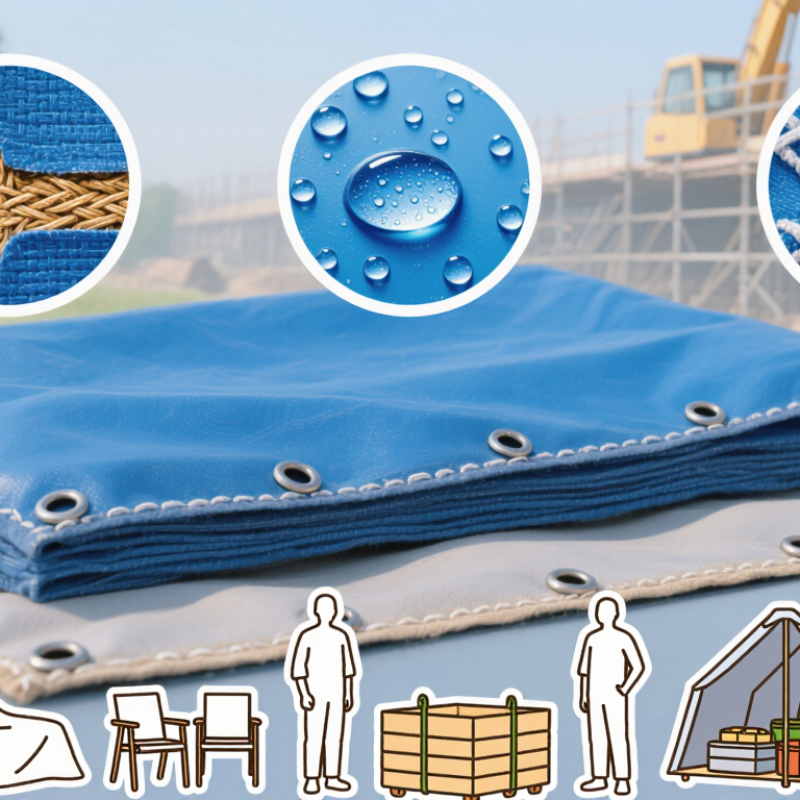
HDPE tarpaulin is usually a woven fabric, not a solid plastic sheet. Manufacturers melt high-density polyethylene resin and extrude it into narrow tapes. These tapes are stretched, then woven into a grid-like base. It starts with resin. The weave gives the fabric strength while keeping it relatively light.
To resist water, the woven base is commonly laminated or coated with polyethylene. UV stabilizers may be added to slow sun damage, while hems, seams, and eyelets reinforce areas that face pulling and abrasion. The finish matters. A coating that separates from the weave can let water in, even when the tarp looks thick. One detail buyers can miss: weight alone does not reveal weave quality or edge strength.
PlasticsEurope’s Plastics—the Fast Facts 2023 reported global plastics production of 400.3 million tonnes in 2022. This broad industry figure reflects the scale of plastic supply, not the quality of any individual tarp. When comparing products, check stated fabric weight, coating, UV treatment, and seam construction. A clear specification is more useful than a vague claim of “heavy duty.” Even then, real service life depends on exposure, handling, and storage.
How Do You Define Your Coverage and Weather-Protection Needs?
Measure the object, then add the drop needed on every side for anchoring and runoff. For a woodpile 2.4 meters wide and 1.8 meters high, a 0.6-meter drop on both sides adds 1.2 meters to the required width. Allow extra material for tie-downs, but avoid excess fabric that can flap in gusts. Measure twice.
Weather exposure matters as much as size. NOAA’s 2024 U.S. Billion-Dollar Weather and Climate Disasters report recorded 27 events, with combined losses of $182.7 billion. That figure does not predict what a tarp must withstand at your site; it does underline why local rainfall, wind, and sun exposure deserve attention. Check nearby climate records and note whether the cover will face driving rain, prolonged UV exposure, or strong gusts. Wind changes everything.
For rain protection, pitch the tarp so water drains instead of pooling in a sag. For windy locations, plan secure tie-down points and choose reinforced edges and sturdy grommets. Check the stated fabric weight, UV treatment, and dimensions before buying; “heavy duty” alone is not a useful specification. An HDPE woven tarp can suit many outdoor covers, but it is not a substitute for a properly designed permanent roof. I have seen careful measurements miss one detail: where the water will go.
Which Material and Construction Specifications Should You Compare?
When choosing an HDPE tarpaulin, compare the fabric and its coating separately. HDPE woven tapes provide the reinforcing grid; a polyethylene coating helps resist water. Check the fabric weight in GSM, but do not treat higher weight as proof of better performance. Ask for tensile and tear-strength figures, plus UV-resistance details suited to your expected exposure. A cover left over a woodpile through a sunny summer needs different protection from one used briefly indoors.
Tips: Inspect the edges and corners. Reinforced hems, securely set eyelets, and consistent eyelet spacing help distribute tension. Look for sealed seams and ask how they were tested. If possible, handle a sample: stiff, brittle-feeling fabric may be awkward to fold, while very thin material can be vulnerable to abrasion. Check dimensions too; a tarp pulled tight over sharp corners is more likely to fail.
Construction details are easy to overlook on a specification sheet. Ask whether the stated weight includes the coating, and compare samples under the same conditions. One detail may still be missing: suppliers do not always publish comparable test methods. That makes a single number less useful than it appears. Consider where water will pool, how often the cover will move, and whether the tie-down points match your setup. A little slack is usually safer than excessive tension.
How Can You Check Durability, Safety, and Quality Standards?
A strong HDPE tarpaulin should handle more than a quick pull in a showroom. Check the fabric weight, weave density, and coating thickness together; a high GSM figure alone does not prove long service life. Hold a sample toward the light and look for uneven gaps or thin patches. Flex a corner several times, then inspect for whitening, cracking, or coating separation. Pay close attention to hems and eyelets, where wind and repeated tying often cause early failures. Small details matter.
Ask for test reports that match the tarp’s intended use and destination market. Useful evidence may cover tensile strength, tear resistance, UV ageing, and water resistance. Confirm the report identifies the tested material and product version, not just a general range. If the tarp will cover goods handled by people or stored near sensitive materials, request relevant chemical-safety information. A certificate can be reassuring, but it is not a substitute for checking its scope and date.
Quality checks should be traceable. Ask how production batches are identified and whether inspection records are available. Compare the delivered sample with the written specifications, including dimensions and edge finishing. In a simple outdoor trial, secure a small sample and observe it after sun and rain exposure. Conditions vary, so one test cannot predict every season. I would still treat any unexplained mismatch as a reason to pause.
How Do You Assess Suppliers, Pricing, and Long-Term Value?
A dependable HDPE tarpaulin supplier should provide clear specifications, not just a heavy-looking sample. Ask for fabric weight, weave density, coating details, UV-test results, and seam-strength data. Request a sample from the production batch, then check its edges, eyelets, and coating for thin spots. Ask for proof.
The OECD’s 2022 Global Plastics Outlook reports that global plastics production reached 460 million tonnes in 2019, double its 2000 level. That figure is not tarp-specific, but it makes material traceability worth checking. Ask suppliers to identify resin type and batch, and to explain how recycled content, if any, affects performance. A polished certificate is useful; a test method and recent batch record are more useful.
Compare landed cost per square metre, including freight, expected replacement frequency, and warranty conditions. A cheaper sheet may lose value if its coating cracks after one season. Cheap can be costly. I would compare quotes using the same dimensions and stated specifications, then ask how the supplier handles defects. Warranty promises need careful reading: sunlight, installation, and storage can change real-world life. The best choice is not always the thickest one; it is the sheet whose evidence matches your site and use.

