
Skip to content

2026 How to Choose Nail Glue Stickers for Wholesale?

In 2026, wholesale buyers face a crowded nail-care market and increasingly careful consumers. Nail Glue Stickers must deliver reliable adhesion, comfortable wear, and clean removal. A glossy package is not enough. Buyers need evidence.

Grand View Research reported that the global nail polish market was valued at approximately USD 14.5 billion in 2023, with continued growth expected through 2030. This wider category signals strong demand for convenient home manicures. Circana’s beauty industry tracking also shows that consumers continue seeking affordable, salon-like results at home. However, these reports cover broader nail products, not every Nail Glue Stickers segment. That distinction matters.

A professional wholesale assessment should examine adhesive strength, curing behavior, flexibility, nail fit, and storage stability. Request batch records, ingredient information, safety documentation, and consistent sample testing. ISO 22716-based manufacturing controls can also support better quality management, although certification claims must be verified directly. Test stickers on short, medium, and long nails. Measure wear after handwashing, showering, and ordinary household tasks. Watch for lifting at the cuticle edge.

Packaging deserves equal attention. Individual sizes should remain organized, sealed, and easy to identify in busy retail settings. Climate can change performance; heat and humidity may affect adhesive surfaces during shipping. Do not rely on laboratory claims alone. A sample that survives one controlled test may fail after three weeks in a real customer’s bathroom. I would also question unusually low prices, because lower costs may reflect thinner materials, weaker packaging, or inconsistent quality. Reliable wholesale decisions combine supplier experience, independent verification, customer feedback, and transparent data.
2026 How to Choose Nail Glue Stickers for Wholesale?

What Are Nail Glue Stickers and How Do They Work?

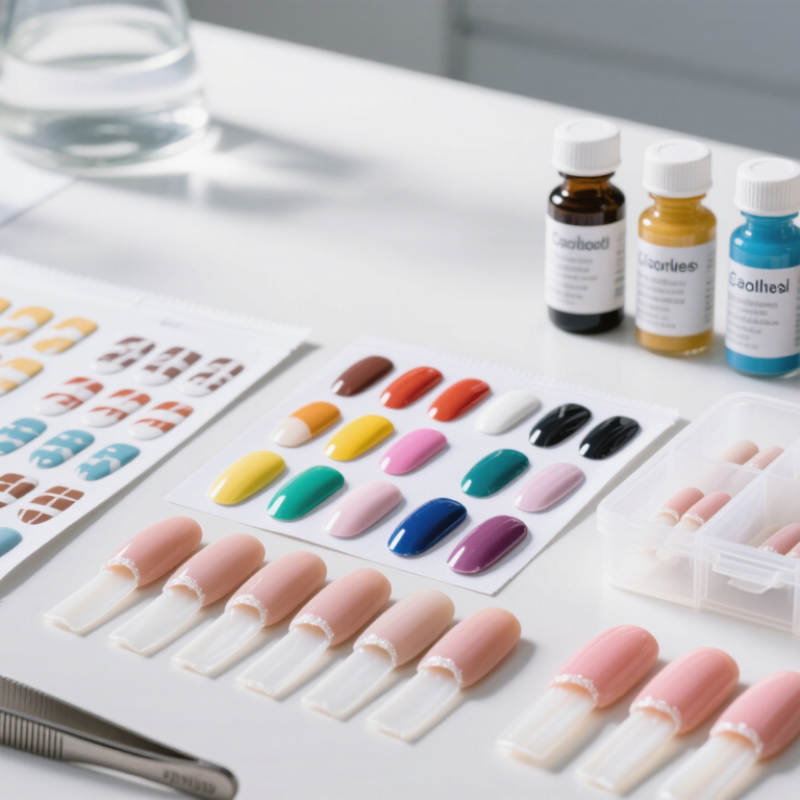
Nail glue stickers are thin adhesive pieces placed between a natural nail and an artificial nail. They may look like clear tabs, but their structure matters. Most use a pressure-sensitive adhesive layer supported by a flexible film. When pressed firmly, the adhesive spreads across the nail surface and creates contact. It does not work like liquid glue. It relies on pressure, clean surfaces, and accurate sizing.

For wholesale buyers, this difference is important. A good sticker should feel smooth, not brittle, and should peel from its backing without stretching. The adhesive needs enough grip for daily wear while allowing careful removal. Before ordering large quantities, test several sizes on different nail shapes. Check adhesion after hand washing, light household work, and normal temperature changes. Real testing reveals more than attractive packaging.

Application technique affects performance. Remove oil, dust, and moisture first. Select a sticker slightly smaller than the natural nail. Press from the center toward the edges for several seconds. Gaps can collect moisture and reduce wear time. In my experience, thicker stickers are not always stronger; some feel secure but lift at the corners. That assumption deserves review. Wholesale quality also depends on consistent cutting, clean backing sheets, stable packaging, and clear storage instructions. Suppliers should provide material details and batch samples, because adhesive performance can vary between production runs.

Which Nail Glue Sticker Types Suit Different Wholesale Buyers?

How to Choose Nail Glue Stickers for Wholesale?

Different wholesale buyers need different nail glue sticker types. According to Statista Market Insights, the global nail care market is projected to exceed US$25 billion by 2028. This growth creates room for adhesive nail products, but buyers should not select only by appearance.

Beauty retailers often need thin, clear stickers with flexible adhesion. They suit customers who want quick application and a natural finish. Salon distributors may prefer stronger, dual-sided tabs with several sizes. These reduce fitting time during appointments. Online sellers usually need compact, leak-free packaging and simple instructions. Fewer returns matter.

Convenience stores require lower-cost sets with reliable shelf stability. Professional buyers may accept a higher price for stronger holding power and cleaner removal. Grand View Research identifies convenience and at-home beauty routines as important nail care growth factors. That supports easy-use formats, though it does not prove every buyer wants maximum strength.

Check the adhesive thickness, curing requirements, storage temperature, and size range. A sticker that grips well in testing may fail on oily nails. Small details matter. In wholesale sampling, I would test ten nail types, not one perfect model. My earlier assumption was that stronger always meant better. It was incomplete. Excessive adhesion can damage natural nails or create complaints. Buyers should compare wear time, removal comfort, packaging waste, and actual reorder rates before committing to volume.

2026 How to Choose Nail Glue Stickers for Wholesale? - Which Nail Glue Sticker Types Suit Different Wholesale Buyers?

Compare nail glue sticker formats by application method, wear expectations, packaging flexibility, and the wholesale buyer profile they serve best.

Nail Glue Sticker Type Recommended Wholesale Buyer Typical Application Approximate Wear Range* Main Advantages Main Limitations Wholesale Evaluation Priorities
Pre-Cut Adhesive Tabs Beauty retailers, starter-kit sellers, gift shops, and temporary event-use suppliers Clean the natural nail, select a matching tab, press it onto the nail, and attach the artificial nail with firm pressure. 1–3 days Fast application, low odor, no curing lamp, easy removal, and suitable for beginners. Generally shorter wear than liquid glue; performance can decline with water, oil, heat, or heavy manual work. Tab thickness, adhesive coverage, residue level, backing-paper release, size assortment, and storage stability.
Ultra-Thin Clear Adhesive Tabs Premium press-on retailers, salon retail counters, and sellers focused on a natural appearance Apply the thin tab to the natural nail and smooth the artificial nail from the cuticle area toward the free edge. 2–5 days Low visible edge, lightweight feel, smooth finish, and a more natural look under short or medium-length press-on nails. Requires accurate sizing and careful preparation; thin tabs may be less forgiving on uneven or oily nail surfaces. Transparency, edge fit, adhesive uniformity, liner release, compatibility with nail shapes, and quality consistency.
Strong-Hold Adhesive Tabs Press-on nail distributors, fashion retailers, and online sellers advertising extended temporary wear Prepare the nail thoroughly, apply the tab without touching the adhesive, and hold the artificial nail in place for the recommended time. 3–7 days Higher initial grip than standard tabs, convenient application, and no liquid-spill risk during shipping. Removal may require more soaking or gentle lifting; poor removal technique can stress the natural nail. Peel strength, clean-removal performance, humidity resistance, shelf life, liner protection, and instruction quality.
Pre-Applied Adhesive Nail Sets Convenience stores, subscription boxes, travel retailers, and mass-market beauty channels The customer selects a suitable size, removes the protective film, and presses the pre-coated artificial nail onto the natural nail. 1–5 days Very simple consumer experience, fewer separate components, and strong suitability for ready-to-use packaging. Limited flexibility in adhesive quantity and shelf-life management; heat exposure may affect the pre-applied adhesive. Protective packaging, expiration guidance, size distribution, coating uniformity, packaging temperature tolerance, and ease of use.
Reusable Adhesive Tabs Eco-conscious retailers, reusable press-on nail sellers, and customers who change designs frequently Apply the tabs for temporary wear, remove the nails carefully, and use a fresh tab set for the next application unless the product specification allows reuse. 1–3 days per application Supports repeat application concepts, reduces product waste, and can be paired with refill packaging. Actual reuse depends on removal method and nail cleanliness; used adhesive should not be assumed to retain original performance. Refill format, waste-reduction claims, removal instructions, adhesive replacement cost, and packaging durability.
Water-Resistant Adhesive Tabs Summer collections, travel retailers, lifestyle stores, and buyers serving active consumers Apply to clean, dry nails and avoid water exposure during the initial bonding period specified by the supplier. 3–7 days Better resistance to occasional hand washing and everyday moisture than basic temporary tabs. Water-resistant does not mean waterproof; prolonged soaking, swimming, oils, and high heat can still reduce adhesion. Moisture-resistance test method, temperature stability, adhesive edge sealing, customer instructions, and claim substantiation.
Tab-and-Glue Hybrid Kit Professional beauty distributors, nail training suppliers, and retailers serving varied wear preferences Use adhesive tabs for short wear or combine the system with a compatible liquid adhesive when a longer-wear option is required. 2–14 days, depending on system use Offers flexibility for different customers, price tiers, occasions, and application preferences. More components increase packaging cost and require clear instructions to prevent incompatible use or difficult removal. Compatibility testing, safety instructions, component shelf life, pack organization, regulatory labeling, and training materials.
Salon-Grade Professional Adhesive Tabs Nail salons, beauty academies, professional wholesalers, and service-based retailers A trained technician prepares the nail, selects the correct tab, aligns the artificial nail, and applies controlled pressure. 3–7 days Consistent application process, professional pack sizes, and suitability for controlled service environments. Requires staff training and careful nail preparation; performance varies with technician technique and client nail condition. Batch consistency, application protocol, professional pack size, technical documentation, traceability, and customer support.
Small-Size Precision Tabs Children’s accessory retailers, petite-nail product sellers, and specialty manicure suppliers Choose a tab that covers the natural nail without touching the surrounding skin, then align the artificial nail accurately. 1–5 days Improved fit for small nail plates, less trimming, and reduced risk of visible adhesive overhang. Not suitable for every customer; smaller tabs provide less total adhesive surface on larger nails. Size range, dimensional accuracy, rounded-edge design, skin-contact guidance, and assortment balance.
Large-Size Full-Coverage Tabs Long-nail retailers, full-cover nail suppliers, and buyers serving customers with wider nail plates Select the closest size, position the tab centrally, and press the artificial nail evenly from the center outward. 2–7 days Greater contact area, reduced need for combining multiple tabs, and better coverage for wide artificial nails. Excess material may contact surrounding skin or create lifting if the size is not trimmed correctly. Coverage area, contour flexibility, trimming guidance, liner handling, adhesion uniformity, and compatibility with long nails.

*The wear ranges are practical estimates rather than guarantees. Actual performance depends on nail preparation, natural nail condition, adhesive coverage, product fit, water and oil exposure, temperature, application pressure, and removal technique. Wholesale buyers should request samples and conduct application, aging, packaging, and compatibility tests before placing a large order.

How to Evaluate Adhesion, Safety, Durability, and Ease of Use

For wholesale buyers in 2026, nail glue stickers should be judged beyond a glossy sample card. Adhesion is the starting point. Test several sizes on clean, dry nails, then record application pressure and hold time. A practical trial can include hand washing, light household moisture, and daily movement. Check lifting at the sidewalls, not only the center. Strong initial tack can mislead. A sticker that grips quickly may still fail after oil exposure. Keep photos and lot records for comparison.

Safety requires transparent material information and controlled skin-contact testing. Ask for adhesive composition, allergen statements, storage conditions, and recommended removal steps. Review packaging for clear warnings and instructions. Trial samples on a small area first, with trained testers and a defined observation period. Stop testing when redness, burning, or swelling appears. “Gentle” is not a test result. It remains only a claim until evidence supports it. Some users may still react, even when the formula seems suitable.

Durability should match the customer’s routine, not an exaggerated promise. Compare wear after three, five, and seven days. Inspect edge curling, residue, color changes, and nail stress during removal. Ease of use matters at scale. Measure backing separation, alignment, filing time, and removal force. A good wholesale sample saves minutes per application. It should also tolerate normal warehouse temperature changes. Results vary. Tester habits can distort findings, so repeat trials across nail shapes and batches before approving volume orders.

How to Compare Suppliers, Certifications, Packaging, and Minimum Orders

In 2026, wholesale buyers should compare nail glue sticker suppliers beyond price. Request samples from at least three factories and test adhesion on clean, dry nails. Check whether the stickers peel smoothly without leaving excessive residue. I record application time, wear duration, package damage, and customer feedback. One supplier may offer stronger adhesion, but its backing paper may tear during removal. Small details matter.

Ask for clear certification and safety documents. These may include an ISO 9001 certificate, material declarations, safety data sheets, and relevant adhesive test reports. Verify certificate numbers, issuing bodies, and expiration dates. Do not accept a logo printed on a brochure as proof. Documentation should match the actual factory and product. Requirements can differ by destination, so confirm them with a qualified local compliance specialist.

Packaging also affects wholesale performance. Check sealed pouches, size labels, batch codes, barcodes, and moisture protection. Drop-test cartons before approving a large shipment. A low minimum order quantity sounds attractive, but tier pricing may become expensive after custom printing and freight. Ask about mixed-size orders, replacement terms, sampling fees, and production lead times. I once focused too heavily on MOQ and overlooked inconsistent sticker sizes. That mistake cost more than expected. Supplier comparisons should include real handling tests, not only attractive quotations.

How to Calculate Wholesale Costs, Lead Times, and Profit Margins

How to Choose Nail Glue Stickers for Wholesale in 2026

Wholesale planning starts with the complete landed cost, not the factory quote alone. Record the unit price, packaging, inspection, freight, insurance, and applicable import charges. For example, a $0.42 pack can reach $0.57 after logistics and handling. That difference matters. Add storage, payment fees, damaged units, and sampling costs. Divide the total by the sellable quantity, not the ordered quantity. If 2,000 packs arrive and 40 are damaged, calculate using 1,960 packs.

Lead time should include production, quality inspection, transport, and receiving. A supplier may quote 18 production days, but shipping can add 12 more. Keep a buffer of seven to ten days during busy seasons. Confirm adhesive performance, package counts, carton dimensions, and replacement policies before placing a large order. Written specifications reduce misunderstandings. They do not remove every risk.

Profit margin needs a realistic selling price. Use this formula: selling price minus landed cost, divided by selling price. A pack sold for $1.20 with a $0.57 landed cost gives a 52.5% gross margin before warehouse and sales expenses. Set different prices for 100, 500, and 2,000 packs, while protecting your minimum margin. My first forecast once ignored slow-moving inventory. It looked profitable on paper. The cash flow was not. Review sales speed every month, and adjust order quantities before discounts become necessary.