How to Choose Garment Packaging Bags in 2026?
Choosing Garment Packaging Bags in 2026 means balancing protection, presentation, cost, and practical use. A bag should keep fabric clean through storage and shipping without adding unnecessary bulk. The right choice depends on the garment, the route it travels, and how customers open and reuse the package. Small details matter. A zipper can help protect a folded shirt, while a clear front lets warehouse staff identify sizes quickly.
Start with the material, thickness, dimensions, and closure. A delicate blouse may need a smoother interior than a durable sweatshirt. A bag that is too tight can crease collars; one that is too large may let garments slide around. These details are easy to miss when decisions are made from a product photo alone. Garment Packaging Bags should also fit packing equipment and storage shelves, not just the finished product. Ask suppliers for material specifications and samples, then test them with actual garments and packing workflows. Check seals, tear resistance, print clarity, and how the packaging looks after handling. Where reduced material use is a priority, compare options carefully rather than assuming thinner always means better. Performance still matters. This guide outlines the questions to ask before choosing a packaging bag, helping buyers make informed decisions based on product needs and verifiable supplier information. Some trade-offs remain; no single bag suits every garment or supply chain.
Identify the Garment Type, Use Case, and Packaging Requirements
How to Choose Garment Packaging Bags in 2026?
Start with the garment, not the bag. A lightweight blouse folds neatly into a slim sleeve, while a structured jacket needs more room to protect its shoulders. Knitwear can snag on rough seams or sharp closures, so check the bag’s interior and opening. Measure folded items in real production conditions; sample garments are often packed more neatly than actual orders.
Then consider where the package will go. Bags for retail displays may need clear film and tidy seals, while parcels traveling through warehouses need stronger seams and enough space to avoid stressing closures. For breathable fabrics, a fully sealed bag may not be ideal during extended storage. Ask suppliers about material thickness and test samples with your garments. Small details matter.
Match the packaging to handling needs, too. Reusable zippers can help with returns or repeated access, but they add cost and bulk. Recycled-content options may suit your goals, though availability and performance vary. Don’t assume a thinner bag is automatically better. I’ve found that one size rarely fits every garment, and a slightly oversized sample can hide problems that appear on a busy packing line. Check the finished pack, not just the empty bag.
How to Choose Garment Packaging Bags in 2026
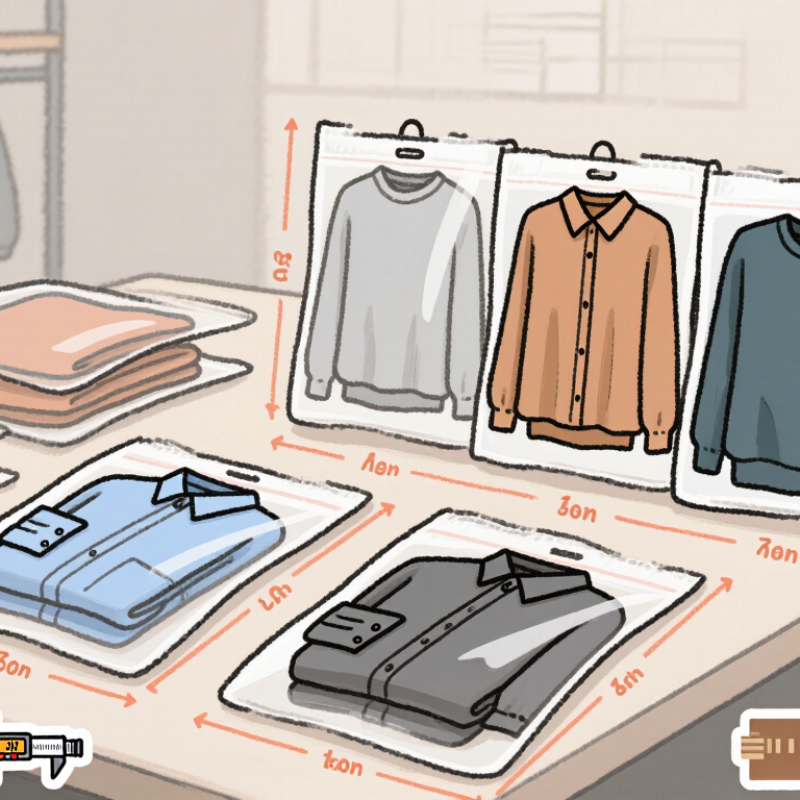
Suggested starting bag dimensions by garment type
Dimensions are practical estimates for folded garments, not universal standards. Measure the folded item, allow room for thickness and easy insertion, and choose packaging that suits the use case—such as retail presentation, shipping, or storage.
Compare Bag Materials, Protection Levels, and Recyclability
In 2026, choose garment bags by matching material to the journey, not just the shelf. A clear polyethylene bag resists splashes and shows the garment, but can trap moisture if clothing is packed damp. Paper allows airflow and is easier to sort where paper-bag recycling exists, yet a wet corner can tear. For coats or long-distance shipping, test seams and closures with a folded garment inside. Small details matter.
Recyclability needs a local check. The OECD’s 2022 Global Plastics Outlook estimated that only 9% of global plastic waste was recycled in 2019. The U.S. EPA reported a 68.2% recycling rate for paper and paperboard in 2018; that figure covers many products, not garment bags alone. Coatings, windows, labels, and mixed-material layers may complicate sorting. A simpler bag can be the better choice. Still, less protection is not automatically greener: one rain-soaked return can erase material savings. Compare recycled content, required protection, and accepted local collection streams, then test a real shipment before ordering at scale.
Select the Right Size, Thickness, and Closure Style
How to Choose Garment Packaging Bags in 2026?
Start with the folded garment, not its hanger size. Measure its width, height, and thickness, then allow a little room for easy packing. A bag that is too large can let fabric shift and wrinkle; one that is too tight may stress the seams. Pitney Bowes’ 2024 Parcel Shipping Index estimated 161 billion parcels worldwide in 2023. That scale makes dependable packaging important, but parcel volume alone cannot tell you which bag fits your product.
Choose film thickness by considering garment weight, sharp trims, and shipping conditions. Micron ratings help compare bags, but thicker film is not automatically stronger; material quality and sealed seams matter too. For a lightweight T-shirt, a thinner bag may be adequate. A heavy knit or garment with buttons may need more protection. Test a packed sample through your actual handling process. Small trials help. I’d avoid choosing by feel alone; that judgment can be wrong.
Tip: Pick a closure for the customer’s next step. Adhesive seals pack quickly, while resealable closures can make returns or storage easier. Keep the opening wide enough for smooth packing, and check that the seal stays shut after bending. A practical fit beats a perfect-looking specification.
Check 2026 Safety, Labeling, and Sustainability Requirements
Choosing garment packaging in 2026 means checking safety, labels, and disposal—not just appearance. Start with the garment’s weight and shipping route. A thin bag can split at a sharp zipper; an oversized bag wastes material. Check applicable market rules for warnings, traceability, and packaging information. In the European Union, Regulation (EU) 2025/40 generally applies from 12 August 2026, while some labeling details are phased in. Confirm current requirements for each destination.
Sustainability claims need evidence. The OECD’s Global Plastics Outlook reports that only 9% of plastic waste was recycled globally in 2019. Ask suppliers for material specifications and test documentation, then check whether local collection systems accept the bag. “Recyclable” on its own may not tell customers what to do. There is no perfect bag; sometimes a lighter design protects less, and that trade-off deserves another test.
Tips: Keep a sample beside the garment during fit checks. Verify warning and label placement on the actual packed item, not just the artwork proof. Record the material, thickness, and supplier batch. A small print change can matter. Check it twice.

