
Skip to content

How to Choose Distillery Filtration Equipment?

Choosing distillery filtration equipment is not simply a capacity decision. It affects clarity, aroma, yield, cleaning time, and product consistency. A polished spirit may look simple in the glass. Its quality often depends on hidden process details.

The IWSR 2024 Global Trends Report shows continuing pressure on beverage producers to improve quality, efficiency, and consumer trust. Meanwhile, Grand View Research identifies filtration as an important part of modern food and beverage processing. These reports do not select a filter for you. They show why equipment decisions need measurable evidence, not attractive brochures.

Start with the spirit itself. Vodka may require fine polishing and activated carbon treatment. Whisky may need gentle filtration to protect color and aroma. Liqueurs can challenge equipment through sugar, oils, and suspended botanicals. Measure turbidity, temperature, alcohol strength, flow rate, and solids before choosing a system. Small details matter.

Think beyond the first purchase.

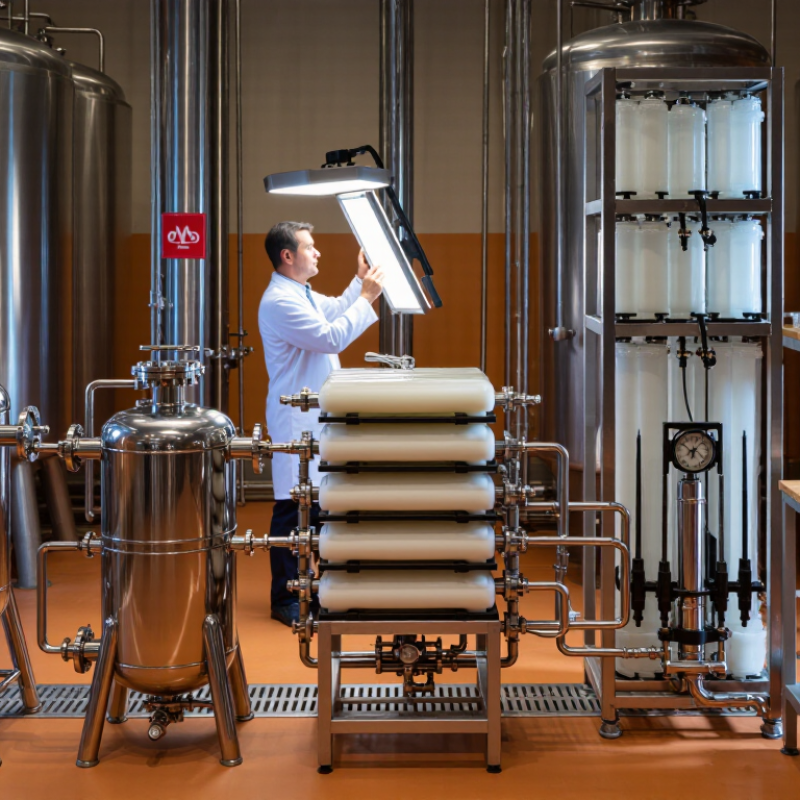
A cartridge filter may suit a small batch operation. A plate-and-frame system may offer better flexibility at moderate scale. Membrane systems can provide precise separation, but they demand careful cleaning and pressure control. Equipment should use food-contact materials and support documented sanitation procedures. Confirm compatibility with ethanol, cleaning chemicals, seals, and operating temperatures.

Experience also reveals an uncomfortable truth: the largest system is rarely the best system. Oversizing can waste energy, product, and cleaning water. Undersizing creates bottlenecks near filling. This guide compares practical options through performance, maintenance, safety, and total operating cost. Some recommendations may need revision after pilot testing. That is not failure; it is responsible engineering.
How to Choose Distillery Filtration Equipment?

Define Filtration Goals for Distillery Operations

Choosing distillery filtration equipment starts with a measurable filtration goal. Define the problem before comparing filter housings, membranes, or cartridges. Do you need brighter spirit, lower sediment, reduced color, or better consistency? Record turbidity, color, alcohol strength, temperature, flow rate, and product loss. The 2019 EU Joint Research Centre BAT Reference Document recommends tracking water, energy, and wastewater by production unit. That guidance fits distilleries well. Filtration affects more than appearance.

Set limits that operators can verify during every batch. For example, establish a turbidity target after filtration, then test it with a calibrated meter. Also measure flow decline and cleaning-water volume.

The 2023 Beverage Industry Environmental Sustainability Report from the Beverage Industry Environmental Roundtable reported a median water-use ratio of about 3.1 liters per liter of beverage across participating sites. This is not a distillery-specific target, but it provides useful context for evaluating rinse cycles and cleaning methods.

A clear goal might be: stable clarity, less than 2% product loss, and reduced water use per batch. Perfect targets rarely survive production. Review them after real trials.

Tips:

Run a small pilot first. Compare filter media at the same temperature and flow. Keep one unfiltered sample for visual and laboratory comparison. Inspect the first and final liters separately. If the spirit becomes too stripped, the filter may be “working” too well. That detail is easy to miss. Document every change, including tank age, proof, and cleaning time. Industry reports provide benchmarks, but your own batch records should control the final equipment decision.

Compare Filtration Technologies and Their Best Applications

How to Choose Distillery Filtration Equipment?

Choosing distillery filtration equipment starts with the liquid, not the catalog. Fermented wash usually needs depth filtration to remove yeast, grain particles, and larger solids. Depth filters can manage heavy solids, but they often require frequent replacement. Plate-and-frame systems suit batch production and offer visible control during operation. They can be slower when volumes increase. Keep it practical.

Cartridge membrane filtration works well for polishing spirits after distillation. It improves clarity and removes fine particles with consistent flow. Microfiltration is useful before filling, especially when stable brightness matters. However, membranes can foul quickly when the liquid contains oils or excessive solids. Activated carbon can reduce unwanted color and aroma, but it may also remove desirable character. Less is often safer.

Equipment selection should consider viscosity, temperature, pressure, flow rate, and cleaning procedures. A larger housing is not always better; oversized systems may waste media and water. Operators should test several media grades using real production samples. Record turbidity, pressure changes, filtration time, and sensory results. Measure before purchasing. A small pilot trial can reveal problems that specifications miss. In practice, the “best” technology may change between batches, because raw materials and fermentation conditions are rarely identical. That uncertainty deserves attention.

How to Choose Distillery Filtration Equipment?

Comparison of representative filtration ratings and their best applications

Screen / Strainer: Removes mash particles, fibers and large solids before finer filtration.
Depth Filter: Suitable for yeast, suspended solids and general spirit clarification.
Cartridge Filter: Provides final particulate polishing before filling or packaging.
Microfiltration: Used for fine clarification and significant yeast or bacterial reduction.
Ultrafiltration: Targets colloids, proteins and other high-molecular-weight compounds in process streams.

Values show representative nominal retention scales in micrometres (µm). Actual performance depends on filter media, pressure, flow rate, temperature, solids loading and the required product quality. Reverse osmosis is not included because it separates dissolved compounds rather than operating on a directly comparable micron rating.

Evaluate Equipment Capacity, Materials, and Compatibility

Choosing distillery filtration equipment starts with capacity, not appearance. The 2024 Distilled Spirits Council Economic Briefing reported 305.5 million nine-liter cases sold in the United States during 2023. That scale shows why inconsistent filtration can quickly affect production schedules. Measure peak flow, batch volume, viscosity, and pressure loss. Do not size only for average output. A filter running near its limit may slow filling and increase replacement frequency.

Materials require equal attention. Stainless steel 316L suits many spirit-processing environments because it resists corrosion and supports repeated cleaning. However, the housing is only one part of the system. Check whether seals, hoses, membranes, and adhesives tolerate ethanol concentration, temperature, and cleaning chemicals. PTFE often offers broad chemical resistance, while elastomer performance varies widely. Confirm every wetted component through supplier compatibility data and controlled trials.

Compatibility also includes the liquid itself. High-proof neutral spirit, colored liqueur, and sugar-rich products can behave differently during filtration. A membrane that performs well with one batch may foul quickly with another. It happens. Record turbidity, pressure, temperature, and flow during pilot testing. The Brewers Association’s 2024 technical guidance continues to emphasize process control and sanitation as practical quality foundations. Still, published guidance cannot replace plant-specific testing. Leave capacity headroom, but avoid buying excessive surface area without evidence. That mistake wastes space and capital.

How to Choose Distillery Filtration Equipment? - Evaluate Equipment Capacity, Materials, and Compatibility

Equipment Type Typical Capacity Typical Filtration Rating Common Wetted Materials Suitable Distillery Applications Typical Operating Limits Compatibility Considerations
Cartridge Filter Housing 0.5–30 m³/h, depending on housing size and liquid viscosity Approximately 0.2–100 µm nominal or absolute, depending on cartridge media 304 or 316L stainless steel housing; polypropylene, PES, PTFE, or cellulose-based cartridges Polishing of spirits, removal of fine particles, final filtration before filling Commonly up to 10 bar differential-pressure design; many polymer cartridges operate below 80°C Use 316L stainless steel and low-extractable media for high-proof alcohol. Confirm gasket compatibility with ethanol concentration and cleaning chemicals.
Bag Filter Housing 5–100 m³/h, based on vessel size, bag length, and liquid viscosity Approximately 1–relevant 200 µm nominal filtration 304 or 316L stainless steel housing; polypropylene, polyester, or nylon bags Removal of coarse solids, char fines, botanical particles, and pre-filtration before cartridges Often designed for up to 6–10 bar; actual pressure depends on housing and bag construction Choose chemically resistant bag media. Bag filtration is generally more suitable for bulk solids than for final microbial or fine-polishing duties.
Plate-and-Frame Filter Press Approximately 0.5–20 m³/h; throughput varies substantially with solids loading Roughly 1–50 µm with suitable filter cloth or filter paper Stainless steel frame; polypropylene plates; polypropylene, polyester, or cellulose filter media Clarification of wash, fruit, grain, botanical, or other spirit streams containing relatively high solids Common operating pressures are approximately 2–10 bar; temperature depends on plates and filter media Requires adequate pre-screening and cake discharge procedures. Verify that filter media will not add taste, odor, or extractables to the product.
Depth Filter Module Approximately 0.2–10 m³/h per module, depending on area and product clarity About 0.2–20 µm nominal or absolute, depending on construction Cellulose, polypropylene, polyester, or resin-bonded media; stainless steel or polymer support components Fine clarification and polishing of spirits, liqueurs, and low-solids liquid products Many modules are used below 60–80°C and at low-to-moderate differential pressure Check ethanol resistance, pressure-drop limits, extractables, and whether the media is approved for food-contact use.
Crossflow Microfiltration System Approximately 0.5–20 m³/h feed flow, depending on membrane area and solids load Typically 0.1–1.2 µm for microfiltration membranes 316L stainless steel piping; ceramic, PES, PVDF, or other membrane materials Continuous clarification with reduced filter-media waste; treatment of products containing fine suspended solids Commonly operated at moderate transmembrane pressure; temperature and pressure depend on membrane chemistry Membrane compatibility with ethanol, flavor compounds, cleaning agents, and pressure cycling must be verified before installation.
Ultrafiltration System Approximately 0.1–10 m³/h feed flow, depending on membrane area and feed composition Typically characterized by molecular-weight cut-off rather than micron rating; common ranges are 1–100 kDa Polymeric membranes such as PES or PVDF; stainless steel process piping Selective removal of colloids, proteins, color bodies, and larger dissolved or suspended macromolecules Usually lower-temperature operation than thermal concentration systems; limits depend on membrane and cleaning protocol Not all ultrafiltration membranes are suitable for high-proof ethanol. Confirm solvent resistance and product recovery before use.
Activated Carbon Filter Approximately 0.2–10 m³/h, depending on carbon bed volume and contact time Not primarily rated by pore size; performance depends on carbon grade, bed depth, and contact time 316L stainless steel vessel; granular activated carbon; food-compatible seals Reduction of selected color, odor, and flavor compounds when the process specifically requires adsorption Operating pressure and temperature depend on vessel design; low pressure drop and controlled flow are important Carbon can remove desirable flavor compounds as well as unwanted compounds. Validate sensory impact, ethanol compatibility, and carbon fines control.
Depth Bed Sand or Multimedia Filter Approximately 1–50 m³/h, based on vessel diameter and bed depth Typically about 5–50 µm for suspended-solid reduction FRP or stainless steel vessel; graded mineral media, garnet, anthracite, or similar media High-volume pre-treatment of process water and low-alcohol liquid streams Usually low-to-moderate pressure operation; backwash flow and drainage capacity are required Generally unsuitable for high-proof spirits unless the vessel, seals, and media are specifically qualified for ethanol service.
Capacity and operating values are typical engineering ranges rather than guaranteed performance values. Final selection should be based on actual flow rate, alcohol concentration, viscosity, solids loading, required clarity, cleaning method, temperature, pressure, and food-contact requirements. Always confirm material compatibility and pressure ratings with the equipment supplier.

Assess Cleaning, Maintenance, and Regulatory Requirements

How to Choose Distillery Filtration Equipment?

Choosing distillery filtration equipment involves more than pore size or flow rate. In daily production, cleaning access often determines consistent performance. Inspect housings, seals, valves, and filter chambers before purchasing. Smooth, drainable surfaces help reduce residue buildup. Tool-free access may shorten cleaning time, but only when parts remain secure. Request documented cleaning procedures and material compatibility data. Small gaps can become expensive problems.

Maintenance should match your production schedule and staff capacity. Confirm how often seals, cartridges, screens, and pressure gauges require inspection. Keep spare parts available, especially during busy production periods. Regulatory expectations vary by location, so consult current food-contact, sanitation, wastewater, and worker-safety requirements. Maintain records for cleaning cycles, filter changes, inspections, and corrective actions. These records support traceability and show disciplined control during audits. Still, paperwork alone cannot prove sanitation. A missed rinse can matter more than a perfect log.

Tips: Test the equipment with real process conditions before full installation. Check drainage after cleaning. Measure pressure before and after filtration. Train operators using simple, written instructions. Review the system after several production runs; early assumptions are often incomplete.

Select Equipment Based on Cost, Efficiency, and Future Needs

Choosing distillery filtration equipment starts with cost, but purchase price rarely tells the full story. Grand View Research valued the global food and beverage filtration market at approximately USD 3.1 billion in 2023, with continued growth expected through 2030. This expansion reflects stricter quality targets and rising production efficiency demands. Compare filter housing cost, replacement media, labor, water, energy, and disposal expenses. A cheaper unit may become expensive when pressure rises quickly or cleaning takes longer.

Measure the liquid before selecting technology. Record flow rate, temperature, solids, viscosity, and desired clarity. A cartridge system may suit small batches, while a depth or membrane system can support larger, repeatable production. Track differential pressure during trials. It reveals when filtration is becoming inefficient. The U.S. Department of Energy reports that monitoring and maintenance can significantly reduce industrial utility waste, although savings vary by site and operating discipline. Real results matter more than catalog claims.

Plan for future needs. Choose modular capacity, accessible parts, and hygienic connections that support expansion. Allow space for additional housings, larger tanks, or automated cleaning. Industry reports often forecast growth, but forecasts can miss sudden changes in demand. Some assumptions will be wrong. A practical pilot test, supported by written operating data, is safer than choosing the largest system immediately. Review performance after several production cycles, not only after installation.