Skip to content

10 Gas Generator Buying Tips for Global Buyers

Buying a Gas Generator for international use is not simply a search for the lowest price. It is a decision about power continuity, fuel availability, maintenance access, and long-term operating risk. A unit that performs well in a showroom may struggle beside a dusty construction site or a humid coastal facility. Global buyers need evidence, not attractive specifications alone.

“Reliability is designed into the system, not added at the end,” says Mike Schultz, a veteran power-generation engineer and industry consultant. This principle deserves careful attention. Engine brand, alternator quality, controller functions, load response, and enclosure design must work together. One impressive component cannot repair a poorly matched system. That mistake is common.

This guide presents ten practical buying tips for a Gas Generator. It examines rated power, standby and prime applications, gas quality, altitude, emissions requirements, noise control, certifications, spare parts, warranty terms, and supplier support. Each point connects technical details with field conditions. For example, a generator installed above 1,500 meters may need derating. A remote buyer may also wait weeks for a simple sensor.

Small details matter.

The recommendations are useful, but they are not perfect. Project conditions differ, and manufacturers sometimes describe performance using different testing methods. Buyers should request test records, clarify assumptions, and compare complete lifecycle costs. A lower purchase price can become expensive after fuel adjustments, service delays, or unavailable parts. Careful questions may feel slow today. They can prevent a very expensive surprise tomorrow.
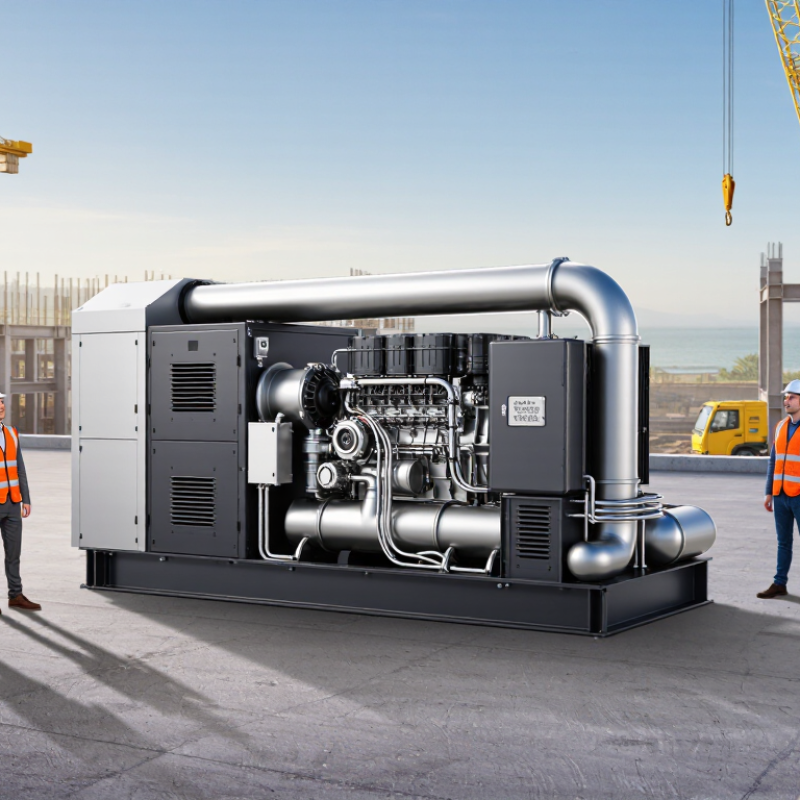
10 Gas Generator Buying Tips for Global Buyers

Define the Power Demand Before Choosing a Gas Generator

Before choosing a gas generator, define the actual power demand at the installation site. List lighting, pumps, compressors, heaters, controls, and future equipment separately. Record both running watts and starting kVA, because motors can briefly demand three to seven times their normal current.

The International Energy Agency’s Electricity 2024 report forecasts global electricity demand growth of about 4% annually through 2026. That trend makes flexible backup capacity more valuable, but it does not justify buying the largest set available. Calculate the continuous load, the largest motor-starting event, and the required power factor. Then select standby or prime duty according to operating hours. A 500 kW load with frequent daily operation needs a different specification from a 500 kW emergency load.

Check altitude, ambient temperature, fuel quality, and available ventilation. These conditions can reduce engine output. For example, a site above 1,500 metres may require derating confirmed by the supplier’s performance curves. Include battery chargers, transfer equipment, and distribution losses in the calculation. Keep reserve capacity for realistic expansion, not an imaginary future.

Measure twice. Numbers drift.

A spreadsheet can still lie. I have seen projects oversize generators after copying old load figures, then operate them lightly for months. Low loading may increase maintenance concerns and fuel inefficiency. Recheck measured demand with clamp meters or power-quality data before approving the final rating. Reference: International Energy Agency, Electricity 2024.

Compare Fuel Types, Engine Designs, and Generator Configurations

Global buyers should compare fuel types before comparing advertised output. Natural gas usually offers cleaner combustion and stable urban operation, but supply pressure can vary. LPG suits remote sites with stored tanks, though cold weather may reduce vaporization. Diesel remains practical for demanding loads and limited fuel infrastructure. Check local fuel quality, storage rules, delivery access, and emergency refueling time.

Engine design affects service intervals, noise, and load response. A four-stroke engine often provides efficient operation and accessible maintenance. High-speed designs can reduce equipment size, but they may demand closer service discipline. Air cooling can simplify installation, while liquid cooling usually handles sustained heavy loads better. Ask for tested fuel consumption at 25%, 50%, and 100% load. One figure is not enough.

Configuration decisions can prevent expensive mistakes. Standby units fit outage protection, while prime-rated sets support longer daily operation. Open sets need a suitable equipment room; enclosed sets simplify outdoor placement but require careful airflow planning. Single units may be cheaper, yet parallel systems improve redundancy and staged loading. Three-phase output suits industrial equipment, but phase imbalance can damage sensitive loads. I have seen buyers oversize generators and then run them lightly, causing inefficient operation and maintenance problems. Measure twice. Confirm voltage, frequency, starting current, altitude, ambient temperature, and acoustic limits with an independent technician. A neat specification sheet can still mislead.

10 Gas Generator Buying Tips for Global Buyers - Compare Fuel Types, Engine Designs, and Generator Configurations

No. Buying Tip What to Compare Key Facts and Typical Characteristics Best-Suited Application Buyer Checklist
1 Select the Correct Fuel Type Diesel, gasoline, natural gas, LPG, or dual-fuel operation Diesel is widely used for high-load and long-duration operation. Gasoline units are commonly compact and suitable for lighter portable use. Natural gas and LPG can offer cleaner combustion, but they require a reliable fuel supply and appropriate pressure regulation. Match the fuel to local availability, storage rules, operating hours, and transportation conditions. Confirm fuel quality, supply continuity, storage requirements, fuel connection standards, and local safety regulations.
2 Size the Generator by Load, Not by Peak Nameplate Only Running load, starting load, power factor, and future expansion Motors, pumps, compressors, and transformers may draw substantially more current during startup. A generator should be assessed using both continuous demand and transient starting requirements. Power factor affects the relationship between kW and kVA. Commercial facilities, construction sites, farms, workshops, and backup systems with motor-driven equipment. List every load, identify the largest starting current, calculate diversity, allow practical reserve capacity, and verify both kW and kVA ratings.
3 Choose the Right Engine Cooling Design Air-cooled versus liquid-cooled engines Air-cooled engines are generally simpler and lighter for smaller portable sets. Liquid-cooled engines usually provide better temperature control for higher ratings, extended duty, and demanding ambient conditions, but they add cooling-system components and maintenance needs. Air cooling for portable and intermittent use; liquid cooling for larger standby, prime-power, and continuous-duty installations. Check ambient temperature, altitude, ventilation, radiator clearance, coolant protection, and service access.
4 Compare Standby, Prime, and Continuous Ratings Duty rating, annual operating hours, and permitted load profile Standby-rated sets are intended for emergency backup and normally do not replace a utility supply continuously. Prime-rated sets are designed for variable loads over extended periods. Continuous-rated sets are intended for steady, sustained loads within the specified conditions. Select the rating based on the actual operating pattern rather than choosing a higher advertised number without checking its definition. Request the rating standard, reference conditions, allowable overload, maintenance intervals, and duty-cycle limitations.
5 Evaluate Alternator and Voltage Regulation Synchronous or induction design, AVR, waveform quality, and phase configuration Synchronous alternators are common in engine-generator sets and can provide controlled voltage for varied loads. An automatic voltage regulator helps maintain output voltage as load changes. Sensitive electronic equipment may require low distortion and stable frequency. Industrial, commercial, residential, telecom, medical, and data-processing applications with different power-quality requirements. Verify voltage, frequency, phase, neutral arrangement, voltage regulation, harmonic performance, and compatibility with nonlinear loads.
6 Choose the Correct Generator Configuration Open-frame, sound-attenuated enclosure, trailer-mounted, or containerized system Open-frame configurations can simplify inspection and reduce size. Enclosures provide weather protection and may reduce noise. Trailer-mounted and containerized systems improve mobility or support larger temporary installations, subject to transport and ventilation requirements. Choose according to site exposure, noise limits, security, portability, lifting arrangements, and installation duration. Check ingress protection, acoustic data, access doors, exhaust routing, lifting points, transport dimensions, and foundation needs.
7 Confirm Frequency, Voltage, and Phase Requirements 50 Hz or 60 Hz, output voltage, single-phase or three-phase supply Electrical systems vary by country and installation. Common arrangements include single-phase supplies for smaller loads and three-phase supplies for industrial equipment. The generator must match connected equipment and the site distribution system. Global projects, export construction equipment, factories, commercial buildings, and emergency power systems. Confirm local grid specifications, motor frequency, voltage tolerance, phase sequence, earthing method, and plug or breaker standards.
8 Assess Automatic Transfer and Parallel Operation Manual start, automatic transfer switch, synchronization, and load sharing Manual systems are suitable when an operator is available. Automatic transfer systems can start the generator and transfer essential loads after utility failure. Multiple sets can be synchronized for higher capacity, redundancy, or staged loading when designed with compatible controls. Unattended facilities, hospitals, communication sites, industrial plants, and critical infrastructure. Verify transfer time, control compatibility, synchronization functions, emergency-stop logic, bypass options, and testing procedures.
9 Compare Efficiency, Emissions, and Total Operating Cost Fuel consumption at different loads, emissions rules, maintenance, and service life Fuel consumption normally changes with load, and a unit operating far below its intended load may be inefficient. Emission requirements depend on jurisdiction, engine type, power category, and installation location. Purchase price is only one part of lifecycle cost. Projects where fuel, maintenance, environmental compliance, and long-term operating expenses are significant. Request fuel-consumption curves, emissions documentation, service schedules, filter and oil requirements, spare-parts availability, and warranty terms.
10 Verify International Compliance and After-Sales Support Safety, electrical, emissions, documentation, warranty, and local service capability A generator intended for international use may need conformity documentation, electrical protection, emissions compliance, transport certification, and installation approval. Reliable technical support and access to consumables can be as important as the equipment specification. Cross-border procurement, remote sites, public projects, regulated facilities, and export-oriented installations. Confirm applicable national standards, test reports, manuals in the required language, spare-parts lead times, technician availability, warranty coverage, and commissioning support.
Note: Actual performance depends on generator size, engine loading, altitude, ambient temperature, fuel quality, installation conditions, and the applicable test or rating standard.

Check Efficiency, Emissions, Noise, and Operating Conditions

10 Gas Generator Buying Tips for Global Buyers

Check Efficiency, Emissions, Noise, and Operating Conditions

Efficiency matters more than the headline fuel rate. Compare specific fuel consumption at 25%, 50%, and 75% load. A generator running lightly may waste fuel.

The U.S. Energy Information Administration reports that natural gas releases about 53 kilograms of CO2 per million British thermal units. At roughly 40% electrical efficiency, that equals about 0.50 kilograms of CO2 per kilowatt-hour. Real results vary with altitude, temperature, maintenance, and load changes. Small details matter.

25%  ·  50%  ·  75% load Compare specific fuel consumption across operating loads rather than relying only on the headline fuel rate.

Check emissions beyond carbon dioxide. Ask for measured nitrogen oxide, carbon monoxide, and particulate data under realistic operating conditions. The IPCC 2006 Guidelines list 56.1 kilograms of CO2 per gigajoule for natural gas combustion.

However, fuel quality and engine tuning can change results. Certificates are useful, but test conditions may not match your site. That is an uncomfortable gap.

Noise requires a measured number. Request sound pressure levels in dB(A), distance, load, and enclosure details.

The World Health Organization’s Environmental Noise Guidelines recommend limiting night-time outdoor exposure near homes to 45 dB Lnight for road traffic. A generator is different, but the health principle remains relevant.

Visit a running installation if possible. Bring a meter. Do not trust the brochure alone.

Check altitude, humidity, ambient temperature, ventilation, dust, and emergency load steps. ISO 8528 testing helps comparison, yet field performance can still disappoint.

Evaluate Safety Features, Maintenance Needs, and Local Regulations

10 Gas Generator Buying Tips for Global Buyers

Safety should be checked before output, fuel capacity, or price. Look for overload protection, low-oil shutdown, an emergency stop, and reliable grounding. A carbon monoxide monitor is valuable, but it cannot replace ventilation. Never operate a fuel-burning generator in a room, garage, or enclosed loading area. During site inspections, I also check cable insulation, socket covers, and warning labels. Small details matter.

Maintenance needs vary with climate and workload. Dusty construction sites usually require more frequent air-filter cleaning. Cold regions may need battery protection and suitable engine oil. Ask for clear service intervals, replacement filters, fault codes, and access to qualified technicians. Confirm that common parts can reach your location without long delays. Keep fuel clean and stored according to local requirements. Poor storage can cause blocked lines and difficult starting.

Local regulations can change the entire buying decision. Check permitted noise levels, emissions rules, electrical standards, import documents, and fuel-storage restrictions before ordering. A generator accepted in one country may need testing or modification elsewhere. Ask the supplier for compliance records, but verify them with a local authority or licensed electrician. My early checks sometimes focused too much on paperwork and missed installation conditions. That was a useful mistake. Measure the distance to buildings, fuel areas, and sensitive equipment. Consider weather exposure, earthing conditions, and emergency access. A practical inspection often reveals more than a polished specification sheet.

Gas Generator Buying Guide: Typical Maintenance Intervals

Maintenance schedules vary by engine design, fuel quality, operating load, and local requirements. These widely used planning intervals should be verified against the specific generator manual and applicable regulations before purchase.

Verify Supplier Support, Warranty Coverage, and Total Ownership Cost

When buying a gas generator across borders, supplier support matters as much as rated power. Ask who answers technical calls after installation. A real support plan names response times, service regions, and escalation contacts. Request commissioning records, operating manuals, wiring diagrams, and maintenance schedules before payment. Remote diagnosis helps, but only with reliable data access. Do not accept “lifetime support” without written terms.

Read the warranty line by line. Check coverage for the engine, alternator, controls, and fuel system. Ask whether labor, travel, freight, and replacement parts are included. Clarify exclusions for gas quality, overloads, poor maintenance, and unauthorized repairs. These details change the real price. Require a clear claim process with inspection steps and expected repair times. Keep service logs and operating data from day one. Even experienced buyers can miss small exclusions.

Calculate total ownership cost, not only the invoice amount. Include shipping, installation, gas conditioning, filters, scheduled service, spare parts, and downtime. Request fuel-consumption figures at 25%, 50%, 75%, and full load. Gas pressure and composition can change performance. Ask for local technician rates and typical parts availability. A cheaper unit may become expensive after one delayed repair. The estimate may still be imperfect, so test your assumptions against similar projects and actual operating conditions.