
Choosing Student Uniforms Fabric is a daily-use decision, not just a color or price choice. A shirt must stay comfortable through crowded classrooms, warm afternoons, repeated washing, and long school days. A blazer should resist creasing without feeling stiff. Small details matter: a scratchy collar or slow-drying waistband can make a uniform frustrating by lunchtime.
The Textile Exchange Materials Market Report 2024 estimates that global fiber production reached 124 million tonnes in 2023, with polyester accounting for about 57% of total output. These figures describe the wider textile market, not school uniforms specifically. Still, they show why fiber choice deserves attention. Cotton can feel soft and breathable; polyester often dries quickly and holds its shape. Blends may balance these qualities, but performance depends on construction, finish, and garment design—not fiber names alone. Numbers help. They do not choose for you.
Textile scientist Dr. Richard Blackburn’s published work on sustainable materials offers a useful lens: assess a material across its life cycle, rather than judging it by appearance alone. For schoolwear, that means asking how fabric feels, washes, repairs, and wears over a full term. A practical selection should also consider climate, activity level, care routines, and budget. There is no universal winner. A fabric that suits a cool, indoor school may feel heavy in a humid region. The best choice is the one that performs reliably in students’ real routines—and is tested before a large order is placed.
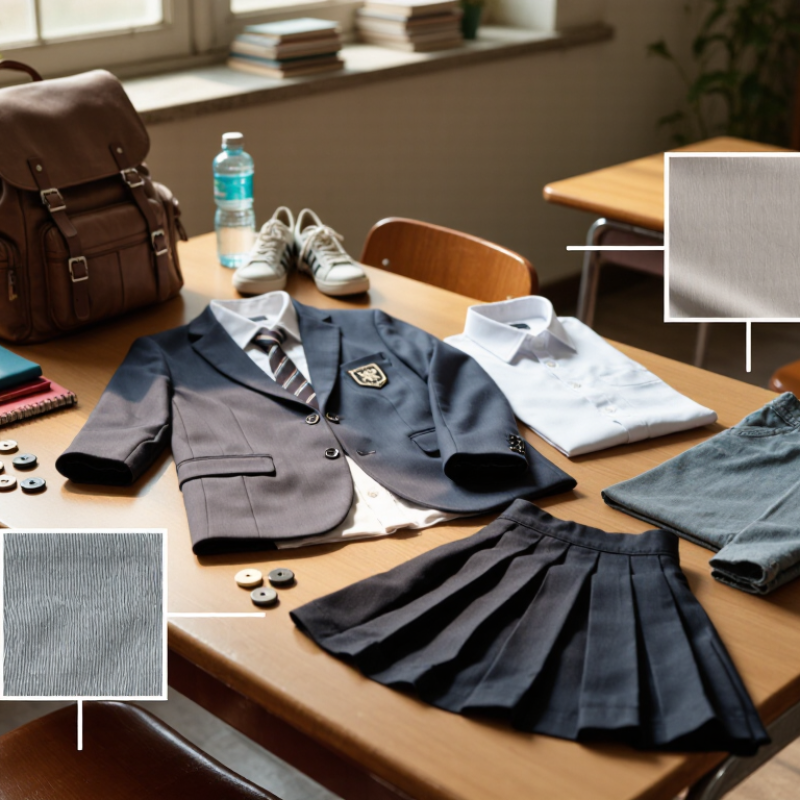
Choosing student uniform fabric means balancing comfort with repeated wear. Students sit, run, carry backpacks, and wash garments often. Breathability matters in warm classrooms, while a denser weave may help shirts resist snagging. Cotton feels familiar against skin, but can wrinkle and shrink. Polyester blends often dry faster and hold their shape, though they may feel warmer. Fiber content alone is not enough; weave, weight, and finish also affect performance.
Tips: Request a fabric sample and check its label. Wash it several times using the care routine families are likely to follow. Compare color, seams, drying time, and feel afterward. Test it during a full school day, not just in a fitting room.
Check durability at elbows, knees, cuffs, and pocket edges, where friction builds. Look for secure stitching and fabric that recovers after gentle stretching. Dark colors can hide marks, but may show fading sooner; check colorfastness after washing. Consider local climate, uniform layers, and the time families can spend on care. A fabric that needs frequent ironing may look neat on day one and become a burden later. It depends. A small trial can reveal problems that a specification sheet misses.
| Fabric option | Comfort and breathability | Durability and appearance | Care and drying | Suitable uniform items | Key trade-off |
|---|---|---|---|---|---|
| Cotton | Soft and breathable; absorbs moisture, which can feel comfortable in warm conditions. | Comfortable for everyday wear, but may wrinkle and can shrink unless treated or laundered carefully. | Usually machine washable; may take longer to dry than many synthetic fabrics and may need ironing. | Shirts, blouses, lightweight summer uniforms and garments worn directly against the skin. | Natural comfort comes with more wrinkling and slower drying than many polyester blends. |
| Polyester-cotton blend | Combines cotton’s familiar feel with polyester’s lower moisture absorption; comfort depends on the fabric construction and blend ratio. | Generally resists wrinkling and holds its shape better than many all-cotton fabrics; performance varies by weave and fabric weight. | Often machine washable and quicker to dry than cotton, though care labels should guide washing and ironing. | Everyday shirts, trousers, skirts, dresses and school uniforms that need frequent laundering. | A practical balance, but it may feel warmer or less breathable than lightweight cotton in hot weather. |
| Polyester | Lightweight options are available, but polyester generally absorbs less moisture than cotton and may feel less breathable in heat. | Often resists wrinkles and retains its shape; abrasion resistance and pilling depend on yarn, knit or weave, and finishing. | Typically dries quickly and is easy to care for; follow the garment label to avoid heat damage. | Performance-oriented garments, durable outer layers and items where quick drying is useful. | Quick drying and shape retention can be useful, but comfort in warm conditions depends strongly on fabric construction. |
| Wool blend | Can provide warmth and help regulate comfort in cooler conditions; usually less suited to hot-weather shirts. | Commonly used for structured garments; durability and shape retention depend on the blend and construction. | Care requirements vary; some garments need gentle washing or professional cleaning, so check the care label. | Blazers, jackets, skirts and trousers for cooler seasons or formal uniforms. | Offers warmth and a tailored appearance but can require more careful care and may cost more than basic blends. |
| Stretch blend | Added stretch can make movement easier; comfort also depends on the base fibre and garment fit. | Useful for active school days, though repeated stretching and high-heat drying may affect some fabrics over time. | Often machine washable; use the care label and avoid excessive heat where elastane is present. | Fitted trousers, skirts, active uniforms and garments where ease of movement is important. | Improves flexibility but is not automatically more breathable or more durable than a non-stretch alternative. |
| Selection checks | Consider the local climate, classroom conditions, the student’s activity level and how the fabric feels against the skin. | Check seam construction, fabric weight, colourfastness and resistance to wear in high-friction areas. | Compare the care label with the household’s usual washing and drying routine. | Choose separately for shirts, trousers, skirts, outerwear and seasonal garments rather than assuming one fabric suits every item. | Request a sample and test comfort, laundering and appearance before ordering uniforms in quantity. |
Note: Fabric performance varies with fibre quality, blend ratio, weave or knit, finishing, garment construction and care. Check product specifications and care labels when comparing options.
