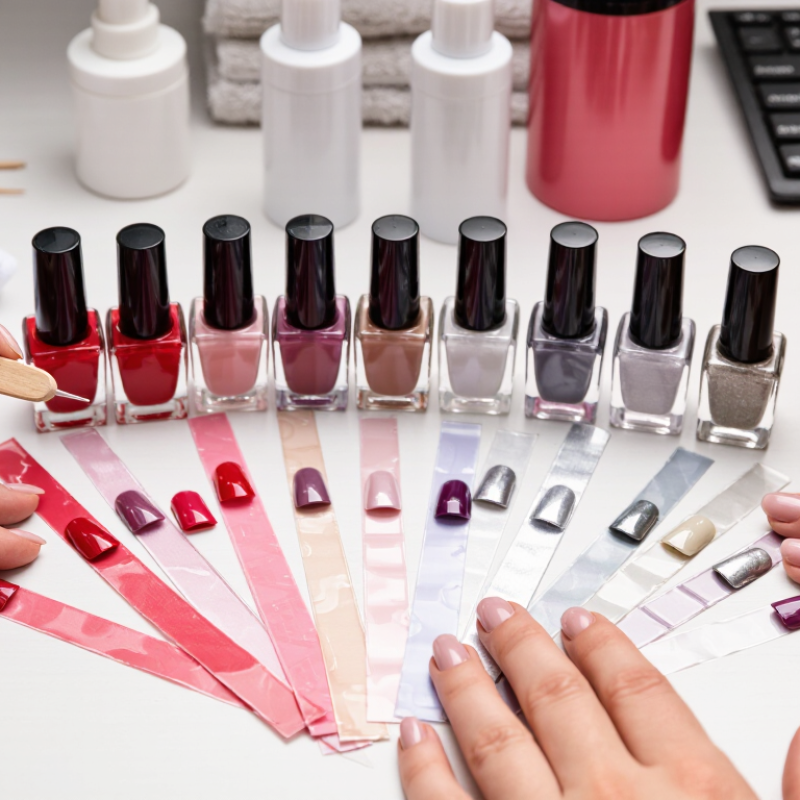
| Product classification and intended use | FDA classification depends on intended use and claims. A product intended to beautify or change the appearance of nails may be a cosmetic. Claims to treat or prevent a disease, or affect body structure or function, may bring drug requirements into play. | A product intended to be placed on nails to change their appearance may fall within the EU Cosmetics Regulation. Classification can depend on the product’s composition, presentation, intended use, and whether it is a mixture or an article. | Review the formula, packaging, instructions, website, and advertising together. Do not assume every nail wrap or separately sold adhesive has the same regulatory classification. |
| Pre-market approval and notifications | Cosmetics generally do not require FDA pre-market approval, except that color additives must be approved for their intended use and may be subject to batch certification. Other legal requirements still apply. | Before a cosmetic product is placed on the EU market, the responsible person must ensure compliance and submit a notification through the Cosmetic Products Notification Portal (CPNP). CPNP notification is not an approval or certification. | Ask for evidence supporting applicable color-additive requirements in the United States. For EU sales, confirm who the responsible person is and that the required CPNP notification has been completed. |
| Safety substantiation and assessment | The responsible person must ensure and maintain adequate safety substantiation for the cosmetic. FDA can take action against products that are unsafe or otherwise violate the law. | A cosmetic product must undergo a safety assessment before being placed on the market. The assessment is documented in a Cosmetic Product Safety Report (CPSR), which forms part of the Product Information File (PIF). | Request product-specific safety documentation appropriate to the market. For EU distribution, verify that the CPSR and PIF are available to the responsible person; a generic certificate is not a substitute for the required assessment. |
| Ingredient declaration | Cosmetic ingredient declarations generally must use the required ingredient names and appear in descending order of predominance, subject to applicable exceptions. Color additives are subject to specific declaration rules. | The label must list ingredients using the common ingredient names specified under EU rules, generally using INCI names, with ingredients listed in descending order by weight at the time they are added, subject to stated exceptions. | Compare the finished-product ingredient list with the current formula and the rules for each destination. Check color additives, fragrance ingredients, and any applicable restrictions or declaration thresholds. |
| Identity and product function | The label must identify the product’s nature or use when that is not obvious. The identity statement should not imply an unsubstantiated treatment or therapeutic effect. | The product’s function must be stated unless it is clear from the presentation. Required information must be clear and understandable to consumers in the relevant market. | Use a clear description such as “nail polish strips” or “nail wraps” if accurate. Ensure images and claims do not suggest medical benefits or performance the product cannot substantiate. |
| Net contents | Cosmetic labels generally require a declaration of net quantity of contents in the prescribed units and format, with placement and type-size rules applicable. | The label generally requires the nominal content at the time of packaging, using the applicable units and presentation rules. Some exceptions apply, including for certain small packages or single-application products. | State the quantity accurately—for example, the number of wraps or the net quantity where required. Check package size, placement, units, and market-specific formatting. |
| Business or responsible-person details | The label generally identifies the manufacturer, packer, or distributor. If the named business is not the manufacturer, the relationship may need to be qualified with wording such as “Manufactured for” or “Distributed by.” | The label must show the name and address of the EU-established responsible person. Required contact details must be presented in the manner prescribed by the regulation. | Confirm that the business named on pack is correctly identified and can be contacted. For EU sales, ensure the responsible person is established in the EU and the label details are current. |
| Warnings and directions | Warnings or directions are required where necessary for safe use and to prevent harm. Avoid implying that a product is safe for every user or every manner of use unless supported. | Required precautions for use must appear on the label. Certain ingredient-specific warnings and instructions may apply depending on the product and its composition. | Review the formula and intended use for relevant precautions, application and removal directions, and any ingredient-specific warning requirements. Ensure warnings are legible and appropriate for the sales market. |
| Batch identification and traceability | Under MoCRA, the responsible person must maintain records of serious adverse events and certain related information. A batch or lot code is also a practical traceability measure; verify applicable labeling obligations for the specific product. | The container or packaging must carry a batch number or reference identifying the product. If the product is too small, the information may be provided on the packaging as permitted by the rules. | Use a legible lot code and keep records linking the code to production, formula, quality checks, and distribution. Confirm the code appears on the appropriate packaging for each market. |
| Durability or period-after-opening information | FDA cosmetic labeling rules generally require applicable expiration-date information where required by law or needed to avoid misleading consumers; shelf-life statements must be supportable. | For products with a minimum durability of 30 months or less, an applicable durability date is generally required. For products with a minimum durability over 30 months, a period-after-opening indication is generally required when relevant, subject to exceptions. | Support shelf-life and after-opening claims with appropriate stability information. Check the EU rule and exceptions for the product’s durability and packaging before deciding which symbol or date applies. |
| “Non-toxic,” “hypoallergenic,” or “safe” claims | Claims must not be false or misleading and should have a reasonable basis. “Non-toxic” is not a substitute for safety substantiation; an absolute safety claim may be misleading without strong supporting evidence. | Cosmetic claims must meet common criteria including legal compliance, truthfulness, evidential support, honesty, fairness, and enabling informed decisions. Claims must be supported by adequate and verifiable evidence. | Define precisely what each claim means, retain relevant test data, and review the full consumer impression. Avoid unqualified “safe for everyone,” “chemical-free,” or similar absolute wording. |
| Wear-time, adhesion, and removal claims | Objective performance claims such as “lasts seven days” should be truthful and supported by evidence that reflects the directions and reasonably expected use. | Cosmetic claims must be backed by adequate and verifiable evidence appropriate to the claim. Presentation must not imply performance beyond what the product can deliver. | Keep test protocols and results for wear duration, adhesion, water resistance, and removal claims. State any relevant conditions, such as application method or tested wear period. |
| Manufacturing and quality controls | MoCRA includes requirements relating to facility registration and product listing, subject to statutory exemptions and other conditions. The responsible person must also maintain adequate safety substantiation and comply with applicable adverse-event requirements. | Cosmetic products must be manufactured in accordance with good manufacturing practice. The responsible person must maintain the PIF and make it accessible to competent authorities at the address indicated on the label. | Request relevant quality-system and traceability information. Check whether any MoCRA exemption applies rather than assuming one, and verify that EU GMP, safety, and PIF responsibilities are assigned. |