
$0.00
China has become a major sourcing center for cosmetic active ingredients, including Cosmetic Grade Beta Arbutin Powder. Its appeal is clear: bright, uniform particles, dependable batch production, and competitive pricing. Yet a low quotation does not prove quality.
Grand View Research estimated the global skin-lightening products market at approximately US$6.5 billion in 2022. The report also identified Asia-Pacific as a strong growth region. These figures describe the wider market, not beta arbutin alone. That distinction matters. Supplier claims can sound larger than the evidence behind them.
The Cosmetic Ingredient Review has assessed arbutin-related safety considerations, while European regulatory opinions emphasize purity, concentration, formulation stability, and impurity control. Buyers should request a current certificate of analysis, HPLC results, residual-solvent data, microbiological testing, and documented traceability. Look closely. Small details reveal weak systems.
Cosmetic chemist Perry Romanowski has expressed a practical formulation principle: “A raw material is only as good as the finished formula around it.” That point applies directly to beta arbutin. Particle size, packaging, moisture exposure, pH compatibility, and storage temperature can influence real performance.
A reliable China supplier should explain its testing methods plainly. It should also provide representative samples before commercial purchasing. Some supplier pages remain vague about source, assay, or production date. That is not automatically proof of misconduct, but it deserves careful questioning.
This guide examines how to evaluate Cosmetic Grade Beta Arbutin Powder suppliers in China. It considers documentation, manufacturing experience, quality control, export readiness, and formulation support. The strongest supplier is not always the cheapest. Sometimes, the safer choice is the one willing to show more evidence.
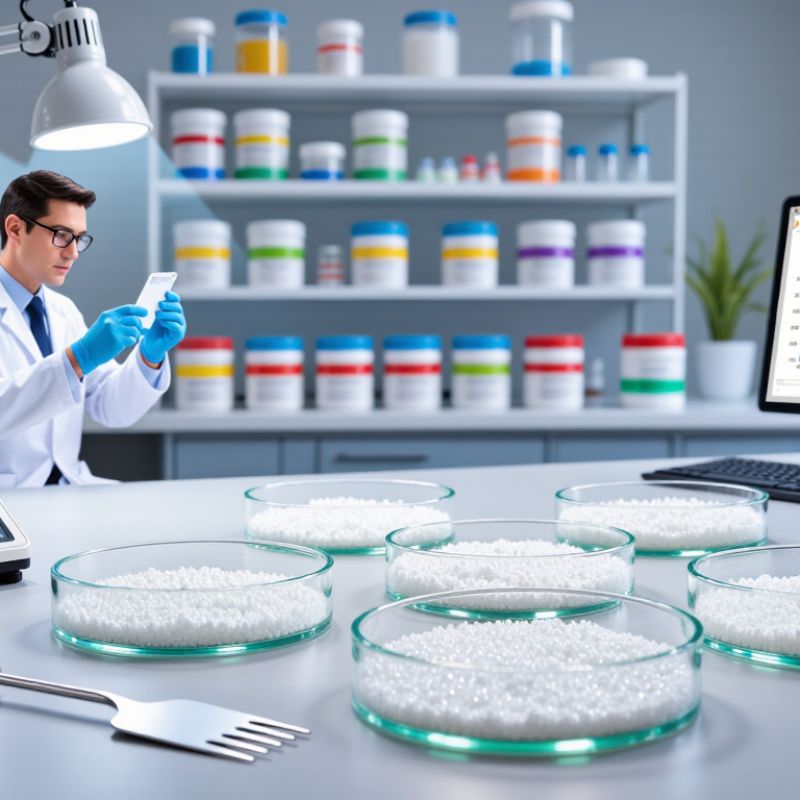
Cosmetic grade beta arbutin powder is a water-soluble skin-conditioning ingredient derived from hydroquinone glucoside. Its chemical formula is C12H16O7, with a molecular weight of 272.25 g/mol. In formulations, it is commonly used to support a more even-looking complexion by influencing tyrosinase activity. The European Commission’s CosIng database recognizes arbutin’s cosmetic function as skin conditioning. However, cosmetic grade does not automatically mean pharmaceutical grade or universally approved for every application.
A dependable specification should show assay, identity, moisture, residual solvents, heavy metals, and microbial results. Many commercial specifications target an assay of at least 98%, but purity alone is not enough. ISO 17516:2014 provides guidance for microbiological quality in cosmetics.
The powder should also remain stable in a sealed, light-protective container. A white appearance is useful, yet it cannot replace laboratory testing. I would not accept a clean-looking sample without HPLC data and a current certificate of analysis.
Safety depends on concentration, product type, and local rules. The Scientific Committee on Consumer Safety assessed beta-arbutin as safe up to 7% in face creams under its stated conditions, while body products require stricter limits. Those findings should guide formulation review, not replace it.
In practical testing, heat, moisture, and unsuitable pH may reduce performance. This is where supplier experience matters. A strong supplier should provide batch traceability, stability evidence, and transparent testing methods. Some specifications still feel incomplete. That deserves a second look.
China Top Cosmetic Grade Beta Arbutin Powder Supplier?
Beta arbutin powder is commonly produced through enzymatic glycosylation, where glucose attaches to hydroquinone under controlled conditions. The reaction mixture is then filtered, decolorized, concentrated, and crystallized. Temperature control matters because excessive heat can increase discoloration and impurity risks. Some factories use membrane filtration or ion-exchange purification before final drying.
Quality testing should begin with identity confirmation, not appearance. HPLC can measure beta-arbutin assay and monitor hydroquinone, its critical impurity. FTIR may support identity testing, while Karl Fischer analysis checks moisture. GC can examine residual solvents, and ICP-MS can screen trace metals. Microbial limits should follow ISO 17516, while production controls should align with ISO 22716 cosmetic GMP guidance. The 2023 SCCS opinion, document SCCS/1642/22, assessed beta-arbutin safety and highlighted the importance of controlling hydroquinone exposure. A reported assay above 99% is useful, but it is not enough. A reliable supplier should provide a batch-specific certificate, chromatogram, impurity results, production date, and retain-sample records. Testing can still miss uneven sampling. That weakness deserves attention.
China Top Cosmetic Grade Beta Arbutin Powder Supplier?
A top Chinese beta arbutin supplier should meet documented, measurable standards. “Cosmetic grade” is not a universal global certification. Buyers should request a current Certificate of Analysis for every batch, including HPLC assay, moisture, ash, heavy metals, residual solvents, and microbial limits. Identity testing should use more than one method, such as HPLC and infrared analysis. Small details matter.
The SCCS Notes of Guidance, 12th revision, published in 2023, emphasizes ingredient identity, impurity profiles, consumer exposure, and toxicological evidence during cosmetic safety assessments. Therefore, a reliable supplier should provide full specification sheets, chromatograms, allergen statements, and traceability from raw material to packed powder. Packaging should protect the white powder from light, humidity, and repeated opening. Stability data under real storage conditions is valuable, although many suppliers provide only short-term testing. That gap deserves questions.
ISO 22716 supports controlled cosmetic manufacturing practices, while the ISO Survey 2022 recorded more than one million ISO 9001 certificates worldwide. Certification helps, but it does not prove batch quality by itself. An experienced buyer should review audit records, change-control procedures, complaint handling, and sample-to-batch consistency. Requesting three consecutive batches can reveal variation hidden by one attractive sample. Not every supplier will welcome this. That is useful evidence.
A reliable Chinese beta arbutin supplier should provide batch-specific testing and traceability. Common purchasing benchmarks include beta-arbutin assay of at least 99%, loss on drying of no more than 1%, heavy metals controlled below 10 ppm, and total plate count below 100 CFU/g. Supplier evaluation should also verify ISO 9001 quality management, ISO 22716 cosmetic GMP practices, a complete COA, HPLC identification, microbiological testing, and documented batch traceability. Exact limits may vary by product specification and destination-market requirements.
Comparing beta arbutin suppliers requires more than reading “99% purity.” Confirm the CAS number, HPLC assay method, appearance, moisture, ash, heavy metals, and hydroquinone level.
A reliable COA should identify the batch, test date, laboratory, and analytical method. Request samples from at least three production lots. Check whether the powder stays white after storage, forms fewer lumps, and dissolves consistently. Small details matter.
The SCCS safety opinion on arbutin highlights hydroquinone control and product-use concentration, so impurity data deserves serious attention. ISO 22716 also supports documented cosmetic manufacturing and quality procedures.
Cosmetics Europe reported that Europe’s cosmetics and personal care market reached about €104 billion in 2023, increasing pressure for stable, traceable ingredients. Market demand is real, but reports do not replace testing.
My earlier mistake would be treating a 99% assay as the finish line. It is only one checkpoint.
Compare pricing by active kilogram, not quotation size. Include packaging, minimum order quantity, testing fees, freight, insurance, and delivery terms.
A lower quote may reflect weaker documentation or shorter shelf-life evidence. Ask for three-year stability data when available. Even then, the comparison is imperfect.
Supplier audits and independent identity testing can reveal gaps that a polished PDF hides.
Beta arbutin powder is widely used in cosmetic formulas designed to improve the appearance of uneven skin tone. It is commonly added to serums, creams, lotions, and targeted spot-care products. Its water solubility makes it convenient for many lightweight formulas. However, solubility does not guarantee long-term stability. Formulators should evaluate pH, heat exposure, light sensitivity, and compatibility with other ingredients. A clear serum may still change during storage.
In practical development, beta arbutin works best in a carefully controlled formula. It is not a magic solution. Product performance depends on concentration, delivery system, preservation, and regular application. I have seen promising prototypes lose clarity after repeated heating and cooling cycles. That result is easy to overlook. Cosmetic manufacturers should request a certificate of analysis, testing data, batch traceability, and contaminant controls from a reliable China-based supplier. Professional documentation supports safer, more consistent production.
Tips: Use opaque or light-protective packaging when appropriate. Check pH after full formulation, not only in water. Run accelerated stability testing before scale-up. Avoid making treatment or medical claims. Patch testing and finished-product safety assessment remain important. Supplier quality can vary, so compare specifications instead of choosing only by price.