
$0.00
Zinc Alloy Metal Key Chains can look similar in a product photo, yet small details often separate a dependable purchase from a disappointing one. Check the weight in your hand, the smoothness of the edges, and the way the split ring opens and closes. Ask about the alloy grade, plating process, finish options, and any available sample. These checks do not guarantee perfection, but they make comparisons more concrete.
A genuine expert quotation was not provided, so I will not attribute invented words to a real person. For a clearly fictional example of the kind of practical advice a specialist might offer, consider this line from “Alex Morgan,” a fictional zinc-alloy product specialist: “Look closely at the edges and ring; those small parts reveal how carefully a key chain was made.” Replace this illustrative name and quotation with a verified expert source before publication.
The seven tips in this guide focus on material quality, finish, design, customization, supplier communication, sample inspection, and total cost. A bright coating can hide uneven details, while a simple sample may reveal them under ordinary light. There is no single best choice for every buyer. Your priorities matter: a promotional giveaway, a retail item, and a daily-use key chain may need different finishes and construction. Use the tips as a checklist, ask specific questions, and leave room to reassess if a supplier’s answers remain vague.
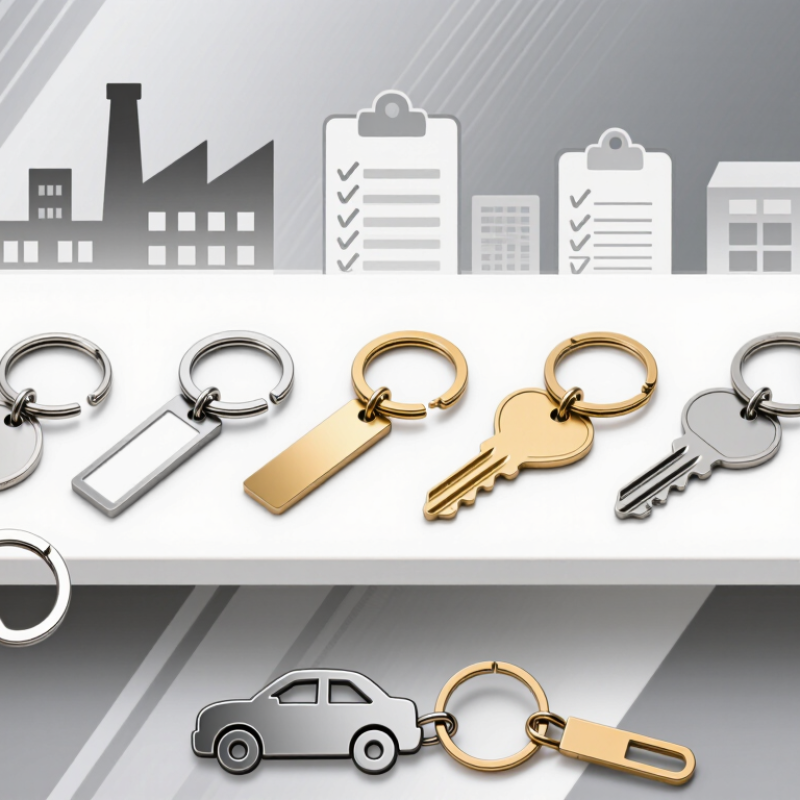
Zinc alloy is a group of metals, not one fixed recipe. Many key chains use die-cast zinc alloy, which can capture raised lettering, fine lines, and custom-shaped edges. That makes it useful when appearance and detailed forms matter. It also accepts plated or painted finishes, so the surface can look bright, matte, or colored.
Its weight is noticeable. A zinc alloy fob often feels more substantial than a thin aluminum one, but it may be less comfortable in a crowded pocket. Small details matter. Check the connector, split ring, and narrow sections of the design, since repeated pulling can stress weak points. Ask what alloy and surface finish are used; “zinc alloy” alone does not describe the full specification.
I would not treat a shiny sample as proof of long-term quality. Look for an even coating, clean edges, and no pits around lettering. If possible, handle a sample and test how the attachment feels when gently tugged. Zinc alloy can suit everyday promotional or decorative key chains, but constant exposure to moisture may wear some finishes. That trade-off is easy to overlook. A little variation between pieces can also occur, especially with detailed cast shapes.
Start with the job the key chain must do. A giveaway for a busy trade show needs a clear logo and a sturdy ring; a premium customer gift may justify a heavier body and polished plating. Specify where the design will appear, the preferred size, attachment type, finish, and whether names or serial numbers are required. A small sample can reveal sharp edges or lettering that looks cramped. Check those details before approving a production run.
Tip: Set the quantity and budget together. Request quotes at several quantity breaks, and ask whether mold fees, individual packaging, and freight are included. The World Bank’s Commodity Markets Pink Sheet records average zinc prices of about $3,478 per metric ton in 2022 and $2,647 in 2023. That shift shows why raw-material costs can move; it does not predict a finished key-chain price. Design complexity and setup costs matter too.
For a modest order, compare sample and setup charges against the cost per piece. For larger orders, confirm the minimum order quantity, acceptable defect rate, and delivery schedule in writing. Keep a small allowance for revisions or shipping changes. It can feel cautious, but overlooking one fee can unsettle a tight budget. Ask suppliers to itemize the quote so you can compare equivalent specifications, not just headline prices.
Before ordering, confirm the alloy grade with your supplier and match the finish and design to the intended use. This chart shows representative Zamak 3 composition limits by weight; zinc makes up the remainder. Order quantity, tooling, finish, and shipping all affect the final budget.
When comparing zinc alloy key chains, start with the shape and how it feels in the hand. A flat outline suits fine lettering, while a raised design adds depth but can catch on fabric. Check the edges closely. Sharp corners may look crisp in a drawing and feel rough in daily use. Ask for a physical sample or clear photos from several angles before approving a large order.
Finishes change both appearance and upkeep. Polished nickel reflects light and shows fingerprints; brushed or satin finishes tend to hide small marks. Antique-style plating brings out recessed details, while matte colors create a quieter look. A sample may appear brighter under studio lighting than it does indoors. It is worth checking the finish in ordinary daylight, too. No finish stays untouched forever.
Customization needs a practical check. Engraving works well for simple text, but tiny letters can lose clarity on a small tag. Enamel color fills add contrast; ask whether narrow lines can be filled cleanly. Compare the artwork with the actual key chain dimensions, not just a screen preview. There is no perfect choice here. A detailed design may look impressive, yet a simpler one can remain readable after years of handling.
| Tip | What to Compare | Useful Checks | Buying Consideration |
|---|---|---|---|
| 1. Compare design complexity | Flat, single-sided shapes versus raised relief, recessed details, or two-sided designs. | Check that small text and narrow spaces remain clear in a production sample. | Fine details may need to be simplified so they reproduce cleanly in a metal casting. |
| 2. Choose a suitable finish | Polished or brushed metallic looks, antique-style finishes, and colored surface treatments. | Ask for finish samples and check appearance under ordinary indoor light. | Finish names and color can vary between suppliers; a reference sample helps set expectations. |
| 3. Check color-fill options | Unfilled relief designs versus recessed areas filled with enamel or paint. | Confirm the color reference, fill boundaries, and whether the design has enough recessed space. | Color fill is generally most practical in clearly defined recessed areas; very small sections can be difficult to finish consistently. |
| 4. Review customization methods | Raised or recessed logos, engraving, color fill, and custom outlines. | Provide vector artwork when possible and ask how fine lines or small lettering will be handled. | Each method creates a different look; confirm the artwork proof before production. |
| 5. Inspect thickness and edges | Overall thickness, edge shape, surface smoothness, and the placement of raised details. | Request a dimensioned drawing or physical sample; check for sharp edges and uneven surfaces. | Dimensions affect feel, weight, pocket comfort, and how the key chain hangs. |
| 6. Compare rings and attachments | Split rings, chains, clasps, and other attachment styles. | Check ring opening, chain links, connection points, and how easily keys can be added. | The attachment is used repeatedly, so it should suit the intended keys and handling needs. |
| 7. Verify quality and order details | Sample approval, finish consistency, stated material, production schedule, and packaging. | Confirm specifications in writing, including dimensions, artwork, finish, attachments, and inspection expectations. | A pre-production sample and clear specifications make it easier to assess the finished order against the approved design. |
Tip 1: Check the metal’s weight and feel. A key chain should feel solid, not brittle or oddly light.
Tip 2: Inspect the finish under bright light. Look for bubbles, thin spots, or color that rubs off with a soft cloth.
Tip 3: Examine high-wear areas. The ring, clasp, and narrow links take repeated stress. Gently pull them. No sharp movement or loose joints.
Tip 4: Check edges and seams. Rough casting lines can scratch fingers or catch fabric.
Tip 5: Ask what the alloy and surface coating contain, especially for items handled often. Request relevant material or safety test records, not just a verbal assurance. Details matter.
Tip 6: Compare several samples from the same production run. Differences in color, lettering, or thickness may point to uneven manufacturing. One perfect sample proves little.
Tip 7: Ask how quality is checked before packing. A useful inspection may include clasp function, finish defects, and attachment strength. Try opening the clasp repeatedly; it should move smoothly and stay closed. I would not judge durability by shine alone. That is an easy mistake. Also check whether the supplier can explain how defects are handled, since even careful production can miss one.
A zinc alloy key chain can look polished in a photo and feel surprisingly light in hand. Tip: Request a pre-production sample, then check its weight, edges, clasp movement, and plating under bright light. Compare it with the approved artwork, including small text and color. Keep one sample as your reference; otherwise, “matching” can mean different things to different people.
Ask the supplier to state the alloy specification, finish, sample fee, tooling ownership, defect allowance, and rework process in writing. USGS Mineral Commodity Summaries 2025 estimates global zinc mine production at about 12 million metric tons in 2024. That figure describes raw supply, not finished-key-chain quality, so confirm the actual material and finish rather than relying on broad market claims. Tip: Put agreed dimensions and acceptable color variation on the purchase order. I still find color matching imperfect.
Get production time, dispatch date, shipping method, and delivery estimate separately. Clarify who pays freight, duties, and inspection costs under the chosen shipping terms. UNCTAD’s Review of Maritime Transport 2024 reports that maritime trade grew 2.4% in 2023, while route disruptions affected shipping schedules. Build in a buffer, especially before an event or seasonal launch, and ask for tracking once the shipment leaves. A promised date is not a delivery guarantee.