
Biodegradable Containers are designed to break down through biological activity under defined environmental conditions. They may use materials such as PLA, bagasse, molded fiber, or starch-based polymers. However, “biodegradable” is not a magic word. Decomposition depends on temperature, moisture, oxygen, microorganisms, and time. A certified compostable cup may break down in an industrial facility, yet remain unchanged in a cold landfill. That difference deserves attention.
The environmental case is substantial. The United Nations Environment Programme reported in Turning off the Tap that global plastic production exceeds 430 million tonnes annually. The OECD’s Global Plastics Outlook found that only about 9% of plastic waste was successfully recycled worldwide in 2019. These figures explain why packaging producers are testing alternatives for takeaway meals, produce, and catering supplies. European Bioplastics and the Nova Institute estimated global bioplastics production capacity at approximately 2.18 million tonnes in 2023. They project capacity could reach about 7.43 million tonnes by 2028. Growth is visible, but it remains small compared with total plastic production.
Choosing Biodegradable Containers should involve more than selecting a green-looking package. Buyers should check recognized certifications, disposal instructions, food-contact suitability, shelf life, and transport performance. EN 13432 and ASTM D6400 are commonly referenced for industrial compostability, although requirements vary by market. A leaking soup container helps nobody. Neither does a compostable package sent to landfill. The strongest decision combines verified materials, realistic waste infrastructure, and measured life-cycle evidence. There is still room for doubt, and that is healthy. Packaging claims should be tested, documented, and honestly explained.
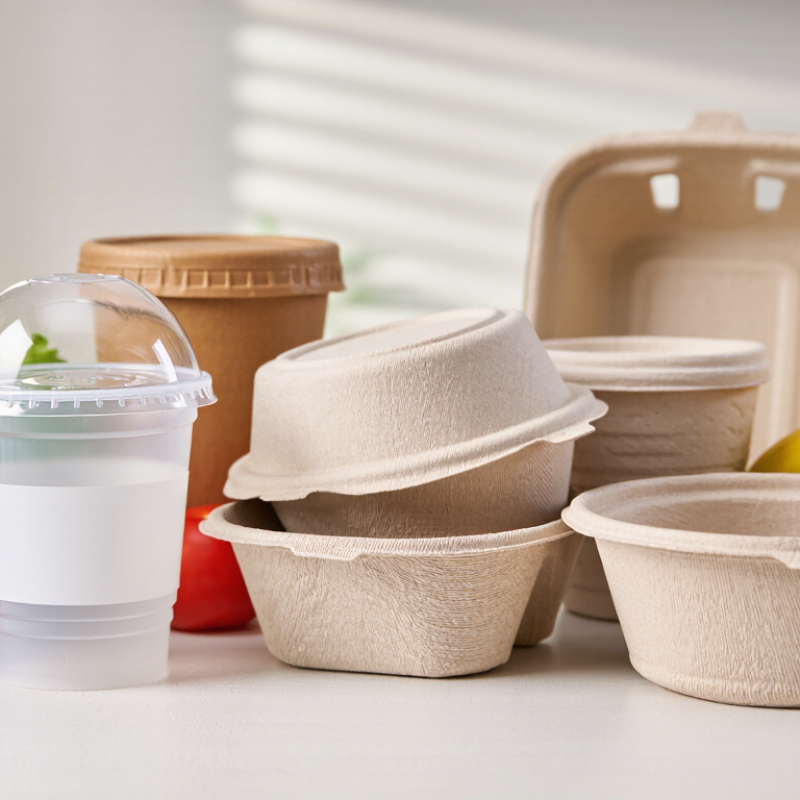
Biodegradable containers are food or storage packages designed to break down through natural biological activity. Microorganisms gradually convert suitable materials into simpler substances, such as water, carbon dioxide, and organic matter. This process depends on moisture, temperature, oxygen, and disposal conditions. It does not happen instantly.
Common materials include plant fibers, paper-based compounds, starch blends, and certain bio-based polymers. Their key features include reduced reliance on conventional plastics, a lower fossil-resource content, and possible composting compatibility. However, biodegradable does not always mean compostable. Some containers need controlled industrial facilities with specific heat and humidity levels. Not always.
In practical use, a container should resist leaks, heat, and pressure during handling. A fiber bowl holding hot soup, for example, needs a reliable barrier against moisture. Without one, it may soften before the meal ends. That matters. Clear disposal instructions are equally important. Check whether the container belongs in household compost, commercial compost, recycling, or general waste. Local facilities may accept different materials. Claims should be supported by recognized testing or certification, rather than vague words on packaging. A common mistake is assuming every plant-based container disappears in a backyard compost bin. The reality is less convenient. Choosing well requires examining the material, intended use, performance data, and actual disposal route.
| Container Material | Primary Source | Biodegradable Status | Typical End-of-Life Conditions | Key Features | Common Limitations | Suitable Applications |
|---|---|---|---|---|---|---|
| Paper and Cardboard | Wood-derived cellulose fibers | Generally biodegradable | Usually breaks down in soil or compost when uncoated and free from plastic laminates, heavy inks, or synthetic additives. | Lightweight, printable, recyclable in many systems, and available in folding or molded forms. | Reduced strength when wet; plastic, wax, or chemical coatings can interfere with recycling and biodegradation. | Dry-food boxes, bakery packaging, sleeves, takeaway cartons, and protective inserts. |
| Bagasse Fiber | Fibrous residue remaining after sugarcane juice extraction | Biodegradable | Commonly processed through commercial composting; breakdown depends on moisture, oxygen, temperature, and product thickness. | Rigid molded structure, good resistance to grease, and suitable for many hot and cold food applications. | May absorb liquids over time; some products use coatings or additives that affect compostability. | Meal trays, plates, bowls, clamshell boxes, and food-service containers. |
| PLA | Plant-based sugars converted into polylactic acid | Conditionally biodegradable | Most PLA containers require an industrial composting facility with controlled heat, moisture, and microbial activity; they generally do not break down quickly in home compost or ordinary landfill conditions. | Clear appearance, good rigidity, and useful for cold foods and beverages. | Limited heat resistance; PLA can soften at approximately 55–60°C, depending on formulation and design. | Cold drink cups, transparent lids, produce containers, and cold-food packaging. |
| PHA | Microorganisms producing polyhydroxyalkanoates from renewable feedstocks | Biodegradable, formulation-dependent | Some PHA products can biodegrade under industrial composting and certain natural environments, but the actual pathway depends on the specific polymer and container design. | Can provide plastic-like flexibility or rigidity while offering broader biodegradation potential than many conventional plastics. | Performance, cost, and end-of-life behavior vary considerably between PHA formulations. | Food packaging, films, coatings, and selected single-use containers. |
| Starch-Based Materials | Corn, potato, cassava, wheat, or other plant starches | Generally biodegradable | Often requires managed composting or moist microbial conditions; blends and coatings can change the degradation rate. | Renewable feedstock, lightweight structure, and suitability for films, loose-fill packaging, and molded products. | Typically sensitive to moisture and humidity; pure starch materials may have lower mechanical strength. | Packaging films, sachets, trays, protective inserts, and disposable food-service items. |
| Wood and Bamboo Fiber | Natural lignocellulosic plant fibers | Generally biodegradable | Can biodegrade in suitable soil or compost conditions when untreated; paints, resins, adhesives, and plastic coatings may prevent natural breakdown. | Rigid, natural-looking, durable for short-term use, and often more heat-resistant than thin bioplastic products. | May be heavier than paper-based options; splinters, moisture absorption, and surface treatments can affect performance. | Cutlery, serving trays, bowls, lids, and reusable or multi-use food-service products. |
