
Choosing the best Reflective Vinyl Sheet for global buyers is not a simple comparison of brightness or price. A roll may look brilliant under a flashlight, yet perform poorly after outdoor exposure, repeated bending, or cold storage. The better decision begins with the application: traffic signs, vehicle graphics, workwear, warehouse labels, or temporary event displays.
I have seen buyers focus on surface shine and overlook adhesive behavior. That mistake can become visible at the edges, where dust lifts the film and rain enters. Materials engineers usually examine the face film, microprismatic or glass-bead construction, liner release, and expected service temperature. They also review color stability, print compatibility, roll width, packaging strength, and documented testing. Small details matter.
Reflective-materials specialist Dr. Laura Chen explains, “The best reflective film is the one that keeps its performance after installation, not merely the one that shines brightest in a sample book.” Her point is practical. A premium grade may be unnecessary for an indoor label, while a low-cost sheet may fail quickly on a highway sign or refrigerated truck.
Global buyers should request technical data sheets, sample rolls, adhesive instructions, and consistent batch information. Check whether the supplier can explain testing conditions clearly. Ask about minimum order quantities, replacement policies, and export packaging. Certifications may support confidence, but they do not replace application testing. This is where judgment becomes imperfect. Laboratory results cannot fully predict every roof, road, climate, or installer. A careful trial remains valuable. The best Reflective Vinyl Sheet is therefore a balanced choice between visibility, durability, compliance, supply reliability, and total cost.
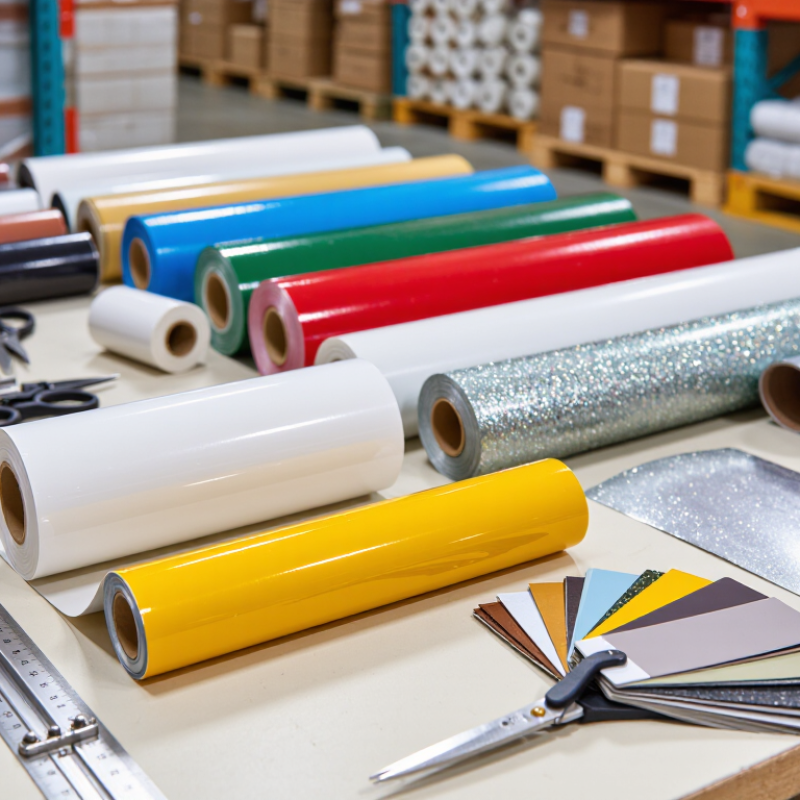
Reflective vinyl sheet is a flexible PVC film that sends incoming light back toward its source. Its surface uses glass beads or prismatic cells. These structures bend and return light, helping signs remain visible after dark. The effect is strongest when a lamp points near the viewer. That detail matters on roads, gates, trailers, and warehouse barriers. Not magic. Brightness depends on construction, angle, color, and surface cleanliness.
For global buyers, the best sheet is not automatically the brightest sample. It should match the application, climate, cutting method, and installation surface. A technical data sheet should state thickness, adhesive type, service temperature, outdoor durability, and reflective performance. Look for test methods and traceable production records, not vague claims. In practical inspections, I check edge lift after application and inspect the film under wet conditions. A sheet can shine beautifully indoors, then lose contrast under rain. That weakness is easy to miss.
Choose a compatible pressure-sensitive adhesive for painted metal, plastic, or smooth masonry. Clean the surface carefully; dust creates tiny dark islands beneath the film. Apply moderate pressure with a soft squeegee, especially along corners and seams. Allow the adhesive to bond before exposing the sheet to heavy moisture or sharp temperature changes. Color also affects performance. White and silver often return more light, while fluorescent colors improve daytime attention. However, color, coating, and viewing distance can change the measured result. Request a physical sample and test it at several angles before placing a large order. My own judgment can be wrong when lighting is controlled. Real sites are less forgiving.
| Evaluation Dimension | Engineering-Grade Glass Bead Sheet | High-Intensity Prismatic Sheet | Microprismatic Sheet | What Global Buyers Should Check |
|---|---|---|---|---|
| Optical structure | Transparent glass beads embedded in a resin layer. | Arrays of cube-corner prisms return more incident light toward the source. | Fine, closely spaced cube-corner prisms provide strong angular performance. | Confirm whether the product uses glass beads or prismatic optics, because the construction affects brightness, flexibility, and durability. |
| How retroreflection works | Light enters the beads, is redirected by the reflective backing, and returns approximately toward the light source. | Prism faces refract and reflect light back toward the vehicle or observer, improving nighttime conspicuity. | Multiple small prisms maintain useful retroreflection over a wider range of viewing and entrance angles. | Look for test results measured under recognized retroreflection standards rather than relying only on visual brightness. |
| Typical visibility role | Suitable for general identification, labels, low-speed areas, and basic signs. | Suitable for traffic signs, work-zone devices, vehicle markings, and applications requiring stronger nighttime visibility. | Suitable for demanding traffic, fleet, safety, and work-zone applications where high brightness and angle performance are important. | Match the optical class to road speed, viewing distance, traffic conditions, and local regulations. |
| Typical sheet thickness | Approximately 100–200 micrometres, excluding the release liner; construction varies. | Approximately 120–250 micrometres, excluding the release liner; construction varies. | Approximately 150–300 micrometres, excluding the release liner; construction varies. | Request the measured thickness of the face film, optical layer, adhesive, and liner separately. |
| Flexibility and conformability | Generally flexible and easier to apply to simple flat or gently curved surfaces. | Moderately flexible; application technique is important on curves and formed surfaces. | Often less forgiving on tight curves because of the thicker or more structured optical layer. | Check minimum application radius, stretch limits, edge-lifting resistance, and whether wet application is allowed. |
| Expected outdoor service life | Commonly about 3–7 years in outdoor use, depending on climate, substrate, cleaning, and installation quality. | Commonly about 5–10 years in outdoor use, depending on product construction and exposure. | Commonly about 7–12 years in outdoor use when properly specified and installed. | Treat service life as an application estimate; request accelerated-weathering data and a written durability statement. |
| Daytime appearance | Usually has a smooth, relatively uniform color with noticeable nighttime return. | Typically offers a brighter, more directional reflective appearance. | May show a more pronounced prismatic or patterned appearance at close range. | Approve a physical sample under daylight and headlamp illumination before bulk purchasing. |
| Adhesive options | Permanent pressure-sensitive adhesive is common; removable versions may also be available. | Usually supplied with permanent pressure-sensitive adhesive for long-term outdoor use. | Usually supplied with a high-performance permanent adhesive matched to the substrate. | Verify adhesive type, peel strength, repositionability, residue behavior, and compatibility with paint, metal, plastic, or composite surfaces. |
| Recommended application temperature | Many pressure-sensitive sheets apply best at approximately 10–25°C, subject to the product specification. | Many products require a clean, dry surface and an application temperature above approximately 10°C. | Application conditions can be more demanding; follow the specified temperature and pressure requirements. | Use the technical data sheet as the controlling source because adhesive formulas differ by construction. |
| Weather and chemical resistance | Suitable for normal outdoor exposure when protected from severe abrasion and incompatible chemicals. | Generally offers improved outdoor durability, but performance depends on the protective film and edge sealing. | Designed for demanding exposure, although harsh cleaners, fuels, solvents, and abrasion can still cause damage. | Request resistance data for UV exposure, water, humidity, salt spray, temperature cycling, and cleaning chemicals. |
| Common compliance reference | Often evaluated against engineering-grade requirements such as ASTM D4956 Type I, where applicable. | Often evaluated against higher-intensity requirements such as ASTM D4956 Type III, where applicable. | May be evaluated against high-performance prismatic requirements such as ASTM D4956 Type IV or other regional classifications. | Confirm the exact edition, color, observation angle, entrance angle, and test report; classifications are not interchangeable across all markets. |
| Best choice by purchasing priority | Best for lower initial cost, routine identification, and simple flat-surface applications. | Best balance of visibility, durability, flexibility, and total project cost. | Best when high nighttime brightness, long service life, and wide-angle visibility are the main priorities. | Select by required performance and local standards, not by price or daytime appearance alone. |
