
Skip to content

15 Best Promotional Items for Businesses in 2026

A branded water bottle on a crowded conference table can earn more attention than another email. That small, useful object captures the promise of promotional items: they keep a business visible after a conversation ends. But usefulness alone is not enough. A flimsy pen, awkward logo, or color that clashes with your brand can leave the wrong impression.

Marketing expert Seth Godin famously wrote, “People do not buy goods and services. They buy relations, stories and magic.” His point offers a helpful lens for choosing promotional items. The best giveaway is not merely an object with a logo. It connects your brand to a moment people remember, whether that is a comfortable tote at a trade show or a well-made notebook used in a client meeting.

This guide explores 15 promotional items businesses can consider in 2026, from everyday desk essentials to practical event gifts. Each choice deserves a closer look. Who will use it? How often? Does the material feel sturdy, and can the logo remain clear without dominating the design? Small details matter.

There is no perfect item for every audience. A reusable bottle may suit a fitness event, while a compact phone stand may work better at a technology conference. And even a thoughtful choice can miss. That is worth admitting. Before ordering in bulk, test a sample, check the finish, and ask a few likely recipients for honest feedback. A little scrutiny now can prevent boxes of forgotten giveaways later.
15 Best Promotional Items for Businesses in 2026

How to Evaluate Promotional Items for Business Marketing in 2026

How to Evaluate Promotional Items for Business Marketing in 2026

Choosing promotional items starts with the audience, not the catalog. A practical item should solve a small, familiar problem: a sturdy tote for event materials, a notebook for meeting notes, or a charging cable for travel. Check usefulness, durability, safety, and relevance to your campaign. A low-cost item that breaks quickly may weaken trust instead of building recognition. Ask recipients what they would actually keep. Their answers may challenge your assumptions.

Evidence helps guide the decision. The ASI 2023 Global Ad Impressions Study reported that 85% of surveyed consumers could recall an advertiser from a promotional product they had received. That finding supports visibility, but it does not guarantee sales. Track outcomes that fit your goal, such as event follow-up visits, offer-page scans, or qualified inquiries. Compare results with the item’s full cost, including design, shipping, and storage. A simple tracking plan matters.

Tips: Order a small sample before committing. Test the print after repeated handling, and inspect seams, buttons, and packaging. Match the item to the setting and season. Keep the message readable at arm’s length. Then review recipient feedback and campaign results. Not every popular item will suit your audience.

Top Promotional Apparel and Wearable Brand Items

Promotional apparel works best when people would wear it without being asked. Choose soft, durable fabrics and restrained graphics: a small embroidered mark on a jacket often feels more wearable than a large chest print. Match the item to its setting. Lightweight tees suit outdoor events, while a well-cut fleece or cap can earn repeat use during commutes and weekend errands. Fit matters. A shirt that twists after washing is unlikely to represent a business for long.

The 2023 ASI Ad Impressions Study estimated that promotional outerwear generates about 6,100 lifetime impressions, compared with roughly 3,400 for shirts and caps.

These figures are modeled estimates, not guaranteed results; wear frequency and audience affect actual exposure. Still, they suggest that useful layers can keep a message visible beyond the event itself. Ask suppliers for fabric composition, sizing details, and care instructions, then test a sample through a wash cycle. It is easy to overlook how a logo feels against the skin. That small detail can matter more than a clever slogan.

Best Technology and Everyday-Use Promotional Products

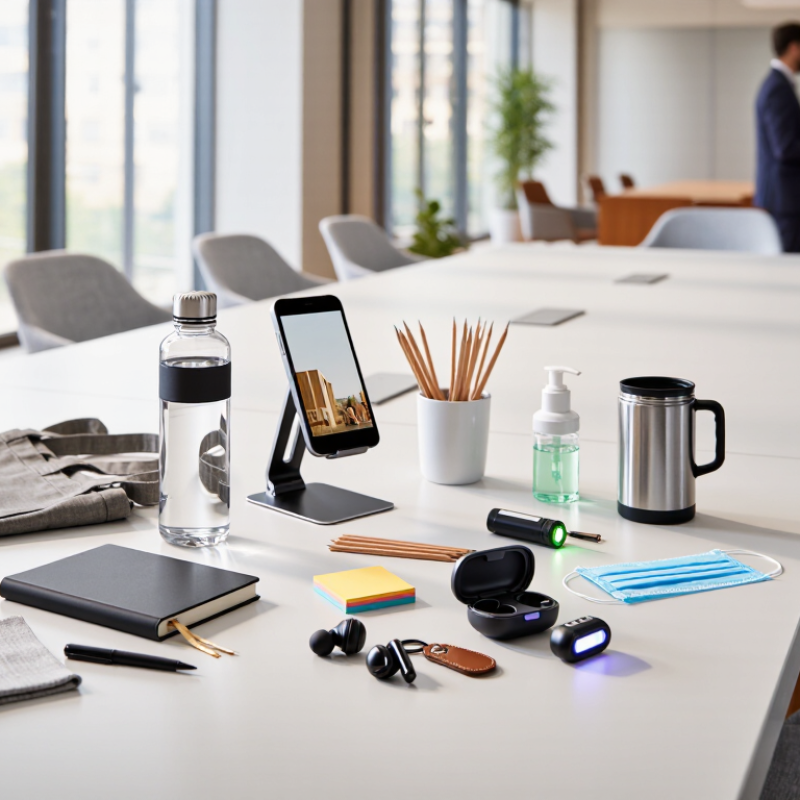
Technology and everyday-use promotional products work best when they solve a small, familiar problem. A compact charging cable or phone stand can earn a place on a desk, while a reusable insulated bottle may travel through commutes and meetings. Practical beats flashy. Before ordering, check material quality, compatibility, cleaning instructions, and whether the item suits the audience’s routine. A cable that supports only one connector may be less useful than its neat packaging suggests.

Everyday products also need thoughtful sizing and durable construction. A notebook should have paper that handles ordinary pens without excessive bleed-through. A tote should fit groceries or a laptop without strained handles. Small details matter. For technology items, request samples and test them with common devices before committing to a large run. Confirm charging specifications and product documentation, rather than relying on a brief catalog description. Lower-cost options can look attractive, but weak hinges, fraying seams, or unclear instructions may reflect poorly on the giver. There is a trade-off: highly specialized gadgets can feel memorable, yet become clutter if recipients cannot use them. Sometimes a simple item is the better choice. Even careful testing will not predict every recipient’s preference, so keep the intended use clear and avoid ordering more than a realistic distribution plan requires.

15 Best Promotional Items for Businesses in 2026 – Best Technology and Everyday-Use Promotional Products

# Promotional Item Category Typical Bulk Unit Cost (USD) Useful Features Best Suited For
1 USB-C Charging Cable Technology $2–$8 Compact charging accessory; multi-connector versions can support several common device ports. Conferences, travel, and customer welcome kits
2 Wireless Charging Pad Technology $8–$25 Convenient charging surface for compatible Qi-enabled devices; power adapter may be sold separately. Employee gifts, offices, and client appreciation
3 Power Bank Technology $10–$35 Portable battery for charging phones and other small devices; capacity and charging speed vary by model. Travel events, field teams, and outdoor promotions
4 Bluetooth Speaker Technology $15–$45 Portable audio for compatible devices; many models include rechargeable batteries and hands-free calling. Milestone gifts, contests, and premium giveaways
5 Wireless Earbuds Technology $15–$50 Compact listening accessory with a charging case; features such as microphones and touch controls vary. Employee rewards and high-value customer gifts
6 USB Flash Drive Technology $3–$12 Portable file storage; available capacities, connector types, and read/write speeds differ by model. Training sessions, presentations, and information kits
7 Webcam Cover Technology $0.50–$3 Small sliding cover that can block a laptop or tablet camera when it is not in use. Large events, technology conferences, and onboarding packs
8 Phone Stand Technology / Everyday Use $2–$10 Desktop support for hands-free viewing; foldable designs are easy to carry and store. Desk-based teams, virtual events, and office promotions
9 Reusable Water Bottle Everyday Use $5–$25 Refillable drink container; material, insulation, capacity, and lid design vary by style. Wellness campaigns, outdoor events, and employee programs
10 Insulated Travel Mug Everyday Use $8–$30 Reusable drinkware designed to help retain beverage temperature; check lid and cup-holder compatibility. Commuters, customer gifts, and office teams
11 Tote Bag Everyday Use $2–$12 Reusable carry bag; fabric, size, handle length, and carrying capacity vary across options. Trade shows, retail events, and community outreach
12 Notebook and Pen Set Everyday Use $3–$18 Practical writing set for notes and planning; paper format and pen style can be selected to suit the audience. Seminars, training, meetings, and welcome kits
13 Compact Umbrella Everyday Use $8–$25 Portable rain protection; folding size, canopy diameter, and opening mechanism vary by design. Seasonal campaigns, travel programs, and client gifts
14 Microfiber Screen-Cleaning Cloth Everyday Use / Technology $0.50–$3 Soft reusable cloth for removing fingerprints and dust from many screens and eyeglass lenses. Technology events, direct mail, and low-cost giveaways
15 LED Safety Light Technology / Everyday Use $3–$15 Small battery-powered light that can improve visibility; light output and battery type depend on the model. Outdoor events, cycling campaigns, and workplace safety programs

Cost ranges are indicative estimates in U.S. dollars for bulk orders. Actual pricing depends on order quantity, materials, customization, packaging, and supplier; confirm specifications and current quotes before purchasing.

Eco-Friendly and Practical Promotional Items for Modern Businesses

Businesses choosing promotional items in 2026 should look beyond a logo and ask whether people will use the item. A sturdy recycled-paper notebook, a washable cotton tote, or a compact stainless-steel bottle can earn repeat use at work, school, or the grocery store. Practicality matters. Items that solve small daily problems are less likely to end up forgotten in a drawer. Before ordering, check material details and care instructions, not just a broad “eco-friendly” label. Recycled content, repairability, and packaging all affect an item’s footprint. Claims can be vague.

The best choice also fits the audience and the way it will be distributed. A lightweight tote suits a community event, while a durable desk accessory may work better for employees who spend their day at a computer. Ask suppliers about recycled-material percentages, production details, and whether parts can be replaced. Then request a sample. Feel the seams, test the lid, and wash the fabric once. Small details matter. In practice, even a thoughtfully sourced item can disappoint if it breaks quickly or is awkward to carry. It is worth admitting that no giveaway is impact-free; ordering fewer, better-made items may be a more responsible approach than chasing the largest quantity.

How to Choose the Right Promotional Items for Your Audience and Budget

Choosing promotional items starts with understanding what your audience will actually use. A useful giveaway fits a daily routine, not just a campaign theme. For office teams, a sturdy notebook or insulated cup may earn regular use. At a community event, a compact tote can carry materials home. Ask a few customers or employees what they keep and what they discard. Small conversations beat guesswork.

Set a budget before selecting products, and include printing, packaging, shipping, and any setup fees. A low unit price can become expensive when an item needs special handling. Compare the total delivered cost, then decide whether fewer, better-made pieces suit your goal. Not every campaign needs a premium gift. Sometimes a practical item with clear, readable artwork is enough.

Think about the moment of use. Will the item be handed out at a crowded event, mailed to a customer, or placed in a welcome kit? Size and durability matter. So does legibility: a logo crowded onto a small surface may be hard to recognize. Request a sample when possible, and check the material, finish, and print in ordinary light. I’ve seen teams overvalue novelty; it gets attention, briefly. That is not always the same as usefulness. Leave room to revise your choice after feedback, even if the first idea feels clever.

Article Source: