Wholesale demand is shifting from plain pet supplies toward products with identity, comfort, and dependable function. Custom Dog Collars sit at that intersection. They can carry a shop logo, a dog’s name, or a seasonal pattern. They must still survive rain, pulling, washing, and daily friction.
The American Pet Products Association reported that U.S. pet industry spending reached $147 billion in 2023. Its 2024 forecast approached $150.6 billion. Grand View Research also identifies strong growth across the global pet accessories market, supported by premium design and online personalization. These figures suggest opportunity, but they do not guarantee profitable inventory. A beautiful collar can still fail through weak stitching, poor sizing, or uncomfortable hardware.
Fit matters most.
Veterinarian and pet-care authority Dr. Marty Becker writes, “Pets are not our whole life, but they make our lives whole.” That reminder gives wholesale buyers useful perspective. A collar is not merely printed merchandise. It touches an animal’s neck every day. Buyers should examine buckle strength, edge finishing, material softness, adjustment range, and packaging clarity.
Supplier samples deserve real testing. Pull them. Wet them. Check the dye after rubbing. Some products look excellent in photographs and disappoint on the first week of use. That uncomfortable possibility should shape purchasing decisions. Certifications, production records, and consistent measurement charts strengthen trust, although they cannot replace hands-on inspection. This guide compares leading Custom Dog Collars for wholesale buyers, balancing retail appeal with practical reliability.
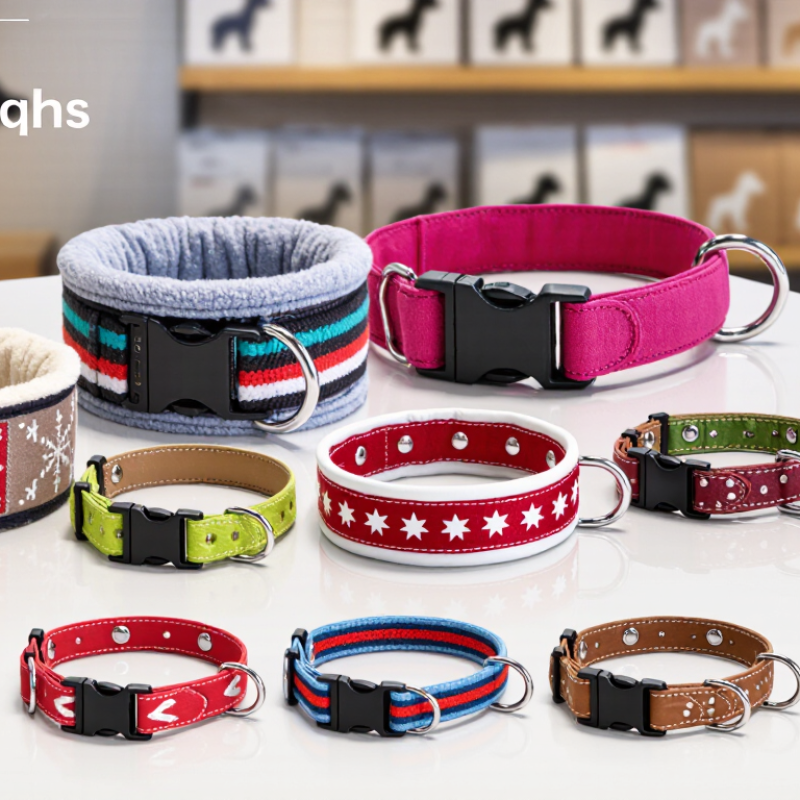
Top Custom Dog Collars for Wholesale Buyers
What Makes a Custom Dog Collar Suitable for Wholesale?
A wholesale-ready custom dog collar must balance appearance, safety, and repeatable production. Buyers need clear material specifications, not vague claims like “premium quality.” Strong nylon, smooth edges, secure stitching, and corrosion-resistant hardware are practical checkpoints. The collar should feel comfortable in the hand and avoid sharp seams near a dog’s neck. It also needs stable sizing across batches. One uneven size chart can create returns, delays, and unhappy retailers.
Customization becomes valuable when it remains manageable. A supplier should offer dependable color matching, readable logos, adjustable size ranges, and artwork approval before production. Samples matter. They reveal fading, buckle tension, print placement, and odor that digital images hide. Ask for test records when available, including pull strength, colorfastness, and hardware inspection. These details show process control, although no test replaces sensible product review.
Wholesale suitability also depends on logistics. Consistent packaging, carton counts, labeling, and lead-time updates help warehouses work without guesswork. A realistic minimum order quantity protects both sides; an unrealistic promise usually causes trouble later. Price deserves scrutiny too. Cheap collars may use thin webbing or weak adjustment points, while excessive decoration can slow production. I have learned that small defects multiply in large orders. A pre-production sample and written approval reduce that risk. Still, buyers should inspect random units after delivery, because reliable sourcing requires ongoing attention, not one successful shipment.
| Wholesale Criterion | Recommended Specification | Why It Matters for Wholesale Buyers | Practical Evaluation Guide | Wholesale Suitability |
|---|---|---|---|---|
| Material Selection | Durable nylon or polyester webbing for everyday use; coated webbing or leather may be offered as premium options. | Materials should balance durability, comfort, appearance, and unit cost across different retail price points. | Check webbing strength, stitching quality, edge finishing, color consistency, and resistance to normal moisture and abrasion. | Excellent when tiered |
| Size Range | Adjustable small, medium, large, and extra-large sizes, with a clearly stated neck-measurement range. | A broad size range helps retailers serve puppies, small breeds, medium dogs, and large breeds without excessive product duplication. | Confirm that the adjustment range is accurate and that the collar remains secure at both the minimum and maximum settings. | Essential |
| Width Options | Common widths include approximately 15 mm, 20 mm, 25 mm, and ile 30 mm, depending on the dog’s size and product design. | Different widths improve fit, comfort, and visual appeal while supporting multiple product categories. | Narrow collars are generally suited to smaller dogs, while wider collars can provide better load distribution for larger dogs. | Highly suitable |
| Customization Methods | Woven labels, screen printing, heat transfer, embroidery, rubber patches, or metal nameplates, subject to material compatibility. | Multiple decoration methods allow buyers to create private-label collections, seasonal designs, and different price levels. | Review artwork accuracy, color matching, print durability, embroidery density, and the comfort of any raised or attached elements. | Excellent |
| Hardware Quality | Corrosion-resistant D-rings, buckles, sliders, and adjustment hardware made from suitable metal, acetal, or other durable materials. | Hardware affects safety, product longevity, perceived value, and customer satisfaction. | Inspect buckle engagement, ring attachment, slider stability, sharp edges, and compatibility between hardware size and webbing width. | Essential |
| Comfort and Safety | Smooth edges, secure stitching, comfortable adjustability, and no exposed components likely to irritate the dog’s skin. | Comfortable products are more suitable for repeat sales and help reduce complaints, returns, and negative reviews. | Test the collar for rubbing, loose threads, buckle pinch points, and secure closure during ordinary walking conditions. | Essential |
| Load and Strength Testing | Product-specific testing based on intended use, dog size, construction, and hardware configuration. | Strength performance should match the product’s intended purpose and should not be inferred from appearance alone. | Request documented test methods and results where available. A collar is not automatically suitable for tie-out use unless specifically designed and tested for it. | Essential |
| Minimum Order Quantity | A clearly stated MOQ by color, size, design, or total order; small trial quantities are useful for new collections. | Flexible MOQs reduce inventory risk while allowing wholesale buyers to test demand before placing larger orders. | Compare the MOQ with expected sales volume, storage capacity, color assortment, and the cost of carrying slow-moving inventory. | Buyer-friendly |
| Sampling Process | Pre-production samples or digital proofs showing dimensions, materials, hardware, logo placement, and color selections. | Sampling helps identify design, fit, and branding issues before bulk production begins. | Approve a physical sample when possible and record the final specifications for comparison during bulk inspection. | Essential |
| Production Lead Time | A defined schedule covering artwork approval, sampling, production, inspection, packing, and shipment preparation. | Predictable lead times support inventory planning, product launches, promotions, and seasonal purchasing. | Ask which events can extend the schedule, such as sample revisions, custom hardware, material shortages, or peak-season capacity. | Highly suitable |
| Color and Design Range | Standard colors for efficient replenishment, plus custom colors subject to material availability and minimum quantities. | A balanced range gives retailers variety without creating unnecessary complexity in purchasing and stock management. | Use physical color references where accuracy is important because digital screens may display colors differently. | Excellent when managed |
| Packaging | Retail-ready individual packaging, barcode or SKU labeling, size identification, and export cartons suitable for the sales channel. | Appropriate packaging improves shelf presentation, warehouse handling, order accuracy, and protection during transportation. | Confirm packaging dimensions, carton quantity, labeling language, recycled-content claims, and compatibility with the retailer’s requirements. | Highly suitable |
| Compliance Documentation | Material information, care instructions, test records where applicable, and documentation required by the destination market or retailer. | Documentation supports responsible sourcing, product review, customs processes, and retailer onboarding. | Requirements vary by country and sales channel. Verify applicable rules before production rather than relying on a generic compliance statement. | Essential |
| Quality Control | Written specifications, inspection checkpoints, defect standards, and batch-level checks for dimensions, decoration, stitching, hardware, and packaging. | Consistent quality is particularly important when products are sold under a private label or distributed across multiple retail locations. | Agree on inspection criteria before production and retain approved samples, measurements, and artwork files as reference standards. | Essential |
| Cost Transparency | A quotation that separates product cost, customization, sampling, packaging, tooling, shipping terms, and any applicable taxes or fees. | Transparent pricing makes landed-cost calculations and retail-margin planning more reliable. | Compare quotations using the same specifications, order quantity, delivery terms, packaging requirements, and payment conditions. | Essential |
| Reorder Capability | Stable material specifications, retained artwork, repeatable colors, documented measurements, and a process for handling repeat orders. | Reliable reordering helps retailers maintain continuity and reduces the need to recreate successful designs. | Confirm how long artwork and product records are retained and how changes in materials or hardware will be communicated. | Highly suitable |