$0.00
An Animatronic Western Dragon can make a striking centerpiece for a theme park, museum, seasonal display, or private event. But the best place to buy one in 2026 depends on where it will operate and how often it will move. A compact indoor model has different needs from a life-sized outdoor figure exposed to wind, dust, and changing temperatures.
Start by comparing established animatronic manufacturers, theatrical-effects suppliers, and custom fabrication studios. Ask for recent project photos or videos, clear specifications, and references for similar installations. Look closely at the details: joint movement, scale texture, eye lighting, sound levels, and the reach needed around the display. Request a written breakdown of materials, controls, installation, shipping, warranty coverage, and replacement-part support. A polished video is useful, but it cannot answer every practical question.
Fit matters.
Before choosing a seller, share your space dimensions, power access, audience distance, and intended operating schedule. Confirm whether the quoted price includes setup, testing, and staff training. Outdoor placement may require different finishes and protective measures, so ask the manufacturer to explain its recommendations in writing. Compare response times as carefully as appearance; a dramatic dragon is less impressive when a small motor fails and support is hard to reach. No checklist is perfect. I would still leave room for surprises, especially with custom builds. The most reliable purchase is not always the largest or most elaborate. It is the one whose documented performance, service plan, and design match your real setting.
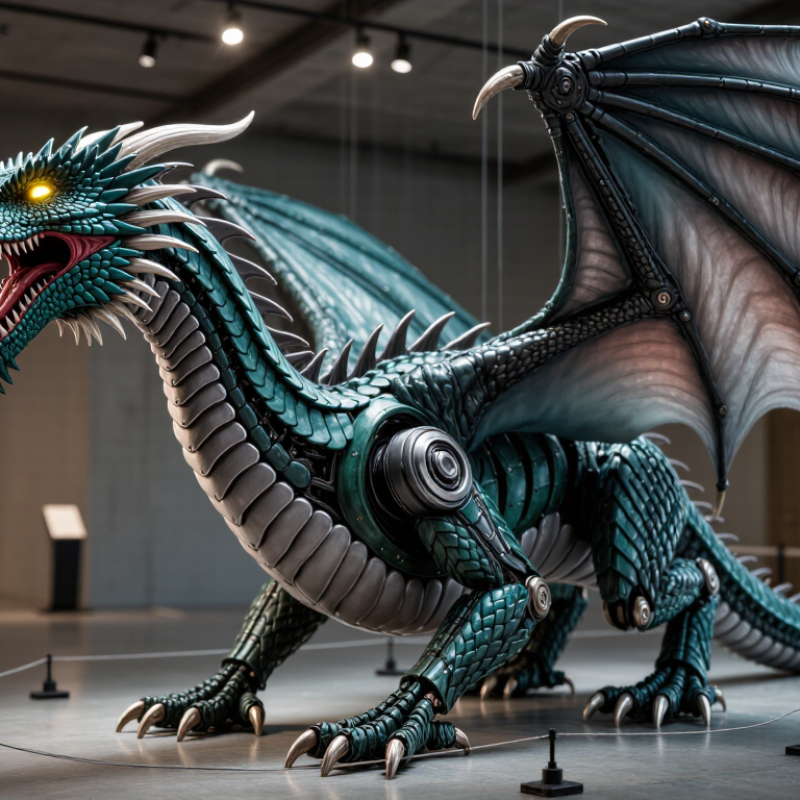
Before comparing suppliers, record the dragon’s full footprint, height, tail reach, and required visitor clearance. Measure the display doorway too. A 2.4-metre figure may fit the room but fail at the entrance. Specify motion by direction and range: jaw opening, head turn, wing lift, and tail sweep. Include safe stopping positions near walls and viewing rails. Small details matter.
Duty cycle needs numbers, not “built for heavy use.” The TEA Global Experience Index 2023 reported 244.6 million visits across the world’s 25 most-attended theme parks, up 23.1% from 2022. That attendance does not predict a dragon’s workload, but it shows why busy displays need realistic operating assumptions. Estimate activations per hour and daily hours, then ask for cycle-test results and cooling intervals. IEC 60034-1 defines duty types, including intermittent periodic duty; use its terminology when discussing motor operation with the supplier.
Describe the display environment: indoor or outdoor, temperature swings, dust, moisture, sunlight, and nearby sound levels. Request the operating limits, ingress-protection rating where applicable, access points, and maintenance schedule in writing. Ask for a floor plan showing the moving envelope, not just the static sculpture. I would leave some clearance beyond the drawing; real rooms are rarely perfect. Test the proposed motion sequence in the actual space before final approval.
When comparing makers of animatronic western dragons in 2026, ask for a documented risk assessment based on ISO 12100. It should identify hazards during transport, installation, operation, cleaning, and maintenance. Look for specific controls around moving jaws, neck joints, pinch points, unexpected starts, and emergency stopping. Ask for evidence. A polished demonstration is not a substitute for clear safety documentation.
Request the IEC 60529 IP rating for the electrical enclosures and connectors, not just a general claim that the dragon is weather-resistant. Confirm which parts were tested and whether the rating suits your planned indoor or outdoor location.
Rain, dust, washdown, and standing water create different demands. Not just a badge. An IP rating does not by itself confirm resistance to corrosion, sunlight, or temperature swings.
A useful shortlist includes makers willing to share assessment dates, operating limits, maintenance instructions, and test records for the actual configuration being quoted. Ask how cables are protected when the creature turns, and where staff should stand during servicing. If documents are vague, request clarification before comparing prices. I would still inspect the finished installation; paperwork cannot reveal every site-specific hazard. That gap matters.
Compare Quotes: Verify Servo Specs, Warranty, Lead Time, and Spare-Parts Support
A strong quote explains how the dragon moves, not just how dramatic it looks. Ask for servo type, torque, operating range, and duty cycle. Confirm whether the quoted motion suits your planned daily run time. A tail that sweeps smoothly in a showroom may behave differently after hours of repeated use. Request a wiring diagram and a clear list of included controls. Details matter.
Tips: Compare the same requirements across every quote. Check warranty length, covered components, labor terms, and shipping responsibilities. Ask which spare servos, sensors, or cables are stocked, and how quickly they can ship. Get lead time in writing, including testing and crating.
Look beyond the advertised delivery date. Ask when production starts, whether approval is needed for movement tests, and what could cause delays. A dated progress schedule is more useful than a vague promise. Request recent test footage and confirm what happens if a joint arrives noisy or misaligned. Also compare the full landed cost, setup guidance, and maintenance documents. A spreadsheet helps, but it cannot reveal every practical issue. I would leave room for questions; sometimes the least polished quote exposes the most important gap.
When comparing an animatronic western dragon in 2026, ask for sound readings under realistic operating conditions. A quiet showroom tells you little. The roar may run only briefly, or repeat every minute beside a staff station. Request the measured level, microphone position, operating cycle, and test duration. A single peak reading cannot describe a worker’s full shift.
In the United States, OSHA’s 85 dBA eight-hour time-weighted average is an action level for hearing conservation, not a universal “safe sound” guarantee. Compare projected employee exposure across setup, demonstrations, cleaning, and maintenance—not just the dragon’s advertised output. A sound-level meter can help screen locations, but a properly fitted noise dosimeter gives a more useful shift estimate. Keep the measurement record.
Check the exhibit with nearby attractions running, too. Crowd noise and repeated effects can change exposure. Ask whether volume can be adjusted without distorting the sound, and whether staff can stand farther away during long demonstrations. If estimates approach 85 dBA, consult a qualified safety professional about monitoring and controls. That extra step may feel fussy. It is better than guessing from a brief demo. OSHA requirements depend on the workplace and jurisdiction, so confirm which rules apply before purchase.
Where to Buy the Best Animatronic Western Dragon in 2026?
A strong seller shows the dragon moving under real operating conditions, not just in a polished clip. Ask for a live demo of head turns, jaw motion, lighting, and sound. Watch several cycles. Listen for grinding, delayed movement, or abrupt stops. Small details matter. Request a written acceptance test with agreed cycle counts, motion limits, noise checks, and sign-off criteria. A demo is useful, but it cannot replace documented testing.
Shipping deserves equal scrutiny. Allianz Commercial’s Safety and Shipping Review 2024 recorded 221 containers lost at sea in 2023, compared with a ten-year average of 1,566. That figure concerns lost containers, not all freight damage, so it is not a direct estimate of your risk. Still, ask how the dragon is braced, crated, insured, and inspected on arrival. Get crate dimensions and a delivery plan before booking. A tight doorway can become an expensive surprise.
Before paying, confirm who handles installation, site measurements, electrical requirements, and operator training. Ask for a service response target, spare-parts list, warranty exclusions, and remote troubleshooting process. Have the seller demonstrate emergency stops and routine maintenance. Record the test results and photograph the crate before opening it. One awkward point: a beautiful dragon may still need frequent adjustment. Ask what commonly wears first, and get the answer in writing.
| Buying decision | What to evaluate | Evidence to request | Practical acceptance target | Warning signs |
|---|---|---|---|---|
| Seller route | Compare a specialist fabricator, an authorized local dealer, and a general event-effects supplier. Choose the route that can document design, controls, delivery, and after-sales responsibility. | Written scope identifying who designs, builds, tests, ships, installs, and services the dragon. | One named contracting party is accountable for the complete agreed scope, including any subcontracted work. | Responsibilities are split informally, or the seller cannot explain who handles faults after delivery. |
| Fit for the venue | Confirm overall height, wingspan, operating envelope, audience clearance, access routes, floor loading, power, and indoor or outdoor use. | Dimensioned drawings, packed dimensions, weight, power requirements, and a site survey or measured access plan. | Every doorway, lift, loading bay, turning point, and operating area is checked against documented dimensions before production or dispatch. | Only the display dimensions are supplied; packed size, clearances, or floor requirements are missing. |
| Live demonstration | Review the actual unit or a clearly identified equivalent. Observe head, jaw, neck, tail, wings, eyes, sound, lighting, and emergency stop under normal operating conditions. | A continuous, dated video showing startup, a complete movement cycle, shutdown, and the controller; request an in-person demonstration when practical. | The demonstrated configuration, movements, finishes, and controls match the written specification. Confirm whether the demo is the exact unit or a reference model. | Edited clips conceal operation, or the seller will not distinguish a prototype from the final build. |
| Movement and controls | Check movement range, speed, repeatability, control modes, operator training, cables, and safe behavior after a power or signal interruption. | Control-system description, operating instructions, movement limits, and a demonstration of the emergency stop and recovery procedure. | Every contracted movement runs repeatedly without collision, unexpected restart, or visible binding during the agreed test cycle. | No written operating procedure, unclear control ownership, or no documented response to loss of power or control signal. |
| Factory acceptance test | Agree on a pre-shipment inspection covering appearance, dimensions, movement, sound, lighting, controls, and included accessories. | A signed checklist, dated photos or video, serial or unit identification, and a list of open defects and corrective actions. | All contract requirements pass before shipment, or any exception has a written remedy and approval from both parties. | Payment or dispatch is requested without an agreed inspection record or a clear defect-resolution process. |
| Materials and finish | Review skin, scales, paint, teeth, eyes, seams, and access panels. Confirm material suitability for the planned environment and cleaning routine. | Finish samples or close-up images of the production unit, care instructions, and any applicable material or fire-safety documentation required by the venue. | Color, texture, and finish are approved against written references; the unit arrives without unapproved visible damage or loose components. | Marketing images are the only finish reference, or environmental and maintenance limits are not disclosed. |
| Shipping and delivery | Clarify crate dimensions, total shipment weight, transport mode, insurance, customs responsibilities where relevant, delivery appointment, and unloading equipment. | A written shipping plan stating the delivery location, estimated transit window, packaging method, insurance coverage, and responsibility for duties and unloading. | The receiving site confirms it can accept and unload the shipment; delivery timing and damage-reporting steps are documented before dispatch. | A delivery estimate is given without shipment dimensions, insurance terms, or clarity on who unloads the crate. |
| Installation and site test | Determine whether installation is included, who supplies tools and lifting equipment, how the unit is anchored, and what site power and clearances are required. | Installation method statement, site requirements, schedule, crew responsibilities, and a commissioning checklist. | The installed unit passes an on-site movement and safety check with the venue layout in place; operators receive a handover. | The buyer is expected to assemble or modify the unit without written instructions or agreed technical support. |
| Warranty and service | Check warranty duration and exclusions, response process, spare-part availability, remote troubleshooting, repair options, and service costs after warranty. | Written warranty terms, maintenance schedule, recommended spare-parts list, and a service contact route. | Coverage, remedies, response expectations, and buyer maintenance duties are specified in the contract rather than left to verbal assurances. | Warranty exclusions are unclear, service is not available after delivery, or essential parts have no stated replacement path. |
| Contract and payment | Match the quotation to the specification, delivery terms, acceptance milestones, change-control process, cancellation terms, and final handover documents. | A dated quotation and contract that itemize the unit, options, testing, packing, transport, installation, taxes, and service obligations. | Payments are linked to clearly described milestones, with final acceptance criteria and remedies written into the agreement. | The scope relies on verbal promises, unspecified add-on charges, or payment terms unrelated to documented deliverables. |
| Buyer note: Acceptance targets above are practical planning criteria, not universal industry certifications. Adjust them to the dragon’s final specification, venue rules, local regulations, and contract. | ||||