What Types of UPVC Fittings Are Available?
UPVC fittings connect pipes, change direction, divide flow, and adapt one connection to another. The right choice depends on the system, not just the shape. Common options include elbows, tees, couplers, reducers, unions, threaded adaptors, and valves. Drainage projects may also use bends, branches, and access fittings. Each has a distinct job.
A 90-degree elbow turns a pipe around a tight corner. A tee creates a branch, while a reducer joins pipes of different diameters. Couplers connect straight pipe sections; unions make later maintenance easier. Small details matter. Check the pipe size, pressure rating, connection type, and intended use before selecting a fitting. A pressure-water fitting may not suit a gravity-drainage line. Product labels and manufacturer instructions are essential checks.
A verified expert name and quotation were not supplied, so I won’t invent an attribution. A useful technical principle is: “Choose the fitting for the system’s flow, pressure, and joint—not by shape alone.” It is simple, but easy to overlook when parts look similar on a workbench. This guide explores the main types of UPVC Fittings, their functions, and the practical differences that help readers compare them. Some installations also depend on local specifications and site conditions, so a general overview cannot replace product guidance. That limitation deserves attention.
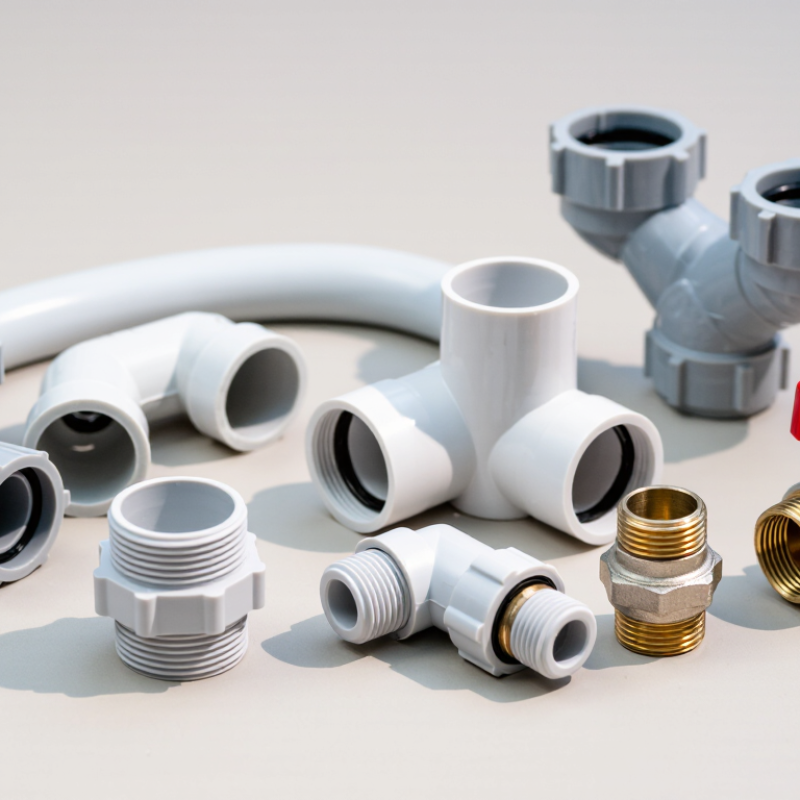
How UPVC Fittings Connect and Direct Piping Systems
UPVC fittings connect pipe sections and control the route of water through a system. Elbows create turns, commonly at 45 or 90 degrees, while tees branch flow into another line. Reducers join different pipe diameters; couplings connect straight sections, and unions allow a joint to be separated for maintenance. Small parts matter. A badly aligned elbow can place stress on nearby joints, especially where pipe supports are too far apart.
The connection method depends on the fitting and system design. Socket joints are commonly solvent-cemented, while larger lines may use elastomeric ring joints; threaded or flanged adapters connect to compatible equipment. AWWA Manual M23 gives a Hazen-Williams C-factor of 150 as a hydraulic design value for PVC pipe. It is a calculation assumption, not a guarantee of actual flow: fitting geometry, diameter changes, and installation quality also affect pressure loss. ISO 1452-3 specifies requirements for unplasticized PVC pressure-system fittings. In practice, confirm that pipe and fittings share compatible dimensions and pressure ratings. Drawings can look tidy, yet leave too little room to tighten or replace a union. That detail is easy to miss.
How UPVC Fittings Are Classified by Shape and Function
UPVC fittings are classified by both shape and function. Elbows redirect flow around corners; 90-degree elbows suit tight turns, while 45-degree bends create a gentler change. Tees split a line into two paths, and wye fittings create angled branches. Reducers connect different pipe diameters. Couplers join straight sections, while caps close open ends. Small parts, big consequences.
Function narrows the choice. Pressure fittings serve pressurized water lines; drainage fittings carry gravity-fed wastewater and need compatible joint designs. ISO 1452-3 specifies PVC-U fittings for water supply, while ASTM D2466 covers Schedule 40 PVC pressure fittings. Check the applicable standard, nominal size, pressure rating, and joining method before installation. A socket may fit physically but still be unsuitable for the system’s pressure or connection method. Easy to overlook.
Market figures offer context, not a sizing rule. Grand View Research valued the broader plastic-pipe market at USD 63.3 billion in 2023 and forecast 5.8% annual growth through 2030. Those figures cover plastic pipes overall, not UPVC fittings alone. In practice, a clear fitting schedule helps avoid mixing drainage and pressure components, especially where several branch sizes meet in a cramped service space.
Elbows and Bends for Changing Pipe Direction
UPVC elbows and bends redirect pipework around walls, equipment, and other obstacles. Elbows commonly make sharper turns, often at 45 or 90 degrees, while swept bends provide a gentler change in direction. The right choice depends on available space and the flow path. Small details matter. A tight turn may fit a crowded corner, but it can create more resistance than a gradual bend.
Before installation, check that the fitting diameter matches the pipe and that its pressure rating suits the system. Dry-fit the pieces to confirm alignment, especially where several turns meet. Cut pipe ends square, remove burrs, and use the joining method specified for the fitting. A joint that looks seated may still be misaligned. Take a moment to check.
Support the pipe near direction changes so its weight does not strain the joints. Avoid forcing a pipe into place to meet an elbow; that can leave stress hidden behind a wall or panel. In a compact layout, a pair of 45-degree elbows may create a smoother route than one sharp turn, though it needs more room. There is no universal best option, and measuring twice can feel fussy until a tight fit has to be redone.
Tees, Crosses, and Reducers for Branching and Size Changes
UPVC tees create a three-way branch, while crosses connect four pipe runs at one junction. A tee is useful when a smaller service line leaves a main pipe, such as a feed to an irrigation zone. A cross can save space, but four connected flows may complicate balancing and maintenance. Keep access clear.
Reducers connect different pipe diameters, either concentrically or eccentrically. Choose the shape to suit the installation and avoid creating awkward air or sediment pockets. Measure the pipe outside diameter and confirm the fitting’s pressure class and joining method before ordering. Small mismatches can mean leaks.
Branch fittings also affect flow. AWWA’s M23 manual for PVC pipe design commonly uses a Hazen-Williams C-factor of 150 for PVC; this is a design input, not a guaranteed flow rate. Tees and crosses add local resistance, so designers should account for fitting losses rather than rely on straight-pipe calculations alone. That detail is easy to miss. In practice, mark each branch direction on the pipe before cutting, then dry-fit the assembly. The layout may look obvious on paper, but site clearances often change the answer.
What Types of UPVC Fittings Are Available? - Tees, Crosses, and Reducers for Branching and Size Changes
| Fitting Type | Configuration | Main Function | Typical Use | Common Connection Styles | Sizing Consideration |
| Equal Tee | Three openings of the same nominal size, arranged as a straight run with a 90-degree branch | Creates a branch while keeping the run and branch the same size | Branching a water or drainage line to a matching-size pipe | Solvent-cement socket ends; other end styles depend on the product range | All three ends are specified for the same nominal pipe size |
| Reducing Tee | Two matching run openings and a smaller branch opening | Creates a branch connection with a change in pipe size | Connecting a smaller distribution branch to a larger main line | Often supplied with socket ends; available configurations vary by system | Specify the run size and branch size separately |
| Equal Cross | Four openings of the same nominal size, forming two intersecting paths | Connects four pipe sections at one junction | Four-way distribution or drainage layouts where the piping system permits a cross fitting | Socket ends are common in compatible UPVC systems | All four openings are the same nominal size; confirm suitability for the intended flow and system standard |
| Reducing Cross | Four-way junction with one or more openings smaller than the others | Combines a four-way branch with one or more size transitions | Specialized distribution layouts requiring different pipe sizes at a junction | End styles and size combinations depend on the fitting range | Check each opening size individually; reducing-cross configurations are less standardized than tees |
| Concentric Reducer | Reducer with centered openings, keeping the connected pipe centerlines aligned | Transitions between different pipe sizes in a straight run | Reducing or increasing pipe size where a centered transition is appropriate | May be socket-to-socket or socket-to-spigot, depending on the system | Specify both end sizes and confirm the fitting’s pressure or drainage rating |
| Eccentric Reducer | Reducer with offset openings, creating one flat side when installed in the intended orientation | Changes pipe size while maintaining a level alignment on one side | Used where maintaining a preferred pipe alignment or limiting air or liquid pockets is important | Availability and end styles vary between UPVC product ranges | Confirm orientation and application with the system design; eccentric reducers are not available in every range |
Note: Nominal sizes, pressure classes, dimensions, and available end connections vary by pipe standard, application, and manufacturer. Match fittings to the pipe system and confirm compatibility before installation.
Couplings, Unions, Adapters, and Caps for Joining or Closing Pipes
What Types of UPVC Fittings Are Available?
In a UPVC pipe run, the fitting determines how sections connect or end. Couplings join two pipes of matching diameter, often with solvent-weld sockets. Unions also connect pipe sections, but their threaded central nut allows later dismantling for pump or valve maintenance. Simple, but not forgiving. Check the seal and seating surfaces before tightening; a trapped grain of grit can compromise the joint.
Adapters connect different end types, such as a solvent-weld pipe to a threaded valve. Caps close an unused branch or terminate a line, while plugs usually fit inside a threaded opening. Choose fittings rated for the system’s pressure and compatible with the pipe dimensions.
The U.S. EPA’s 2023 Drinking Water Infrastructure Needs Survey and Assessment estimates $625 billion in drinking-water infrastructure needs over 20 years. That figure makes reliable connections more than a cosmetic detail.
During installation, keep pipe ends square, dry-fit parts to check alignment, and follow the cement maker’s stated setting time. Do not force a misaligned adapter to meet a valve; strain can build at the joint. A neat fit can still be wrong. Check the system after assembly, and remember that fitting choice alone cannot replace a pressure test.

