2026 Top Turf Football Shoes for Global Buyers?
Choosing the best Turf Football Shoes in 2026 requires more than comparing logos, colors, or launch prices. Global buyers face different pitches, climates, playing styles, and import conditions. A shoe that grips wet artificial grass in Manchester may feel too aggressive on dry, compact turf in Doha.
FIFA’s 2023 Professional Football Report recorded 128,694 professional male players across 3,986 clubs and 135 countries. That scale shows why regional testing matters. Broader sports footwear reports from Grand View Research also indicate sustained market growth, although their categories rarely separate football turf models. The data is useful, but imperfect. Buyers should not treat broad footwear forecasts as direct Turf Football Shoes sales figures.
Fit remains the clearest starting point. Sports podiatrist and footwear consultant Dr. Simon Bartold has stated, “The best shoe is the one that fits the athlete.” That principle deserves more attention than advertising claims. Check heel security, toe-room, outsole flexibility, and traction before judging appearance. A stable heel should not lift during sharp turns. The forefoot should bend naturally, not collapse.
This guide compares leading 2026 options through outsole design, upper durability, comfort, surface compatibility, and value for international buyers. It also considers sizing consistency, retailer support, and long-distance shipping realities. Some conclusions may change after real match testing. That is the honest limitation.
The right pair is not universal. It is dependable under pressure.
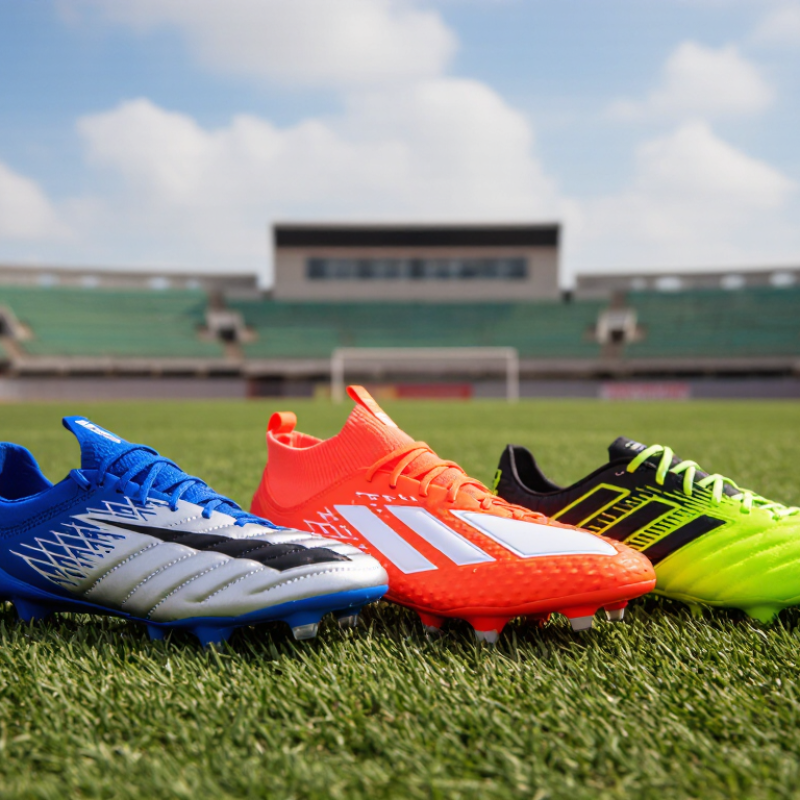
2026 Turf Football Shoe Types: TF, AG, and Multi-Ground Outsole Data
2026 Top Turf Football Shoes for Global Buyers?
2026 Turf Football Shoe Types: TF, AG, and Multi-Ground Outsole Data
TF outsoles use many short rubber nubs. They spread pressure across hard, carpet-like turf and can feel stable during quick turns. AG outsoles usually have more widely spaced, rounded studs designed to distribute load on longer artificial grass. Stud height, shape, and spacing vary by model, so labels alone are not enough. Check the maker’s surface guidance.
Multi-ground outsoles combine stud patterns for more than one surface, but versatility can mean a compromise. Compare stud count, length, spacing, and plate flexibility, not just the product name. A dense pattern may suit compact turf; longer, spaced studs may grip better on deeper artificial grass. No single layout fits every pitch. Even careful comparisons leave some uncertainty, since turf pile and infill differ between fields.
Tips: Match the outsole to the pitch you use most. Press the studs against the surface and check the fit before play. If the shoes feel unstable or studs catch during turns, reconsider the match. A convenient all-round pair is not always the safest choice.
FIFA Quality Programme Tests: Traction, Durability, Shock, and Ball Roll
2026 Top Turf Football Shoes for Global Buyers?
When comparing turf football shoes, use traction, durability, and shock absorption as practical checkpoints. On a short-pile artificial surface, the outsole should grip during a quick turn without feeling locked in place. Too much grip can feel uncomfortable. Check the stud layout and outsole seams for signs of weak bonding, especially if you play several times each week. For cushioning, notice how your heel feels after repeated sprints, not just during a brief fitting. Small differences matter.
Ball roll needs careful interpretation. It mainly describes how the ball travels across a tested playing surface; it is not a standalone score for a shoe. FIFA Quality Programme assessments apply to specified football products or surfaces, so buyers should verify exactly what a certificate or test report covers. Do not assume a shoe is FIFA-certified because a seller mentions FIFA testing. Ask for the test scope, surface type, and test date. A controlled result cannot fully predict comfort on every pitch, and that limitation is easy to overlook. Try the shoes on the kind of turf you actually play on, if possible.
2026 Turf Football Shoe Buying Priorities
A practical comparison framework based on key performance considerations for global buyers.
Traction and rotational release, durability, and shock absorption are relevant footwear considerations. Ball roll is primarily a playing-surface test, so it is included as field context—not as a shoe-performance rating. Scores are illustrative editorial priority indices, not measured product results or official FIFA scores. FIFA Quality Programme testing concerns football surfaces; it does not rank turf football shoes.
Performance Metrics: Weight, Stud Density, Flexibility, and Lockdown
For global buyers, turf football shoes should be judged by measurable performance, not appearance. A 2023 review in Sports Medicine linked heavier footwear with higher running energy costs; a useful benchmark is roughly 1% more effort per added 100 grams per shoe. That figure comes from running research, not direct turf testing. The difference still matters during repeated sprints.
Stud density requires careful balance. FIFA Quality Programme testing evaluates traction, deformation, and surface interaction under controlled conditions. More, shorter studs usually spread pressure across artificial turf and reduce unstable foot loading. However, excessive density can limit penetration and feel slippery on wet fibres. Buyers should compare stud spacing, not only stud count. Small details matter.
Flexibility should occur near the forefoot, while the heel remains stable. Lab footwear reports commonly assess bending resistance and torsional control, but testing methods vary between suppliers. A shoe that bends smoothly under the toes may support sharper cuts. Too much flexibility can weaken lateral confidence. Lockdown depends on heel shape, lacing tension, and upper compression. A practical test is simple: push the foot forward, then make a hard side step. Heel lift should remain minimal. I would not trust one laboratory score alone; foot width, sock thickness, and turf temperature can change the result. Performance is rarely perfect.
2026 Top Turf Football Shoes for Global Buyers: Performance Metrics
Representative, brand-neutral benchmarks for common turf-shoe design types. Values describe typical construction targets, not independently tested results for specific products.
| Design Type | Weight
(per shoe, men’s US 9) | Turf Stud Density
(molded rubber lugs per outsole) | Flexibility
(1–5 scale) | Lockdown Potential
(1–5 scale) | Best-Suited Use |
| Lightweight speed | Approx. 250–290 g | Approx. 80–100 | 4–5 — bends readily through the forefoot | 3–4 — typically relies on a close fit and secure lacing | Quick changes of direction and shorter sessions on firm artificial turf |
| Balanced all-round | Approx. 280–330 g | Approx. 90–120 | 3–4 — moderate forefoot flex with a supportive base | 4 — a conventional lace closure can provide a secure midfoot fit | Regular training and match play across a range of artificial-turf surfaces |
| Cushioned comfort | Approx. 310–370 g | Approx. 80–110 | 2–4 — often firmer through the midfoot | 3–4 — fit depends on upper structure, lacing, and foot shape | Longer sessions or buyers prioritizing underfoot cushioning |
| Durable training | Approx. 330–400 g | Approx. 100–130 | 2–3 — generally more structured and resistant to bending | 3–4 — supportive construction may improve stability, but fit varies | Frequent practice and buyers prioritizing a robust outsole and upper |
| Wide-fit comfort | Approx. 290–360 g | Approx. 85–120 | 3–4 — varies with soleplate stiffness and upper materials | 4 for a well-matched foot shape; lower if the shoe is too roomy | Players needing more forefoot room without choosing a rigid, narrow fit |
Global Buyer Standards: EU, UK, US Sizing, Materials, and Safety Compliance
2026 Top Turf Football Shoes for Global Buyers?
Global buyers need more than attractive photos when selecting turf football shoes. EU, UK, and US sizes are not perfectly interchangeable. Measure both feet in the afternoon, wearing the socks used for training. Record heel-to-toe length and forefoot width. Check the supplier’s exact chart.
A practical fit leaves roughly 8–12 millimeters ahead of the longest toe. The heel should stay secure without pressure. Some conversion tables are inconsistent. I have seen identical measurements produce different size recommendations, so buyers should request an internal-length figure before ordering. Half sizes and wide options can reduce returns, especially for growing players.
Material choices affect comfort, durability, and safety. Synthetic uppers resist light rain and clean easily, while engineered mesh may improve airflow but expose weak stitching. Inspect the tongue, eyelets, seams, and heel counter. The outsole should use flexible, non-marking rubber with short, evenly distributed turf lugs. Sharp or excessively long studs may increase discomfort on artificial surfaces. Ask for abrasion, flex, slip, and chemical-compliance documentation relevant to the destination market. Labels should identify materials, origin, care instructions, and responsible importer details where required. Adhesives and dyes deserve attention too. Testing claims need traceable reports, not vague factory assurances. Fit still depends on the player. No chart replaces a careful trial.
2026 Selection Matrix: Surface, Climate, Player Level, Price, and Lifespan
For global buyers, the best turf football shoe begins with the playing surface. FIFA’s Quality Programme for Football Turf evaluates shock absorption, vertical deformation, rotational resistance, ball roll, and ball rebound. These tests show why one outsole cannot suit every artificial pitch. Short, dense fibers usually reward closely spaced, low-profile studs. Longer, abrasive fibers may need deeper traction. Check the facility, not only the product label. Fit comes first.
Climate changes everything. The World Meteorological Organization’s State of the Global Climate 2024 reported a record warm year, about 1.55°C above the pre-industrial average. Heat can soften materials and increase foot sweat. Rain exposes weak grip and poor water management. Beginners should prioritize comfort and stable movement over maximum bite. Competitive players may accept a firmer plate after testing it. My own mistake was choosing traction before fit. The result was pressure near the little toe.
Price should be judged against weekly use. A modest pair used twice weekly may outlast an expensive pair used daily on abrasive turf. Inspect stud edges, heel lining, seams, and outsole separation monthly. Replace the shoe when traction changes, not when the upper merely looks dirty. Manufacturers rarely publish comparable lifespan data, so buyer records matter. Log sessions, weather, and surface type. This evidence is imperfect, but more honest than a universal mileage promise. Selection remains a compromise.

