2026 Top Army Winter Sweater Suppliers for Global Buyers?
Choosing an Army Winter Sweater supplier is not just a price comparison. Global buyers must assess warmth, durability, consistent sizing, and dependable delivery. Small differences matter: a collar that loses shape, cuffs that stretch, or wool that pills after repeated wear can undermine an otherwise strong product.
The scale of the materials market makes sourcing questions increasingly important. Textile Exchange’s Materials Market Report 2024 estimates that global fiber production reached 124 million tonnes in 2023, up from 116 million tonnes in 2022. The report projects production could reach 160 million tonnes by 2030. These figures describe the wider fiber industry, not military sweaters specifically, but they underscore why material origin and supplier transparency deserve attention.
This guide examines leading supplier options for 2026 through practical buyer criteria: fiber composition, knit construction, sample quality, production capacity, and quality-control documentation. Ask suppliers how they test shrinkage, colorfastness, and seam strength, and request clear specifications before approving bulk production. Check whether claimed certifications can be independently verified. Important details.
A polished sample is useful, but it cannot prove every production batch will match. That remains a sourcing risk. Buyers should compare documented performance with their intended climate, use, and care requirements, then confirm delivery schedules in writing. The strongest supplier is not always the cheapest. It is the one whose claims, samples, and production records hold together under scrutiny.
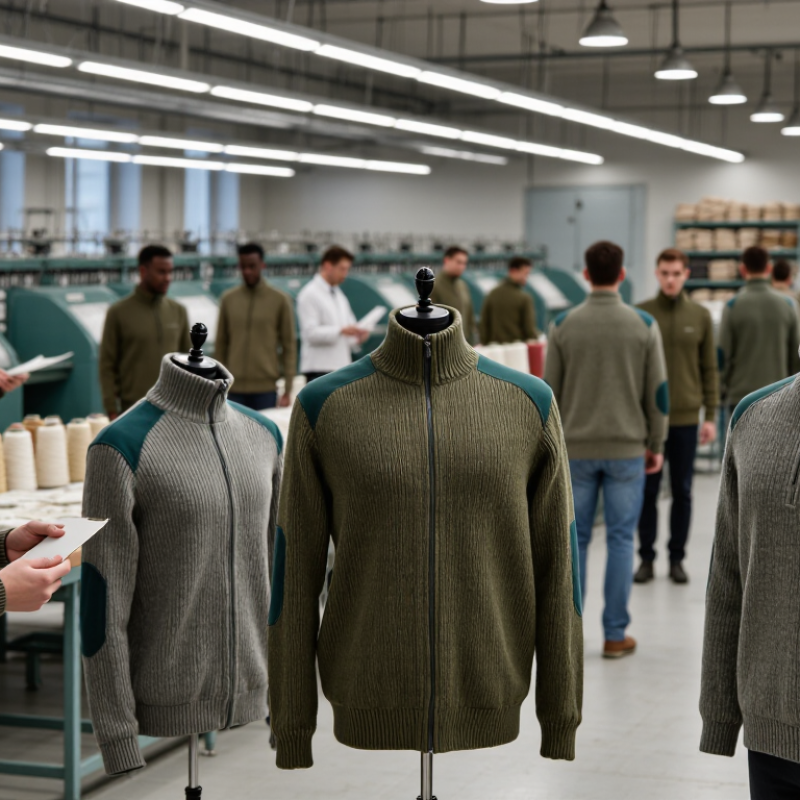
Defining Army Winter Sweater Requirements for 2026
2026 Top Army Winter Sweater Suppliers for Global Buyers?
Defining Army Winter Sweater Requirements for 2026
A reliable winter sweater specification starts with the conditions soldiers will actually face. Cold, damp field use calls for different insulation and drying performance than dry, sub-zero conditions. Buyers should define expected temperature ranges, layering needs, and exposure to rain or snow before selecting materials. Fit matters. Sleeves must allow movement without riding up, while the body should sit comfortably beneath an outer jacket.
Material descriptions need measurable details. Specify fiber composition, fabric weight, knit gauge, and acceptable shrinkage after repeated washing. Request samples for checks on pilling, seam strength, color consistency, and comfort against the skin. A label that says “warm” is not enough. Include care instructions and test garments after laundering, not just when they arrive new. Small details, such as reinforced elbows or ribbed cuffs, can affect service life and wear comfort.
Requirements should also account for different sizing systems, climates, and laundry routines across buying regions. Clear measurement charts and agreed inspection criteria reduce avoidable disputes. Still, overly rigid specifications can miss real-world needs; a sweater that passes a fabric test may feel restrictive during long shifts. Trial wear can reveal that gap. Use wearer feedback alongside documented test results, then revise the specification where evidence supports a change.
2026 Top Army Winter Sweater Suppliers for Global Buyers? — Defining Army Winter Sweater Requirements
Suggested evaluation weights for comparing army winter sweater specifications. These are planning weights, not measured supplier or market data.
Prioritize thermal performance and durability, then assess comfort, mobility, and care requirements. Adapt the weights to the operating climate, uniform system, and tender specifications.
Mapping Global Supplier Regions and Manufacturing Capabilities
Global sourcing for army winter sweaters depends on more than low unit cost. East Asian manufacturing clusters often combine yarn sourcing, knitting, dyeing, and finishing, while South Asian factories commonly support larger knitwear programs. Türkiye and parts of Eastern Europe can offer shorter transport routes into European markets and experience with wool-blend garments. Regional strengths vary by factory, not just by country.
The Textile Exchange Materials Market Report 2024 estimates global fiber production reached 124 million tonnes in 2023, with polyester accounting for about 57 percent. This broad fiber-market figure is not a sweater-specific measure, but it helps buyers assess the scale of synthetic insulation and blending supply chains. For cold-weather procurement, request samples that show stitch density, cuff recovery, seam strength, and performance after repeated washing. Ask suppliers to document fiber content and batch-level testing. Details matter.
Factory audits and verified test reports are useful, yet paperwork cannot fully predict comfort in wet, windy field conditions. A dense knit may retain warmth but feel restrictive under layered clothing. That trade-off deserves wear trials. Regional maps are helpful, but incomplete: a capable mill may rely on imported yarn, and delivery reliability can hinge on dye-house capacity or seasonal power constraints. Buyers should compare these production steps directly before assigning volume.
Comparing Leading Suppliers by Quality, Cost, and Capacity
Global buyers comparing army winter sweater suppliers should assess quality, landed cost, and production capacity together. A dense knit may feel warm in a sample, yet shrinkage, pilling, or loose cuffs can appear after repeated washing. Ask for fiber composition, fabric weight, seam construction, size tolerances, and wash-test results. Details matter. Compare samples in the intended colors, since dye lots can change both appearance and surface feel. Check collar recovery and sleeve coverage over a base layer, not just on a flat table.
Low unit prices can conceal setup fees, packaging costs, or higher freight charges. Request a clear quotation that separates these items and states the minimum order quantity. For capacity, ask how many units the supplier can produce monthly, what lead time applies, and whether production slots are confirmed in writing. A large stated capacity means little if it is already committed. Request a small pilot order when practical, then compare actual measurements and delivery timing with the agreed specifications. One detail is easy to overlook: seasonal demand can stretch lead times, so leave room for delays rather than planning around a perfect schedule.
Checking Military Standards, Certifications, and Export Compliance
For global buyers, a winter sweater’s “military grade” label proves little by itself. Requirements depend on the contract, climate, and destination market. Ask suppliers for the applicable specification, fiber composition, sizing tolerances, and test methods before approving samples.
For thermal performance, ISO 11092 measures thermal and water-vapour resistance; ISO 12947 assesses abrasion. Request dated reports identifying the tested fabric, laboratory, and sample batch. A report for similar yarn is not proof that the delivered garment matches.
Paperwork matters. ISO’s 2023 Survey recorded more than 1.26 million valid ISO 9001 certificates worldwide. That figure shows the standard’s reach, not that any sweater meets a military specification. Verify certificate scope and validity, and check that product tests come from a competent laboratory, preferably accredited to ISO/IEC 17025 for the relevant method.
Also confirm fiber-content records, inspection results, country-of-origin documents, tariff classification, and destination-specific import or export requirements. These checks need review by qualified trade-compliance staff; rules vary by route and contract.
Not enough.
Keep a traceable link between each production lot and its test records. One practical weakness remains: paperwork can look complete while covering the wrong fabric, so compare documents with the actual sample and shipment.
Managing Sampling, Bulk Orders, and Long-Term Supplier Performance
A dependable army winter sweater supplier should prove performance before discussing large volumes. Begin with a clear sampling brief: yarn composition, garment weight, color tolerance, seam construction, and wash-care requirements. Ask for a size set, not just one attractive sample. Check cuff recovery, collar shape, and pilling after repeated washing. Small details matter. Keep an approved sample and record every change; otherwise, a “minor” yarn substitution can alter warmth and fit.
Textile Exchange’s Materials Market Report 2024 estimates that global fiber production reached 124 million tonnes in 2023, with polyester representing about 57% of total output. For buyers, that scale makes fiber traceability and consistent material specifications essential. Request mill-level composition records and batch identification, then compare them with incoming-goods tests. During bulk production, use agreed inspection points for measurements, color, knitting defects, and packing. A dated photo log helps resolve disagreements, though photos alone cannot replace physical inspection.
Long-term performance needs measurable routines. Track sample approval time, on-time delivery, defect rates, and corrective-action closure across each order. Review trends quarterly, not only when a shipment fails. Ask suppliers to flag capacity limits early and share realistic production calendars. Some delays will still happen; planning buffers helps, but it does not excuse vague updates. Keep the scorecard practical, and revise it when field feedback shows the original checks missed something.

